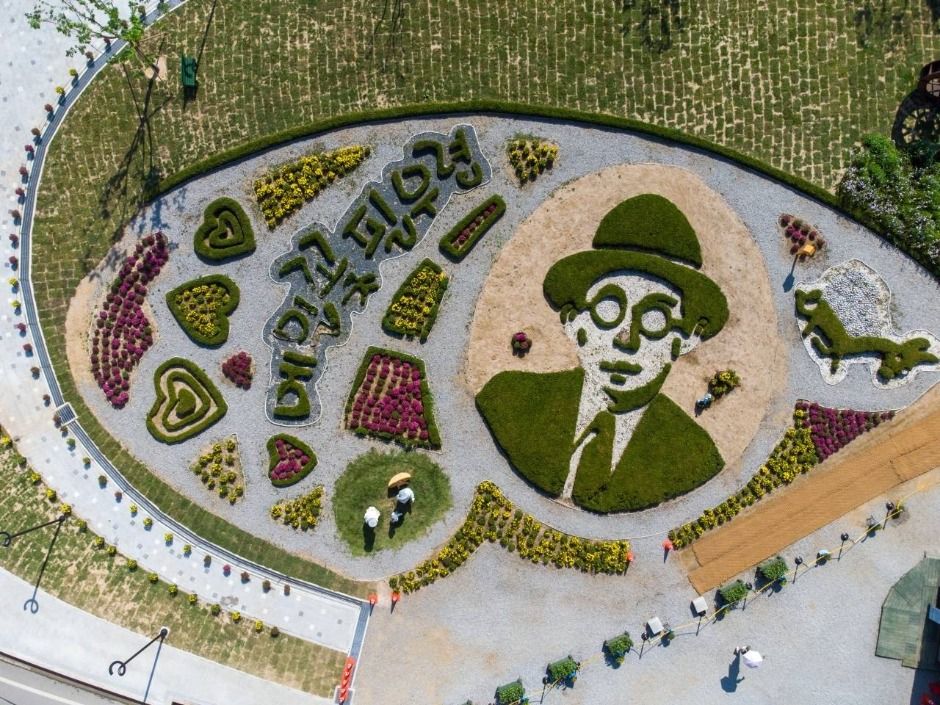
Hyoseok Cultural Festival takes place in Bongpyeong, the rural setting of Lee Hyo-seok’s 1936 short story When the Buckwheat Flowers Bloom. The connection is literal rather than decorative: visitors move through the village and buckwheat fields that frame the story, while the programme returns to the writer through performances, a national writing contest and a literary award ceremony.
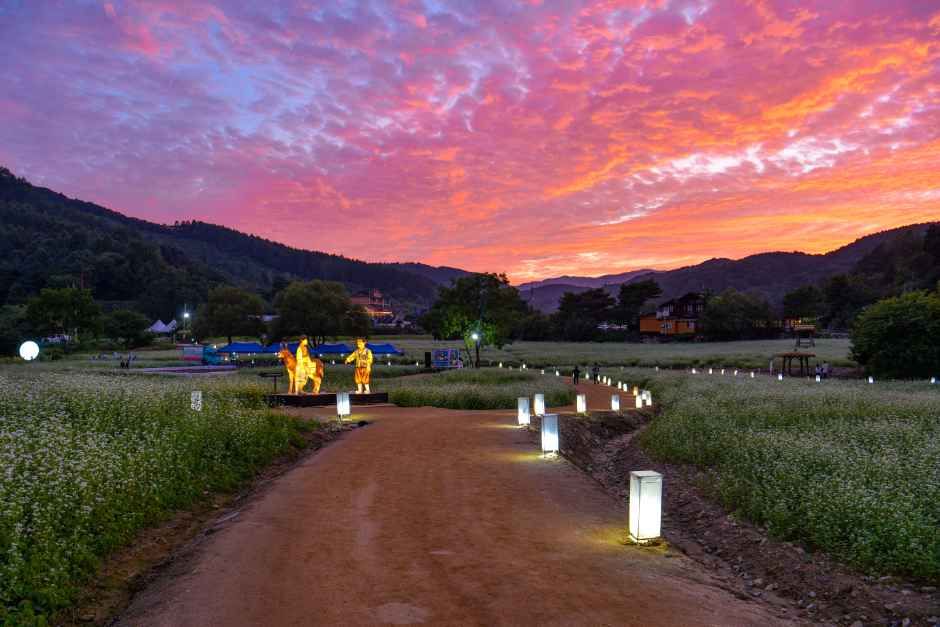
The 2026 festival runs from September 4 to 13 in the Hyoseok Culture Village area, and the opening ceremony was held on September 5 at the dome stage in Bongpyeong. The current Korea Tourism Organization listing gives daily operating hours of 10:00 to 17:00. That is the useful planning window; this is a daytime festival, so do not build an evening-only visit around descriptions of concerts from older editions unless the official day-by-day schedule confirms one. The one fixed exception is the fire-pit session, which the programme lists as running after 18:00.
What you actually do here
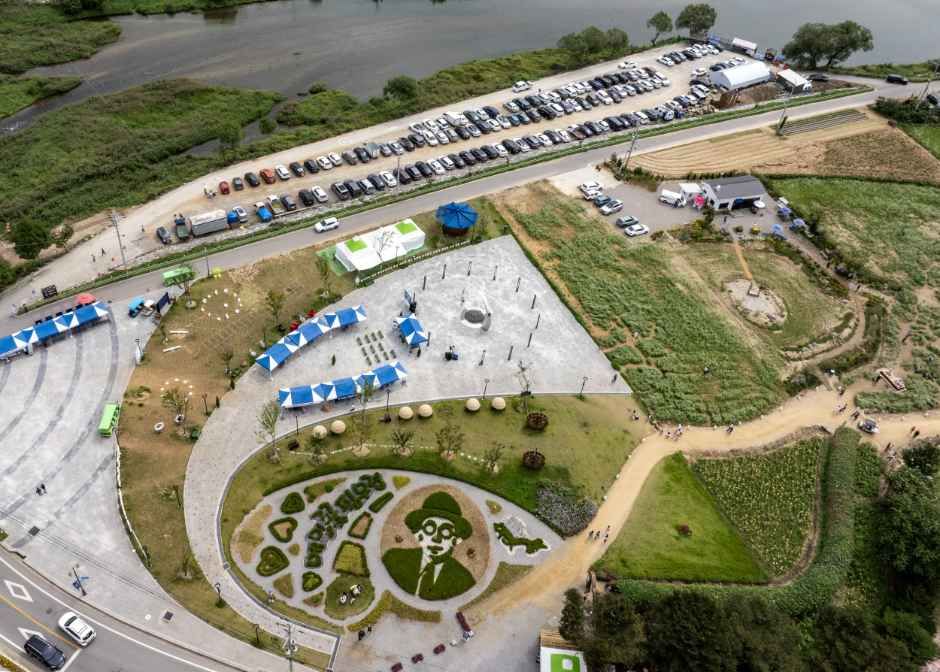
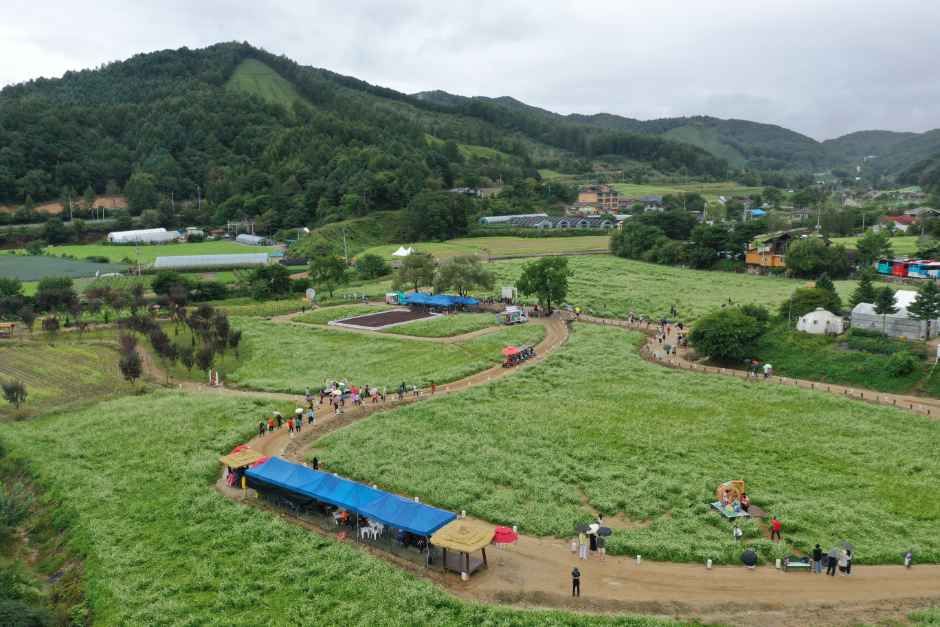
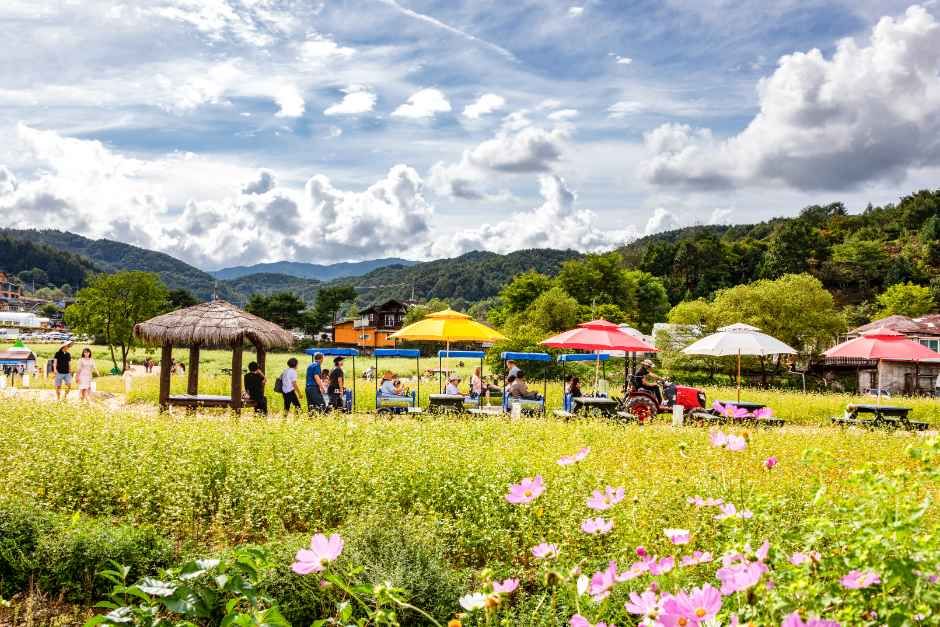
The simplest visit is a loop between the village, the buckwheat fields and the main programme area. The fields are the visual draw, but this is also a literature festival built around one writer. The site includes the Lee Hyo-seok Literary Museum and Hyoseok Moonlight Hill, both free to enter during the festival, which give the trip a fixed indoor-and-view anchor even on a busy performance day.
The confirmed 2026 programme has a clear literary spine: a When the Buckwheat Flowers Bloom madanggeuk stage performance, the 47th National Hyoseok Writing Contest, the 4th Pyeongchang Buckwheat Flower Song Festival, the Lee Hyo-seok Literary Award ceremony and a live radio broadcast. Around those sit performances by local troupes and a set of participatory activities described below.
Those headline events will not all run continuously. Check the official timetable and choose the day around the one scheduled item you care about, then use the remaining time for the fields, the museum and the village. Without a timed performance, two to three hours is a reasonable visit; allow longer if you want to walk slowly, eat in Bongpyeong or attend a full event.
The KTO description also identifies folk performances and local-food stalls as parts of the festival format. Treat those as things to look for on the day rather than promises about a particular booth or hour. The published 2026 detail page does not yet provide a full stall map or a minute-by-minute running order.
Programme and timetable
The main-stage programme is the part worth planning around, because it is the part with fixed times you cannot recover if you miss them. The madanggeuk adaptation of When the Buckwheat Flowers Bloom is the signature performance; the National Hyoseok Writing Contest and the Lee Hyo-seok Literary Award ceremony tie the event back to the writer; and the Pyeongchang Buckwheat Flower Song Festival and a live radio broadcast fill the entertainment side. These are distinct formats with their own slots, not a single rolling show, so the daily grid on the official site is the document that matters.
Alongside those, the 2026 record lists a group of participatory programmes. Most are free: a stamp tour with small prizes, a music-request radio segment, the “Find the Golden Buckwheat” prize game that runs only during scheduled programme hours, and an after-18:00 fire-pit (“bulmeong”) session. The literary train, which carries the “into the story” theme, charges a separate ride fare. If a specific participatory activity is your reason for coming, confirm its hours on the day rather than assuming it runs all festival.
One concrete 2026 addition is worth flagging because several outlets reported it independently on September 7: the Rural Development Administration is exhibiting three domestically bred buckwheat varieties — Hwanggeum-miso, Haetsal-miso and Goun-miso — at the festival through September 13, part of an effort to replace the ageing Bongpyeong landrace seed. It is a small government display rather than a headline act, but it fits the festival’s buckwheat theme and is confirmed to run this year.
Tickets, fees and free experiences
Admission is the point this article most needed to correct. The current KTO Korean record marks the 2026 festival as free, the official site advertises a mix of free and paid experiences, and multiple September 2026 reports describe the grounds as a free festival site. Earlier English tourism data that flagged the event as “paid” is out of date for this year; this guide follows the current record.
Free does not mean everything inside is free. The Lee Hyo-seok Literary Museum and Hyoseok Moonlight Hill are free during the festival, as are the stamp tour, the music-request segment, the Golden Buckwheat game and the evening fire-pit session. The literary train ride is paid, and the festival’s own materials separate a handful of paid experiences from the free ones. Because no per-programme price list is published for 2026, this article does not quote an amount — bring a payment option without budgeting around an unconfirmed figure. Card acceptance at individual stalls has not been checked, so carry some cash.
Getting there without a car
The cleanest long-distance leg is the Gangneung-line KTX-Eum from Seoul Station or Cheongnyangni Station to Pyeongchang Station. Current published schedules put a direct Seoul-to-Pyeongchang run at roughly 1 hour 30 minutes, with individual trains varying. Reserve the train rather than treating that figure as a fixed departure time.
Pyeongchang Station and Bongpyeong are separate places. The festival is at 157 Ihyoseok-gil in Hyoseok Culture Village, not outside the rail station. The 2026 KTO record now lists a free shuttle bus from Pyeongchang Station to the festival site, which is the change from previous years when only a 2025 service was on record. No printed shuttle timetable is published yet, however, so confirm the current notice on the official site and keep a local bus or taxi in mind for the final leg, especially for the return.
The bus alternative is Dong Seoul Bus Terminal to Jangpyeong Terminal. Pyeongchang County’s current terminal page confirms regular Dong Seoul services at Jangpyeong, and the terminal is the more useful road-transport hub for Bongpyeong. The county page publishes departure times rather than an end-to-end journey duration, so this article does not claim one. You still need a local connection from Jangpyeong to the festival grounds.
If you drive, note that the county’s own guidance points weekend visitors toward the station shuttle because grounds-side parking fills as traffic builds. A 2026 parking-lot map and shuttle timetable had not been published when this guide was updated, so this article does not diagram the lots. For the return, choose the train or intercity bus first and work backward — rural connections are the fragile part of this trip, and missing the planned transfer matters more than it would at an urban festival with frequent metro service. Save the Korean festival name from the fact card and the street address for a driver.
Food on site and nearby
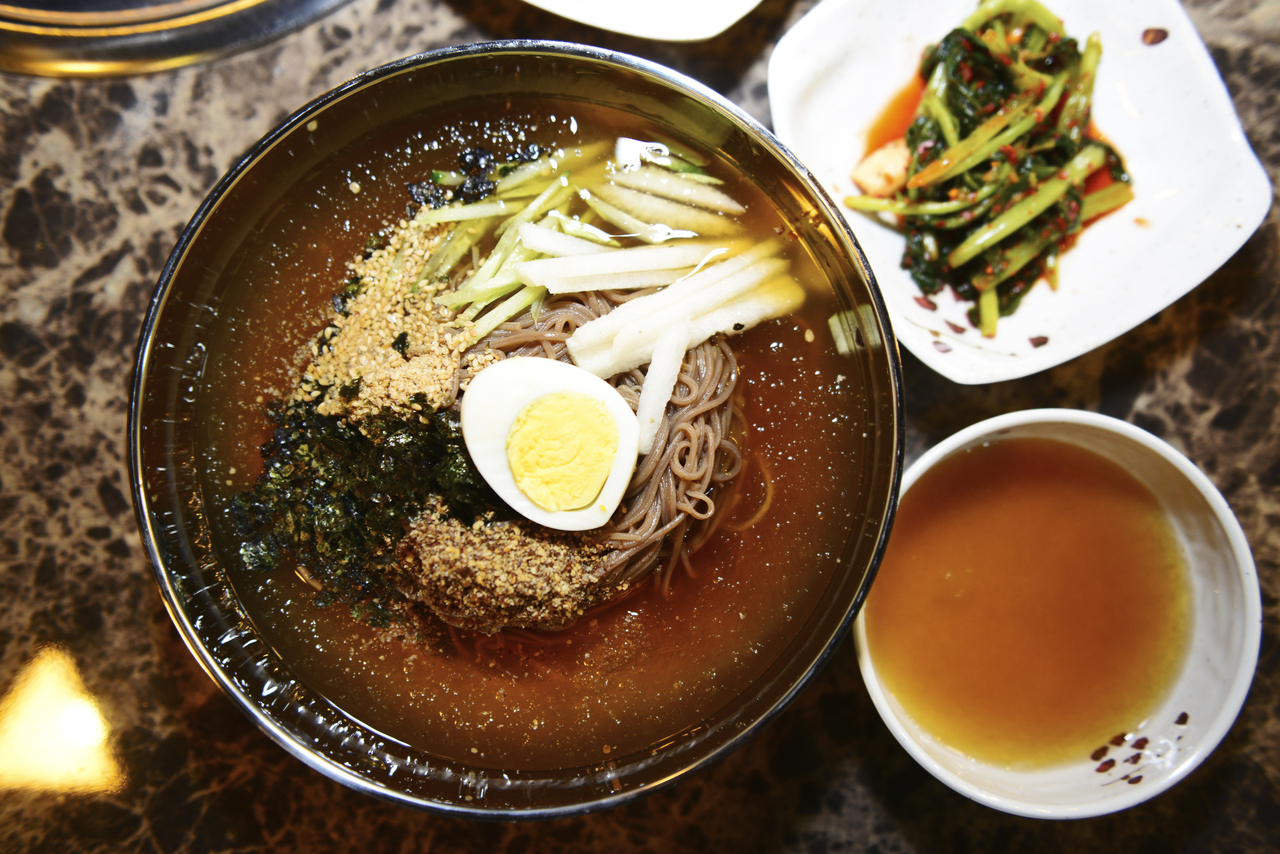
There will be food stalls at the festival, but the reliable, verifiable meal here is the area’s own specialty rather than any particular temporary vendor. Bongpyeong is buckwheat country, and the crop that fills the festival’s white fields is also its food. The public Jiyeok-N-Munhwa culture portal, run by the Korean Federation of Culture Centers, documents Bongpyeong’s buckwheat and its buckwheat noodles as a regional tradition.
In practice that means makguksu, the chilled buckwheat noodles the local market is known for, along with buckwheat jeonbyeong crepes and memil-muk jelly. Bongpyeong’s traditional market has a cluster of long-running buckwheat-noodle houses, and a market day during the festival is the natural place to try them. This is a regional specialty recommendation — a real reason the area is worth eating in — not a promise that a specific restaurant will be open or that a festival stall will sell it.
Honest assessment
Come for the combination of landscape and literature, not for a large roster of headline entertainment. Someone who knows the story, or at least reads a synopsis beforehand, will get more from the village, the museum and the stage adaptation. If your only aim is a flower-field photograph, the festival programme may be secondary and the extra travel from the station can feel disproportionate — though the free museum and Moonlight Hill give even a photo-first visit a fixed point to build around.
The main uncertainty this year is the flowers, not the dates or the price. Both are now settled: the ten-day run is confirmed, and admission is free with a few paid extras. But early-September reporting noted the buckwheat bloom ran late in 2026 because of the summer heat and heavy rain, so the fields may not be at their peak on any given day. Flower condition is not a scheduled programme item; use recent official photographs or notices — not the calendar alone — if seeing the fields in full bloom is the reason for the trip.
There is no verified 2026 crowd forecast worth pretending to know, so this article does not label particular days or hours as quiet. The practical loose ends are the shuttle timetable and the last return train: the free Pyeongchang Station shuttle is confirmed for 2026 but not scheduled in print, and the festival’s daytime 10:00-17:00 hours make a Seoul day trip realistic as long as you do not build it around a tight same-day rail connection with an unfixed final transfer. Recheck the shuttle and the return train shortly before departure, particularly if you plan around one performance.