
Autumn · Seoul · Field listing
Bongsan Mask Dance 2026
The essentials first: whether it is open, what it costs, how hard it is to reach and what to expect if you do not speak Korean.
When
Oct 2 — 4ConfirmedConfirmed dates
Where
Uijeongbu Historic Site Plaza, Gwanghwamun, Jongno-gu, SeoulSeoul
Admission
FREENo ticket price is published. The Korea Tourism Organization's record leaves both the admission-fee and the booking-place fields empty, and the venue itself is an unfenced public plaza that Seoul Metropolitan Government keeps open 24 hours at no charge, so there is no gate to pay at. The hands-on parts — mask-making and trying on costumes — may ask for materials on site; no price list for those has been published.
From Seoul
In central Seoul — about a 5-minute walk from Gwanghwamun StationThere is no intercity leg. Take Seoul Subway Line 5 to Gwanghwamun Station and leave by Exit 2; Seoul Metropolitan Government puts the plaza 385 m from that exit, on the east side of Sejong-daero between Gwanghwamun gate and the National Museum of Korean Contemporary History. Line 3 to Gyeongbokgung Station, Exit 6, is the alternative at roughly 500 m.
Day trip
DOABLE IN A DAYThe venue is in central Seoul at Gwanghwamun and the Korea Tourism Organization puts a performance at about 60 minutes, so this is something you fit into a day you are already spending in the city. It is not a reason to book a night anywhere.
Organiser
National Intangible Heritage Bongsan Talchum Preservation Society, 02-566-6356
Is this one for you?
Who it suits. This suits travellers who want to see one specific Korean art form properly rather than sample a general culture fair — Bongsan Talchum is a single tradition, performed by the body that holds its national heritage designation, and the programme is built to let you make a mask, walk in the parade and try the steps afterwards rather than only watch. It is a weak fit if you want a full day out: a performance runs about an hour, and no daily timetable has been published, so you cannot plan around it in advance. It is also a poor fit if dialogue matters to you — talchum's satire is spoken in Korean, and no interpretation or subtitling has been confirmed for this event.
When to go. Friday October 2 is the quietest of the three days: October 3 is National Foundation Day, a public holiday, and October 4 is the Sunday after it, which puts holiday crowds into the Gwanghwamun area on both of the later days. Because no start times have been published, phone the preservation society on 02-566-6356 before you fix an arrival time — the easiest thing to miss here is the whole performance, not a detail inside it. If you go anyway without confirming, go in the afternoon and give yourself slack: the pre-festival mask-making and the street parade both happen before the main performance, and they are the parts you can take part in.
LOCAL WEATHER
Weather near the festival
The festival date is outside the current forecast window. Check again closer to your trip.
Korea Meteorological Administration forecast
Need something we do not list — a stall menu, a parking gate, a last bus? The Korea Travel Helpline answers in English around the clock: dial 1330 inside Korea, or +82-2-1330 from abroad.
Bongsan Mask Dance is a three-day event built around a single tradition rather than a broad cultural programme. The Korea Tourism Organization confirms October 2-4, 2026 at the Uijeongbu Historic Site Plaza beside Gwanghwamun in central Seoul, run by the preservation society that holds the national heritage designation for Bongsan Talchum. The name of the event in Korean is an invitation — roughly, everyone who does Bongsan Talchum, gather here.
That focus is the thing to understand before you decide whether to go. This is not a festival that happens to include mask dance among other attractions. It is the mask dance, presented by its own custodians, with the audience pulled into the making, the parade and the steps.
What Bongsan Talchum actually is
Talchum is Korean mask dance drama, and it is not only dance. The Korea Heritage Service describes a form that mixes dance, music and theatre closely enough that Western performance categories do not fit it. It was inscribed on UNESCO’s Representative List of the Intangible Cultural Heritage of Humanity in November 2022, as a tradition whose satire of social hierarchy the committee judged still relevant.
Bongsan Talchum is the version from Bongsan-gun in Hwanghae-do, now in North Korea. The Korea Heritage Service dates its beginnings to around 200 years ago and records that it was traditionally performed at night on Dano, the fifth day of the fifth lunar month, and at the summer solstice — a once-a-year village event at the market, not a repertory show. It was designated a National Intangible Cultural Heritage on 17 June 1967.
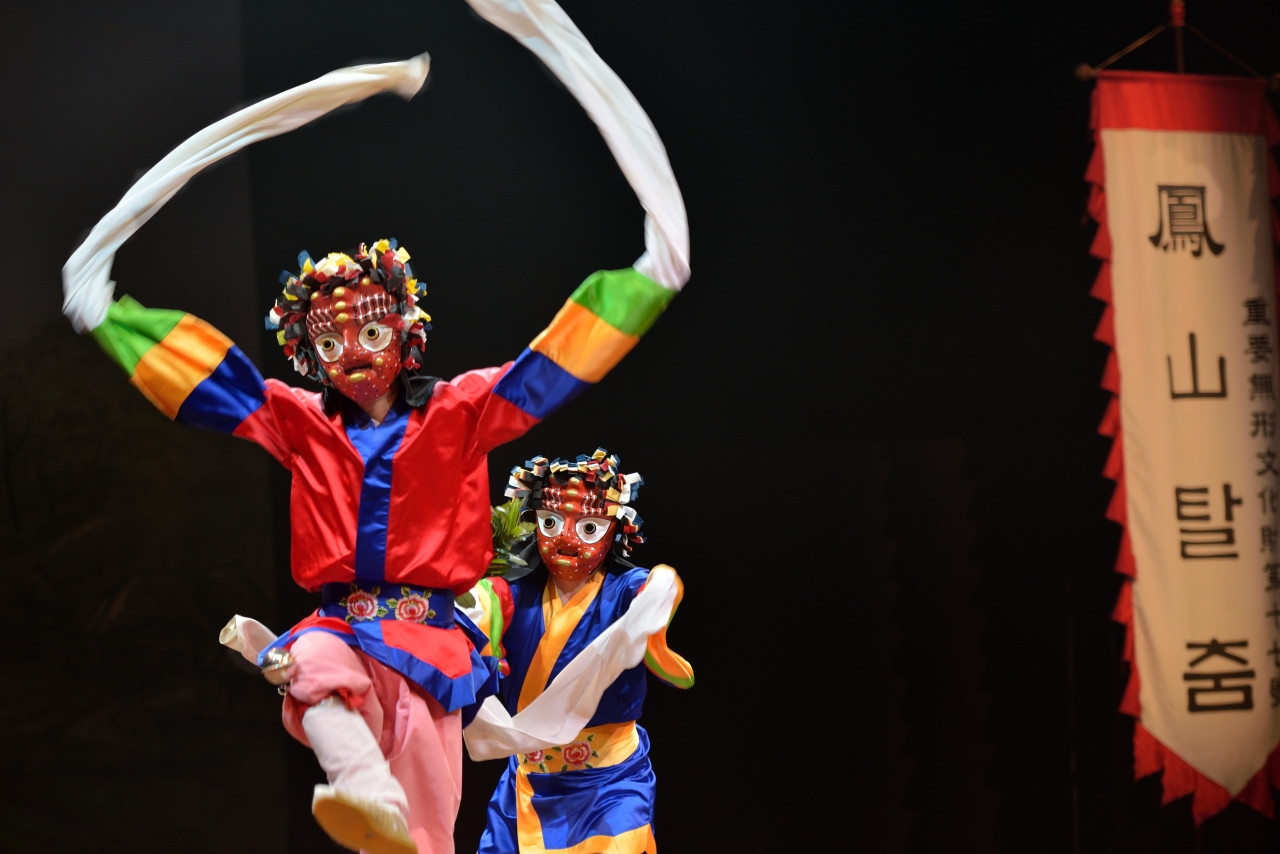
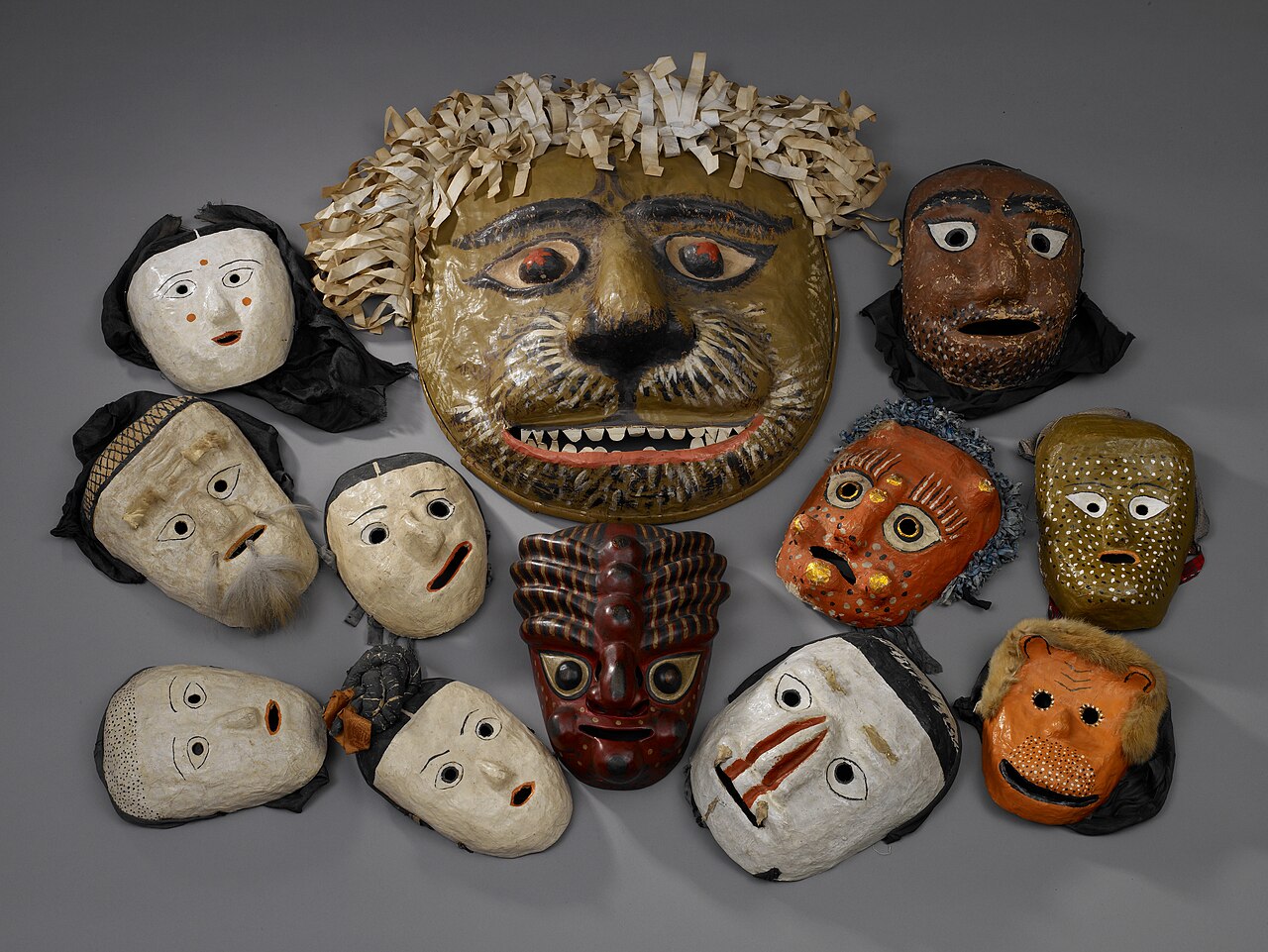
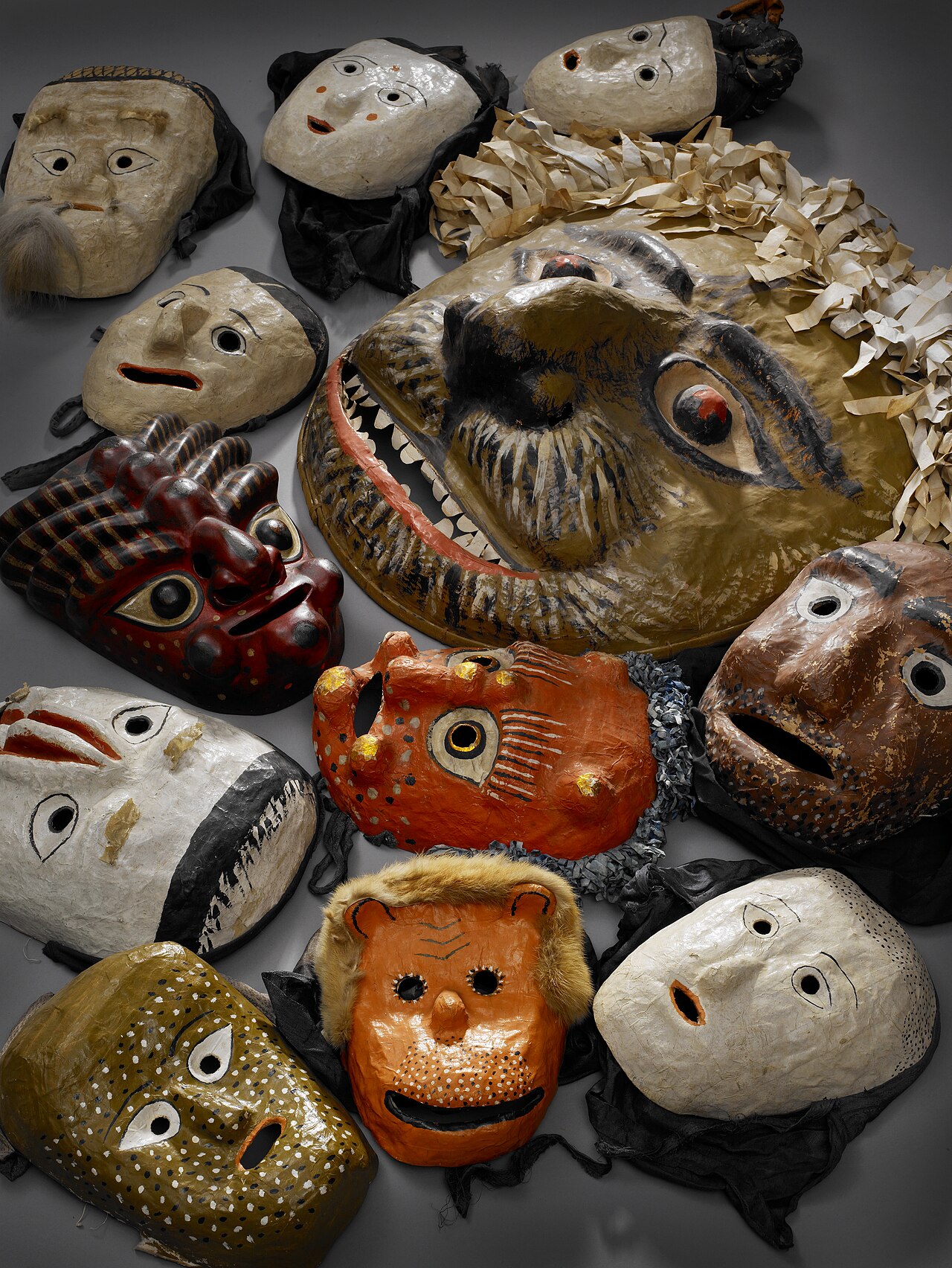
The structure is larger than most visitors expect. KTO’s record puts it at seven acts with 36 characters and 27 masks, including masks used for more than one role. The heritage record names the groupings you will see: four novice monks, eight monks in black robes, a female entertainer, an old monk, a nobleman and an old wife. The accompaniment is a small wind-and-string ensemble — flute, bamboo flute, two-stringed fiddle, drum and hourglass drum. What distinguishes Bongsan from other regional mask dances, by the heritage record’s own account, is the vigour of the movement, particularly the whipping of the long white sleeves.
The content is blunt. The official description lists satire aimed at nobles who harass commoners, at monks who have abandoned their vows, and at the custom of a man taking several wives. This was popular theatre with a target, performed by people who could not say those things any other way.
What you actually do here
KTO’s programme description sets out a sequence rather than a single show, and the sequence is the point.
It opens with pre-festival activities: making a mask, and trying on traditional costume. These are hands-on and they come first, which is a deliberate order — you handle the object before you watch it used.
Then a street parade moves the audience to the performance venue. You are not finding your seat; you are walking there with everyone else. The main event is the Bongsan Talchum performance itself, which KTO puts at about 60 minutes, subject to which performance you attend.
Afterwards there is what the listing calls an after-party, where participants learn the dance and take commemorative photographs with the performers. For a form whose characteristic move is a full-body sleeve throw, being shown it by the people who just did it on stage is a better souvenir than most festivals manage.
The listing marks the event as suitable for all ages, with no age limit.
Times, prices and what has not been published
This is where honesty costs something. The KTO record for this event has four fields left empty, and each of them is a question a traveller would want answered: the daily operating hours, the admission fee, the booking place, and the event homepage.
So: no start time has been published for any of the three days. Not by KTO, not anywhere else we could find. The preservation society’s old website ran on Naver’s modoo! platform, which was shut down on 26 June 2025, and the address now returns a service-termination notice. There is no official festival page to check.
If you search, you will find a 16:00 start for a Bongsan Talchum performance at this exact plaza. That is a different, one-day event from 2024, run with Seoul Metropolitan Government’s cultural heritage division, and it is listed on the Seoul Culture Portal with 2024 dates. It tells you nothing about 2026 beyond the fact that the society has performed here before. Do not build an itinerary on it.
The practical move is to call the organiser: the National Intangible Heritage Bongsan Talchum Preservation Society, 02-566-6356, the contact KTO lists. If you are not comfortable phoning in Korean, the Korea Travel Hotline on 1330 offers interpretation and can make that kind of enquiry for you.
On price, no figure has been published either — but the absence matters less here. The venue is an open plaza with no gate, and the booking-place field is empty, meaning no ticketing arrangement is recorded. The realistic risk is not an unexpected entry fee but a small materials charge at the mask-making station. Carry some cash.
The venue: a dug-up government office, not a theatre
The Uijeongbu Historic Site Plaza is worth a paragraph on its own, because the setting does some of the work here.
Uijeongbu was the State Council, the highest administrative body of the Joseon dynasty, and it stood directly in front of Gwanghwamun gate — the seat of government looking at the seat of the throne. The site was excavated and then opened to the public as a historic plaza, with an official opening on 12 September 2024. Seoul Metropolitan Government gives it an area of 11,300 m².
What you see is foundations and outlines rather than rebuilt halls: the traces of five structures, including the hall where the three State Councillors worked, the offices of the next ranks down and a pavilion, plus a restored well and a pond area, laid out with walking paths. Information plaques carry QR codes with audio explanations. Public toilets are on site. The plaza is open 24 hours and free.
This matters for a mask dance in a way it would not for a concert. Talchum was outdoor, courtyard, market-day theatre — the heritage record is explicit that it is not tied to a stage. Performing it on open ground in front of the palace gate is closer to its original condition than a proscenium would be, and it is a genuinely handsome place to stand at the start of October.
It also means an outdoor visit with the limitations of one: little shade, limited seating, and no wet-weather cover. No rain policy has been published for this event.
Getting there without a car
There is no intercity leg. The plaza is in central Seoul and the subway is the only sensible way in — Sejong-daero is a major arterial road and parking around Gwanghwamun is neither cheap nor quick.
Line 5, Gwanghwamun Station, Exit 2 is the closest approach. Seoul Metropolitan Government puts the plaza 385 m from that exit; allow five minutes on foot, north along the east side of Sejong-daero. Gwanghwamun Station also connects under the road to Gwanghwamun Square through the Haechi Madang underground concourse, which is useful in rain or heavy crowds.
Line 3, Gyeongbokgung Station, Exit 6 is the alternative at about 500 m. Take this one if you are pairing the festival with Gyeongbokgung Palace, since it puts you at the palace end first.
Be aware of the date. October 3 is National Foundation Day, a public holiday, and in 2026 it falls on a Saturday, with Sunday October 4 immediately after. Central Seoul carries holiday-weekend crowds on both, and Gwanghwamun is a part of the city where large public gatherings and road closures are not unusual. Check a live map application the morning you travel rather than assuming the normal street layout.
What to do around it in the same afternoon
An hour-long performance does not fill a day, and you do not need it to — this is one of the densest corners of Seoul for things worth seeing.
Gyeongbokgung Palace is directly north through Gwanghwamun gate. The National Museum of Korean Contemporary History is the building next to the plaza; its published hours are 10:00-18:00, extended to 21:00 on Wednesdays and Saturdays, and admission is free. That makes it a reasonable fallback if the weather turns, though public-holiday hours can differ from the standard listing and are worth checking on the museum’s own site before you rely on it. Cheonggyecheon stream starts a few minutes east, and Insadong is a short walk northeast.
Food on site and nearby
Nothing has been published about food stalls at this event, so this guide will not promise any. Treat whatever is operating on the plaza as a convenience rather than a plan, and eat before or after.
For something documented, seolleongtang is the Seoul dish with the clearest official standing. Seoul Metropolitan Government’s Future Heritage programme registered it as the first food ever added to that list, describing it as the dish that best represents native Seoul cooking, one that spread across the whole city from the late Joseon period onward. It is a beef-and-bone broth simmered long enough to go pale and milky, served with rice, sliced beef and spring onion, and seasoned at the table rather than in the kitchen. One of the seolleongtang houses on the Future Heritage register has been trading in Jongno-gu — the same district as the plaza — since 1904. This is a regional specialty note, not a claim about what will be sold at the festival.
Honest assessment
The strength of this event is that it is narrow. You will not spend the afternoon working out which of nine stages to stand at. One tradition, presented by its designated custodians, in a setting that suits how the form was actually performed, with a sequence deliberately arranged so that you make something and walk somewhere before you watch anything. For a visitor who wants to come away understanding one Korean art form rather than having photographed six, that is a better deal than a large general festival.
The weakness is equally plain: you cannot plan it. No start times, no timetable, no official website, and a performance of about an hour inside a three-day window. That combination means a real chance of arriving at an empty plaza. Anyone travelling specifically for this should treat the phone call to the preservation society as part of the trip, not an optional extra. Everyone else should treat it as a bonus on a day already spent around Gwanghwamun — which, given that Gyeongbokgung and a free museum are both within a few minutes’ walk, is an easy day to have.
The other honest caveat is language. Talchum reads visually to a point, and the lion, the costumes and the sleeve work need no translation. But the satire is dialogue, and it is dialogue in Korean of a fairly old register. No interpretation has been confirmed for this event. You will enjoy the movement; you will miss the jokes.
Nothing here costs you money, which changes the calculation. A free, hour-long piece of UNESCO-listed heritage performed outdoors in front of the main palace gate is worth building a couple of hours of flexibility around — and if the timing does not work out, you are standing in the best-connected square in Seoul with a palace on one side and a museum on the other.
Local specialties to try
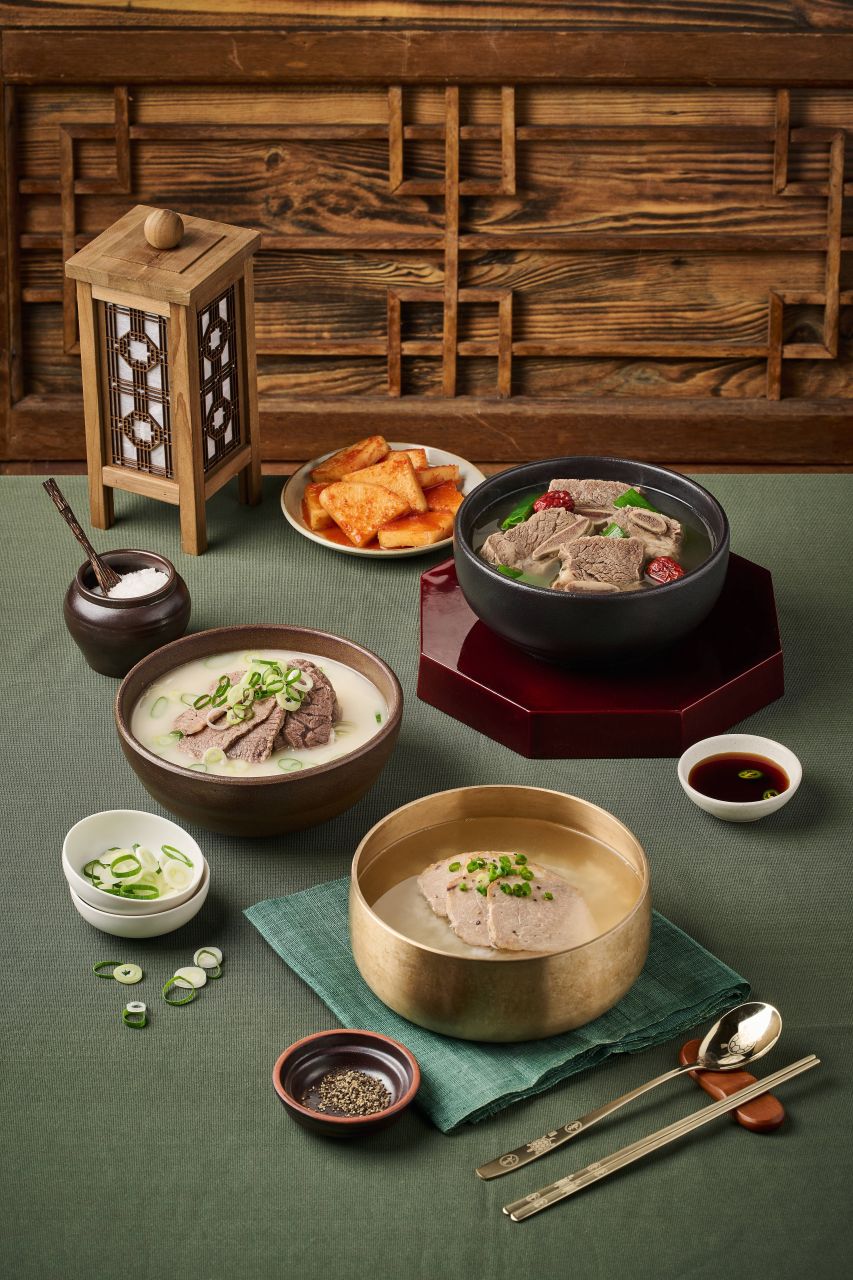
Seolleongtang (설렁탕)
A long-simmered beef-and-bone soup with a pale, milky broth, served with rice, sliced beef and chopped spring onion. Seoul Metropolitan Government's Future Heritage programme registered it as the first food entry on its list and describes it as the dish that best represents native Seoul cooking, spread across the city from the late Joseon period. One of the registered seolleongtang houses has been trading in Jongno-gu, the same district as this festival, since 1904.
Questions worth asking
Is the Bongsan Mask Dance festival free?
No admission charge has been published, and there is nothing to pay at. The Korea Tourism Organization's record leaves the admission-fee and booking-place fields blank, and the venue is an open public plaza that Seoul keeps accessible 24 hours a day at no cost. Budget a little cash anyway in case the mask-making station asks for materials.
What time does it start each day?
This has not been published. The KTO record gives the running time of a performance as about 60 minutes but leaves the daily operating-hours field empty, and no official festival website exists to check. Call the preservation society on 02-566-6356 before you go. A 16:00 start that appears online belongs to a separate one-day performance at the same plaza in 2024 and should not be used for 2026.
How do I get to the venue by subway?
Seoul Subway Line 5 to Gwanghwamun Station, Exit 2, then about 385 m north along the east side of Sejong-daero. The plaza sits between Gwanghwamun gate and the National Museum of Korean Contemporary History. Line 3 to Gyeongbokgung Station, Exit 6, is roughly 500 m and works better if you are combining this with the palace.
Will I understand it without Korean?
Partly. The dancing, the masks and the lion sequence carry themselves, and the KTO listing marks the event as suitable for all ages. The satire — corrupt monks, a nobleman being mocked by his own servant, a wronged wife — is carried in spoken Korean, and no interpretation or subtitling has been confirmed for this event, so that layer will pass you by.
Can I take part rather than just watch?
Yes, that is how the programme is built. The KTO description lists mask-making and costume try-on before the performance, a street parade in which the audience walks to the venue together, and an after-party where participants learn the dance steps and take photographs with the performers.
Is October 3 a good day to go?
It is the busiest of the three. October 3 is National Foundation Day, a public holiday, and it falls on a Saturday in 2026, so central Seoul and the Gwanghwamun area will be fuller than usual. Friday October 2 is the quieter choice if your schedule allows it.
What else is within walking distance?
Gyeongbokgung Palace is immediately north through Gwanghwamun gate, and the National Museum of Korean Contemporary History stands beside the plaza; its published hours are 10:00-18:00, extended to 21:00 on Wednesday and Saturday, with free admission. Cheonggyecheon stream begins a few minutes east. Check the museum's own site before relying on it, as public-holiday hours can differ.
Before you goFestival Etiquette in Korea: What Visitors Get WrongBooking KTX Trains and Intercity Buses as a Foreign VisitorGetting Out of Incheon Airport and On to a FestivalKorean Festivals With Children: Toilets, Strollers and TimingStaying Online in Korea: SIM, eSIM and the Apps That MatterEating at a Korean Festival Without Speaking KoreanRain, Typhoons and Cancelled Festivals: How to Plan Around ThemHow to Pay for Things in KoreaT-money and Transit Cards in KoreaWhat to Wear to a Korean Festival, Season by Season
LAST UPDATED · Sep 30, 2026