The Gwangju Kimchi Festival is a three-day food festival held in front of Gwangju City Hall. KTO describes it as having a 33-year history, and the 2026 edition is the 33rd. The festival’s official site is run by the organising committee under the city government. Listings now give the city’s official name as Jeonnam-Gwangju Special Metropolitan City; this guide calls it Gwangju for short.
For 2026, the dates are Friday October 23 to Sunday October 25. Entry is free. KTO’s Korean record, last updated on September 28, lists the opening hours as 10:00-20:00 and the place as the Gwangju government complex plaza at 111 Naebang-ro, Seo-gu. KTO’s English record still shows the 2025 edition, including a different park venue, so the Korean record is used here for 2026 details. Two independent October reports also give October 23-25.
What you actually do here
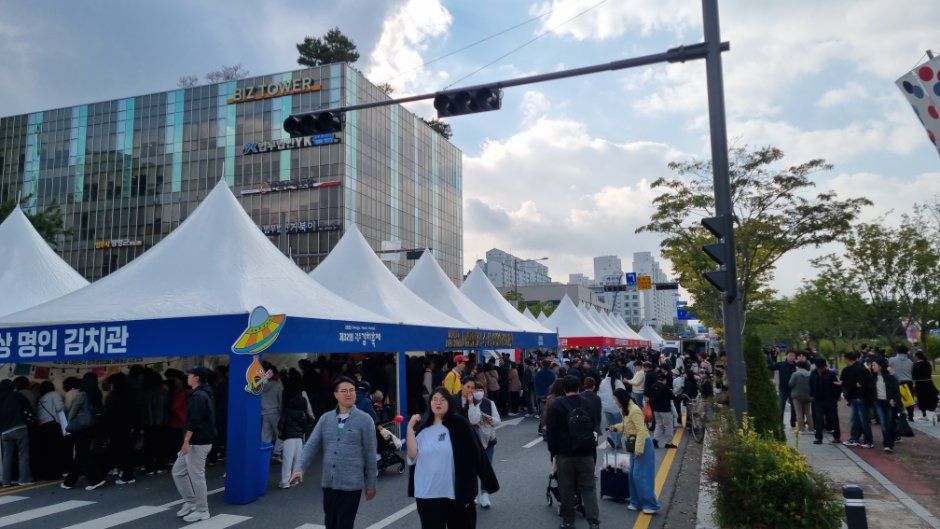
The core of the festival is eating and buying kimchi. KTO’s programme summary names four main elements: the Thousand People’s Table, a kimchi party, a kimchi master class and a kimchi market. The Thousand People’s Table is a food area with cultural performances. The market is where you can compare regional kimchi and buy it by weight.
Around that core, KTO lists exhibitions, sales, experiences and cultural performances, plus a participation zone with a kimchi experience hall, a play area and a salt experience hall. The urban farmer festival is listed as a separate item in the same programme. KTO’s overview also mentions the national kimchi competition, which has its own section on the official site.
You are not buying a ticketed show here. You walk the plaza, taste, watch and decide where to spend your money, which makes it easy to dip in for an hour or spend a day.
Programme and timetable
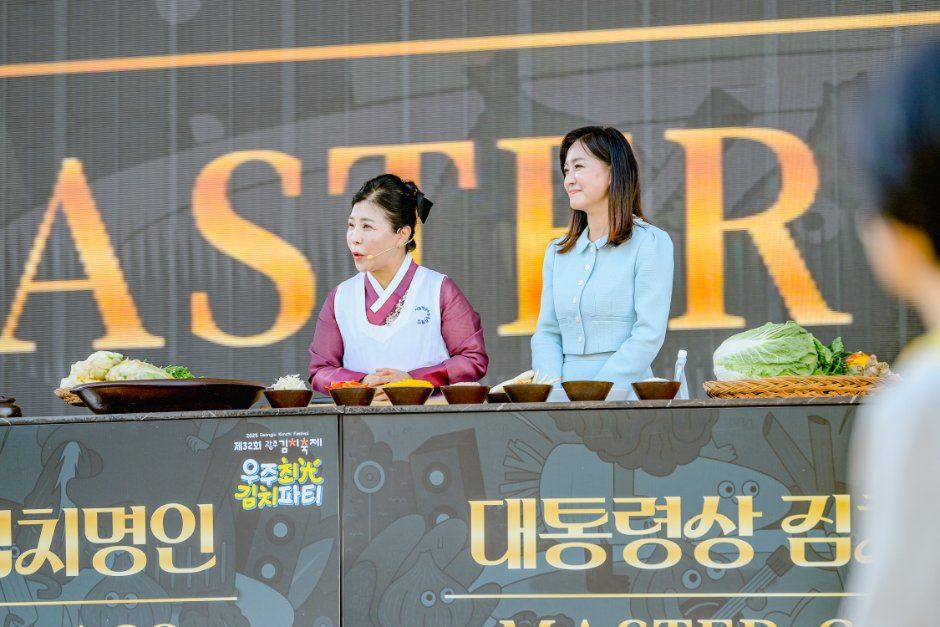
There is no published day-by-day timetable for 2026. The official site’s recent notices show how much was still being finalised in the weeks before the festival. On September 21 it opened applications for the Kimchi Master Class, in which kimchi masters who have won the presidential prize share their methods with the public. On September 30 it opened a second round of recruitment for Thousand People’s Table vendors. On October 8 it announced an incentive programme for group-tour operators.
For a visitor, that means the stall list is not final. KTO says plainly that the food details in its record belong to the 2025 festival and are being updated. This guide does not name any 2026 stall, menu or price. The official Instagram account is 062kimchi_festa, and there is an official YouTube channel; check them for line-up, timing or access changes before you go. Social posts were not opened for this guide, and no photos were taken from them.
Local press adds a little context without adding a timetable. On October 7 News1 listed the festival among the month’s food events, describing the kimchi market, hands-on experiences and the Thousand People’s Table. On October 4 MTN reported a joint autumn-festival promotion by four southern regional governments that used the festival’s poster. Neither report gives a session-by-session schedule.
Tickets, fees and booking
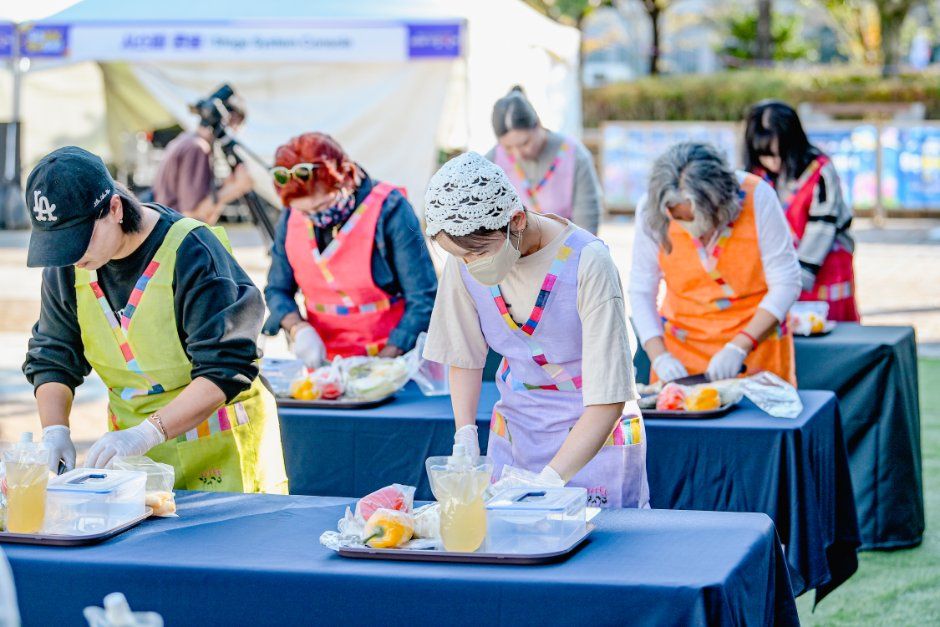
There is no ticket for general entry. KTO’s Korean record gives the fee as free and says the kimchi experience school is paid. No 2026 price, booking method or capacity limit was published when this guide was written. If a hands-on session matters to you, call the organising committee at 062-613-3955. The festival office is listed as open 10:00-18:00, which is the office schedule and not the festival hours.
The Master Class had a public application notice, so do not assume you can simply turn up. Whether walk-ins are accepted is not stated.
Food on site and nearby
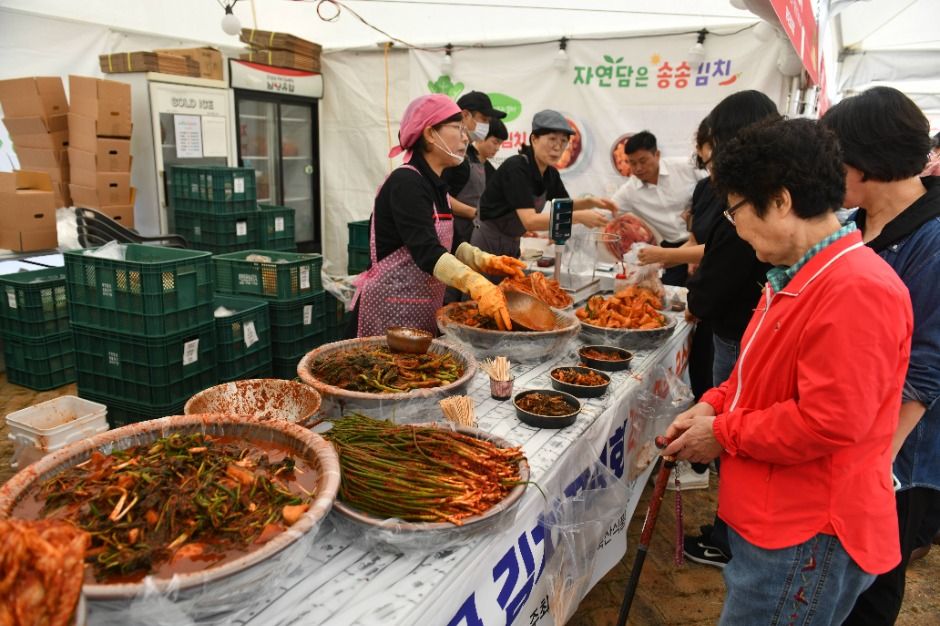
The Thousand People’s Table is the main food area, but its 2026 vendor line-up was still being recruited at the end of September. Treat the food at the festival as a bonus until the final list appears.
If you want to buy kimchi to take home, check how it will be packed and whether your airline or customs rules allow it. Neither vendor shipping nor packing options were verified. Do not use 2025 price signs from older photos as a guide.
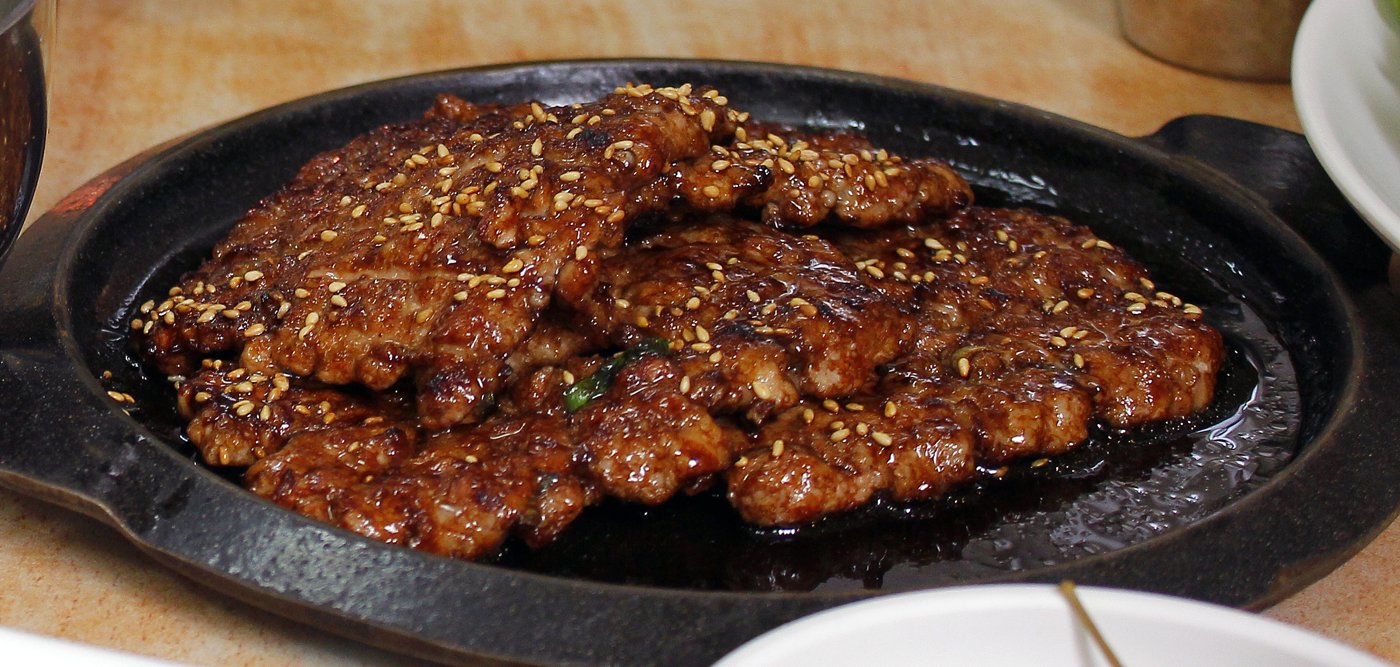
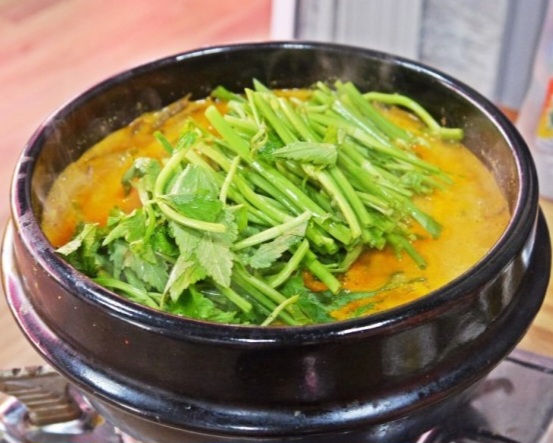
Away from the booths, Gwangju is known for its own dishes. The city’s official list of five representative foods includes Songjeong-style tteokgalbi, duck stew, boribap, a seasonal set meal and Gwangju kimchi. The tteokgalbi restaurant street is in the Songjeong district, beside the station where your KTX arrives. That makes it a convenient meal before or after a day trip.
Getting there without a car
Take KTX from Yongsan Station to Gwangju Songjeong Station. The fastest services take about 1 hour 50 minutes, and one timetable listing shows around 2 hours 6 minutes for the few departures from Seoul Station. Specific trains vary with their stops, so check the exact one on KORAIL for your date.
Songjeong Station is a rail hub, not a stop at the plaza, so you need a second leg. For the last leg, a taxi is the simplest option. The festival’s directions page names Sangmu Station (exit 4) and Unchon Station (exit 3) on the Gwangju Metro, but it describes a 25-30 minute walk from each, which is too long if you are carrying kimchi. City buses also serve the building, but routes can be altered during a festival, so use a live Korean map app and set the destination to 111 Naebang-ro, Seo-gu, not just “Gwangju”.
Parking, shuttles and traffic control
The sources checked do not include a 2026 parking map, road-closure notice or shuttle schedule. The official site’s latest notices cover the master class, vendors and group tours but not access arrangements. If you drive, check the official notice board shortly before travelling and avoid using a parking list from a previous year.
Day trip or overnight
A day trip from Seoul is possible on paper. The rail journey is about two hours each way, and the festival is listed as open until 20:00. This guide does not state a last return train because the correct answer depends on the day and any timetable changes. Search the exact return on KORAIL before you buy the outbound ticket.
Staying overnight in Gwangju is more relaxed if you want a full day at the festival and a meal in the city. Hotel availability and prices were not checked, so no specific hotel is recommended. If you pick a hotel, choose by walking or taxi access to the City Hall area rather than the rail station.
Honest assessment
The festival’s strength is focus. It does one subject, kimchi, in the city that treats it as part of its civic identity, and the market, demonstrations and food area all point the same way. Entry is free, so you can judge it without committing to a ticket package.
Its weak points are the gaps in advance information. There was no named line-up, no confirmed vendor list, no public price for the paid experiences and no 2026 parking or shuttle plan when this guide was written. Do not plan around the 2025 details still visible on KTO’s English page, including its different venue. Language support at the stalls and in the experience programmes was not checked, so do not count on English-language help until you see it.
Go for the food and the market rather than for entertainment, bring a way to carry what you buy, and check the official channels the day before you travel. That is the sensible way to use a festival whose own programme was still being filled in two weeks out.