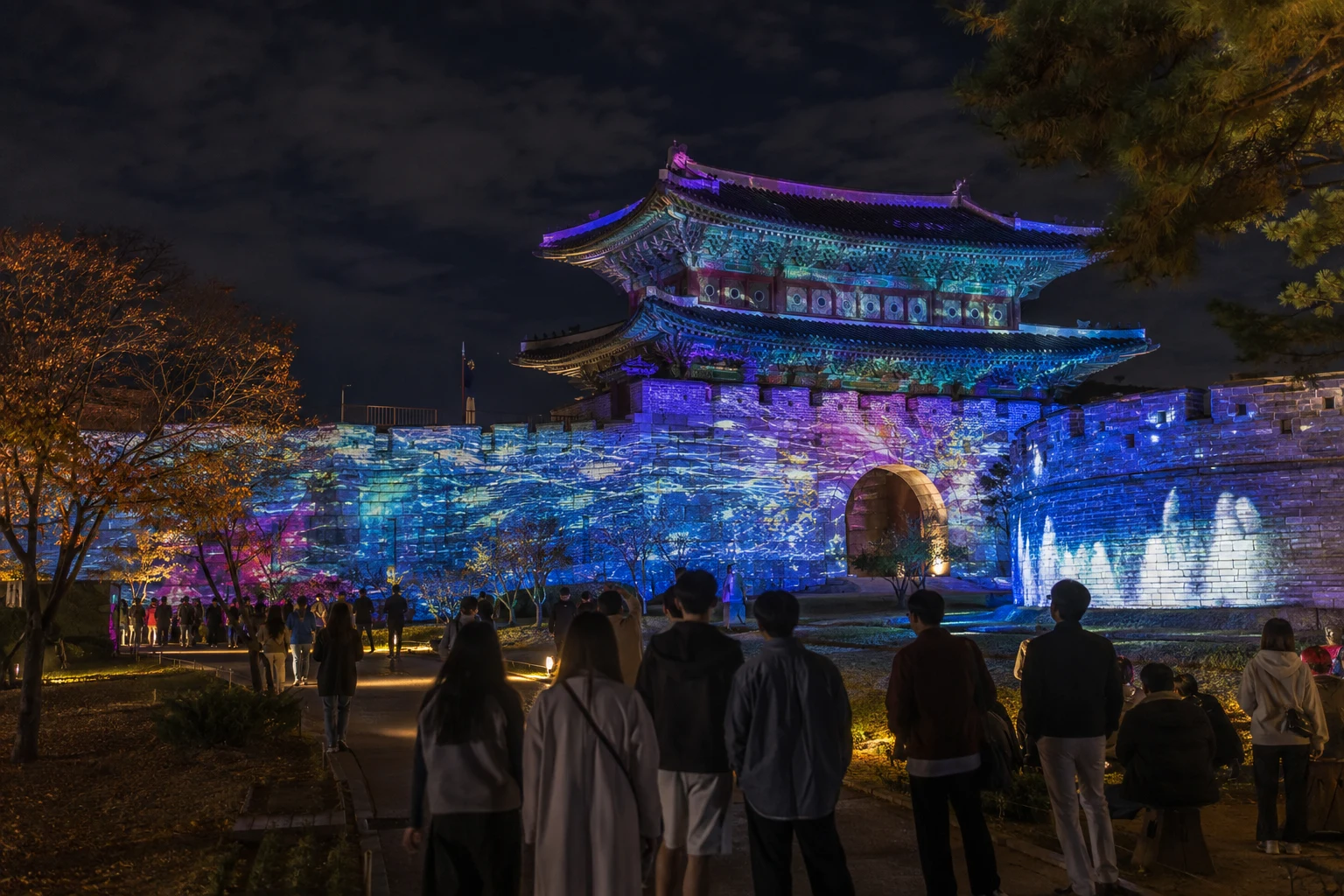
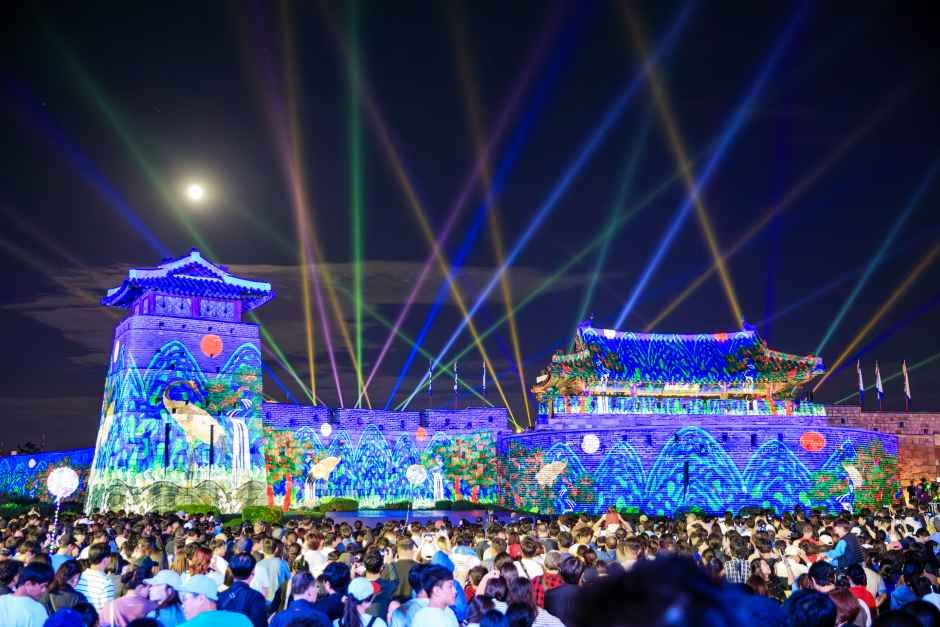
This is a night walk through the northwestern side of Suwon Hwaseong rather than a single seated show. Light, video, live movement and interactive pieces run between Hwaseomun, Jangan Park and Janganmun, using the fortress walls and park as their setting. The 2026 programme is titled “Saebit Dongrak: Suwon Hwaseong Blossoming in Light.” It opens a new season after the festival’s 2021–2025 series and uses stories of people connected with the fortress, from its construction to the present, as the thread between the three zones.
What you actually do here
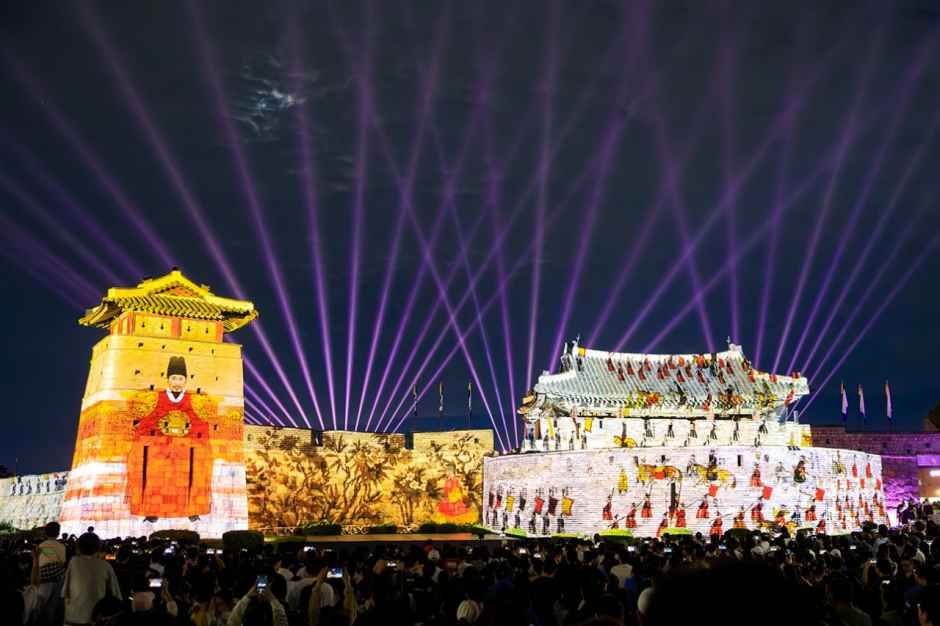
Start at Hwaseomun for the main projected work, shown at 19:30, 20:30 and 21:30. Each presentation is scheduled for no more than 35 minutes. The gate is not simply a screen: the programme combines mapped imagery with live Korean dance, sangmo ribbon-hat performance and ballet. Its narrative begins with King Jeongjo’s 1795 procession and moves through a welcoming feast, military training and the passage of time at the fortress. You do not need to know that story in advance to follow the visual structure, but it explains why the work returns to ideas of guests, welcome and connection.
In between screenings, walk east through Jangan Park. The park is the participation-heavy part of the festival: its Media Art Wall turns a wish spoken into a microphone into a digital sky lantern, while the Media Ground contains movement- and light-based activities. The Botanical Healing Zone uses flowers and butterflies as its visual motifs. The Play Square combines fringe performances, bubble lighting, a large Jenga area, a local market and a food zone. There is also a Culture City Suwon area with LED-block activities and a pop-up area built around licensed character IP.
Continue to Janganmun for the most enclosed work. Projections, lighting, sound and effects use the inside of the gate’s curved defensive wall to create a 360-degree presentation. It runs from 19:00 to 22:00, beginning on the hour and half-hour, and each cycle lasts about 15 minutes. The announced works use relationships, accumulated memory and Suwon imagery as their subjects; one section pairs the traditional royal-screen motif of the sun, moon and five peaks with Peanuts characters and a KT Wiz collaboration.
The route works in either direction, but Hwaseomun to Janganmun is easier to organize around the three fixed main-show times. If you arrive after a Hwaseomun screening has begun, use the gap for the park and Janganmun rather than waiting in one place for nearly an hour.
Programme and timetable
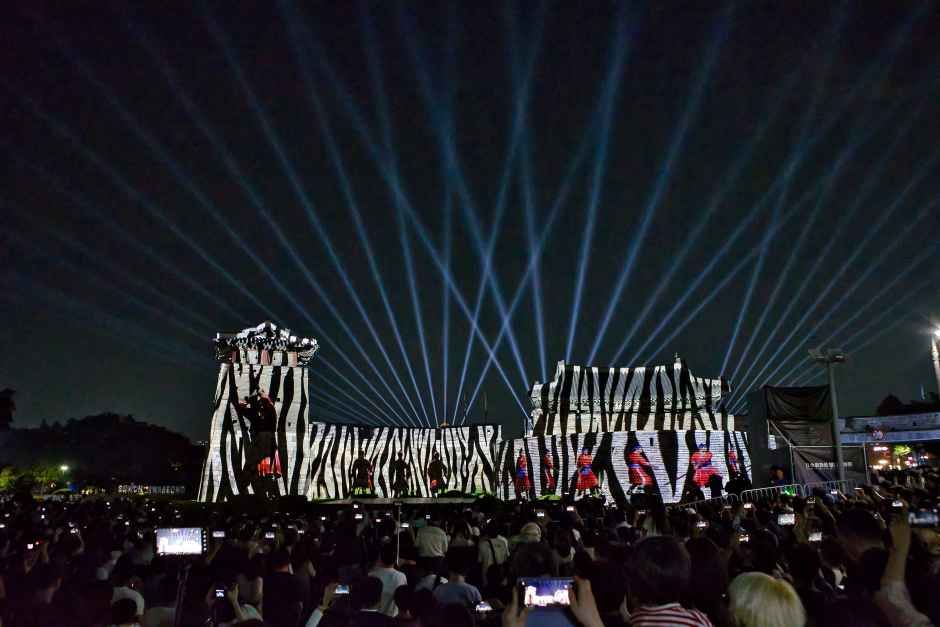
The festival grounds operate daily from 18:00 to 22:00 from September 19 through October 6. The three headline Hwaseomun presentations begin at 19:30, 20:30 and 21:30. Janganmun starts earlier, at 19:00, then repeats every 30 minutes through the evening. The park installations and activity areas sit between the two gates and follow the overall 18:00–22:00 operating window.
Opening night has one important exception to the normal rhythm: the official programme lists an opening ceremony at Hwaseomun from 19:00 to 20:00 on September 19. Treat that first evening as a ceremony night, not as the best date for a simple first-show-in, last-show-out visit.
The schedule makes a two-hour visit possible, but not comprehensive. A practical sequence is to reach Hwaseomun before 19:30, watch the main work, cross Jangan Park at a steady pace, and catch one of the half-hourly Janganmun cycles. Allowing three hours gives you time to queue for interactive pieces, look at the market and return to anything that was too busy on the first pass. The published programme does not give separate times for every fringe performance, so do not build a trip around a specific busker or bubble show unless the organizer posts a dated timetable closer to your visit.
Tickets, seats and guided tours
Walking the installation route is free. Payment applies to the reserved viewing section at Hwaseomun and to the separate guided tour, not to entry through a festival gate. The seated area contains 625 places across standard seating, a family zone and wheelchair spaces. Standard seating accounts for 451 seats; the family zone has 50 places and requires each booking party to include a child of elementary-school age or younger. Wheelchair users have a dedicated entry and exit route, and a companion needs a separate seat booking. The organizer warns that some standard seats may have a restricted view.
The calendar matters more than the simple label “weekend.” The organizer lists September 19, 20 and 23–27, plus October 2–5, as paid dates. Seats cost 5,000 won per person on those dates. It lists September 21, 22 and 28–30, plus October 1 and 6, as free-seat dates. Reservations opened on August 21 through Naver Booking; free does not mean that a seat is guaranteed without a reservation. Read the seat description at booking because the family section is unnumbered and its rules differ from the standard blocks.
“Bitdam Hwaseong” is a separate 90-minute guided route for groups of up to 20. The first tour runs 19:30–21:00 in Korean, from Hwaseomun through Jangan Park to Janganmun. The second begins at 19:35 at Janganmun, finishes at Hwaseomun at 21:00, and is announced in English, Chinese and Japanese. A third Korean tour runs 20:30–22:00 in the same Janganmun-to-Hwaseomun direction. It costs 10,000 won on the paid dates and 5,000 won on the listed weekdays. That is the only language provision confirmed here; it should not be read as a claim that signs, booths or staff across the whole festival provide those languages.
The organizer also announces a limited local-shopping route to a seat: wearing traditional, everyday or modernized hanbok can qualify one person for one seat, while a same-day paper receipt showing at least 20,000 won spent in Haenggung-dong or Yeonghwa-dong can qualify one person for one seat. These are first-come offers, clothing accessories alone do not count as hanbok, and operating details can change with conditions on site. A normal reservation is the safer plan if the main performance is your priority.
Getting there without a car
The simplest low-cost route from central Seoul is Line 1 from Seoul Station to Suwon Station. Allow roughly an hour for the rail leg, then another 15 minutes on a local bus, plus transfer and walking time. KTO’s Line 1 guide lists buses 11 and 13 from Suwon Station Exit 4 toward the old-town side of Hwaseong, with a journey of about 15 minutes; it puts the corresponding taxi ride at about 10 minutes. Suwon Cultural Foundation’s general fortress guide instead directs passengers from Exit 9 to the Maesan Market stop, where several local buses run to Paldalmun. That southern gate is useful for daytime sightseeing but is not the festival entrance, so use a live map for the final stop near Hwaseomun rather than assuming every “Hwaseong” bus leaves you beside the projection.
There are also direct express-bus approaches from Seoul: the foundation lists route 1007 from Jamsil to the Haenggung area, 7770 from Sadang with a local-bus transfer, and 3000 from Gangnam to Paldalmun. These routes can be useful if your accommodation is in southern or eastern Seoul. Their road journey is exposed to evening traffic, however, so the Line 1 route is easier to estimate from central Seoul.
Do not plan around parking at the venue. Suwon City’s 2026 event listing explicitly records no festival parking and marks road control in effect. No 2026 shuttle timetable or satellite-lot plan was published on the official pages checked for this update, so it would be misleading to promise either. The route is linear enough to arrive near Hwaseomun, walk through Jangan Park to Janganmun, and then use a bus or taxi back rather than retracing every step. Check the official notice page on your date for any more specific road closure or access announcement.
Food on site and nearby
Jangan Park’s Play Square officially includes a food zone and a Suwon Skewer Festa booth, alongside the Haenggung Store/Suwon Store flea market. That confirms food is part of the 2026 programme, but the organizer has not published a complete vendor list, menus, operating times or prices on the pages checked. Treat it as an option during the walk, not as a booked dinner.
The full Suwon Skewer Festa is a separate event, not the in-park booth. The city and local press confirm it runs October 3–5, 2026, at the Hwaseong Museum plaza with the path toward Haenggung and the Suwoncheon riverside road, opening at 2 pm on October 3. Around 90 groups take part with more than a hundred kinds of skewers, and galbi skewers were reported at 10,000–15,000 won. That site is a short walk south of the media-art route rather than inside it, so it only overlaps the media art on the final weekend; if you want the skewer festival itself, plan for October 3–5 and treat the media art as a separate evening stop.
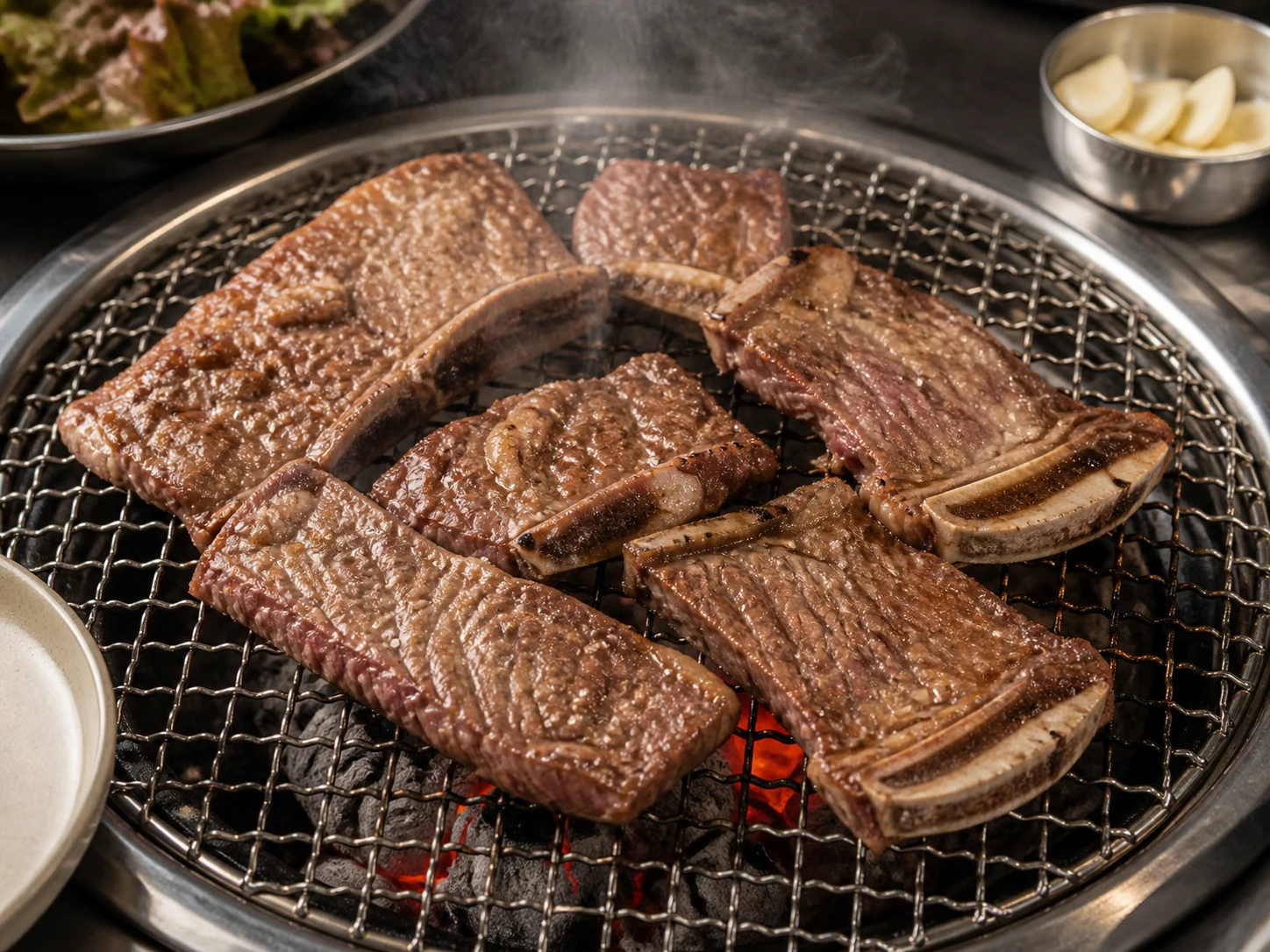
For a meal tied to the city rather than the event branding, Suwon galbi has firmer local credentials. Suwon Museum traces the dish to Hwachunok, which opened outside Paldalmun in the 1940s, and records that the city designated Suwon galbi as a local heritage food in 1985. The city’s cattle-market history is part of that development. The festival itself does not promise galbi stalls, so look around the old town separately if you want it; the local-specialty note on this page is context, not a claim about what will be sold in Jangan Park.
Honest assessment
The main constraint is crowd density, not the journey from Seoul. The foundation’s own operating record gives 511,830 visits for the 16-day 2025 edition. That number counts visits rather than unique people and does not predict a particular 2026 night, but it is enough to treat a clear weekend evening as a high-demand period. The 625-seat area is tiny beside that overall scale; reserving a seat solves the view for one show, not congestion in the park or at the gates.
For the least complicated visit, choose one of the listed weekdays, arrive before the first Hwaseomun show, and accept that you may need to skip an interactive queue. The half-hourly Janganmun cycle is the flexible part of the plan. The 35-minute Hwaseomun work is the fixed anchor. Families may prefer the park first at 18:00, before the main projections start pulling people toward the gates.
This is also a real fortress environment rather than a purpose-built indoor venue. Much of the appeal comes from seeing imagery fitted to the stone gates and wall, but that means standing and walking outdoors for most of the evening. The paid seat only covers the Hwaseomun presentation. Nothing in the verified information promises shelter across the route.
Suwon is close enough to approach as an evening trip from Seoul, but check the last train or bus for your exact date before relying on a return after the 21:30 show. The installations are outdoors, and the official archive contains a weather cancellation notice from an earlier edition. That is evidence that rain can change operations, not proof that every rainy evening will be cancelled. Check the official site and the festival’s current social feed on the day, especially before travelling for opening night, a weekend seat or the final screening.