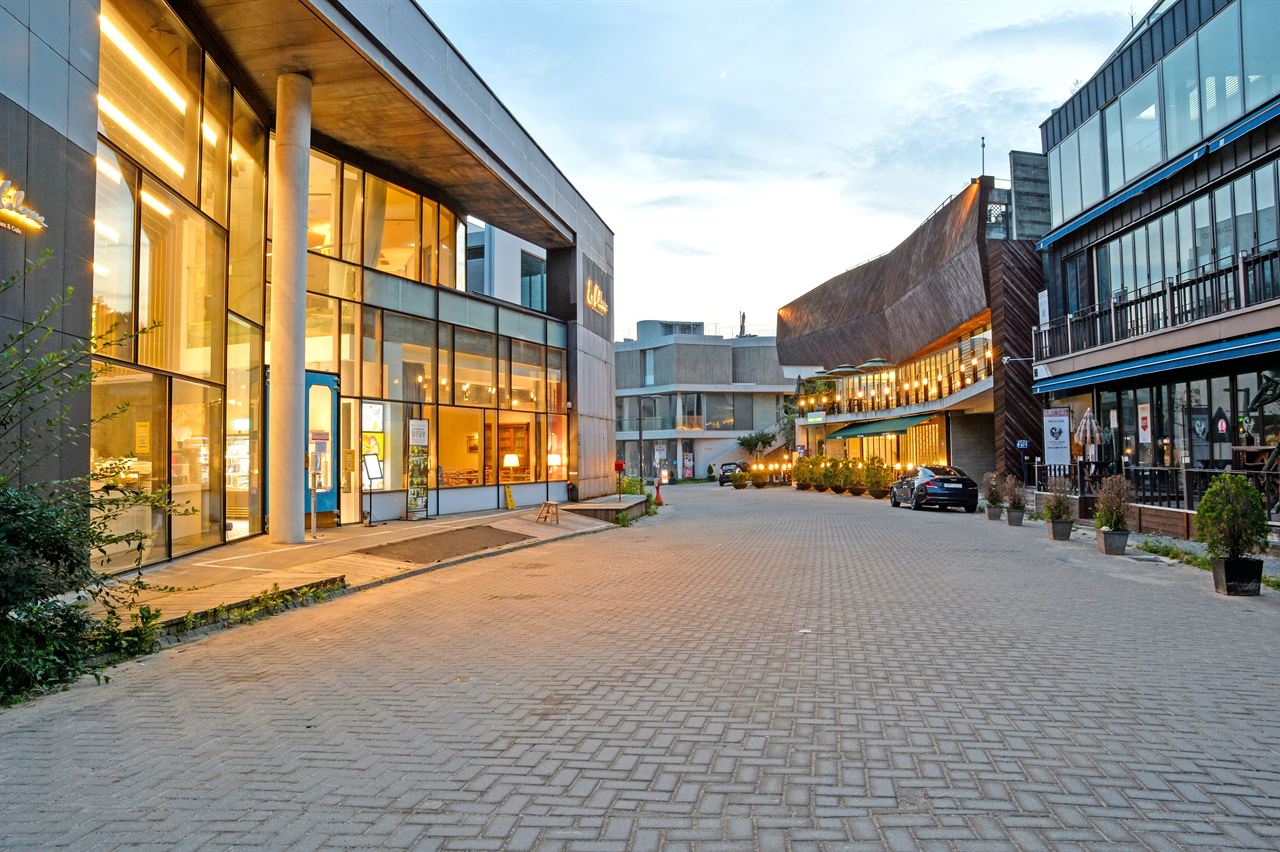
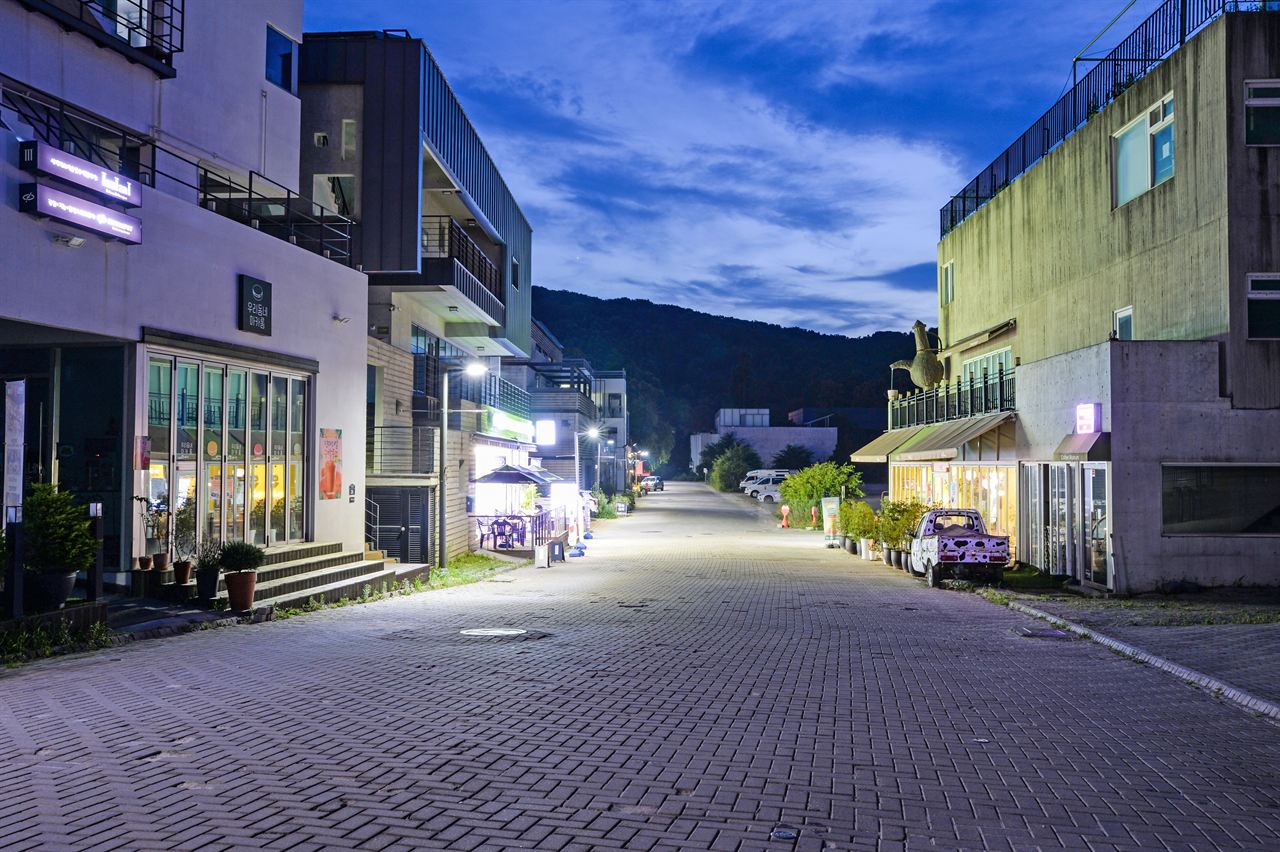
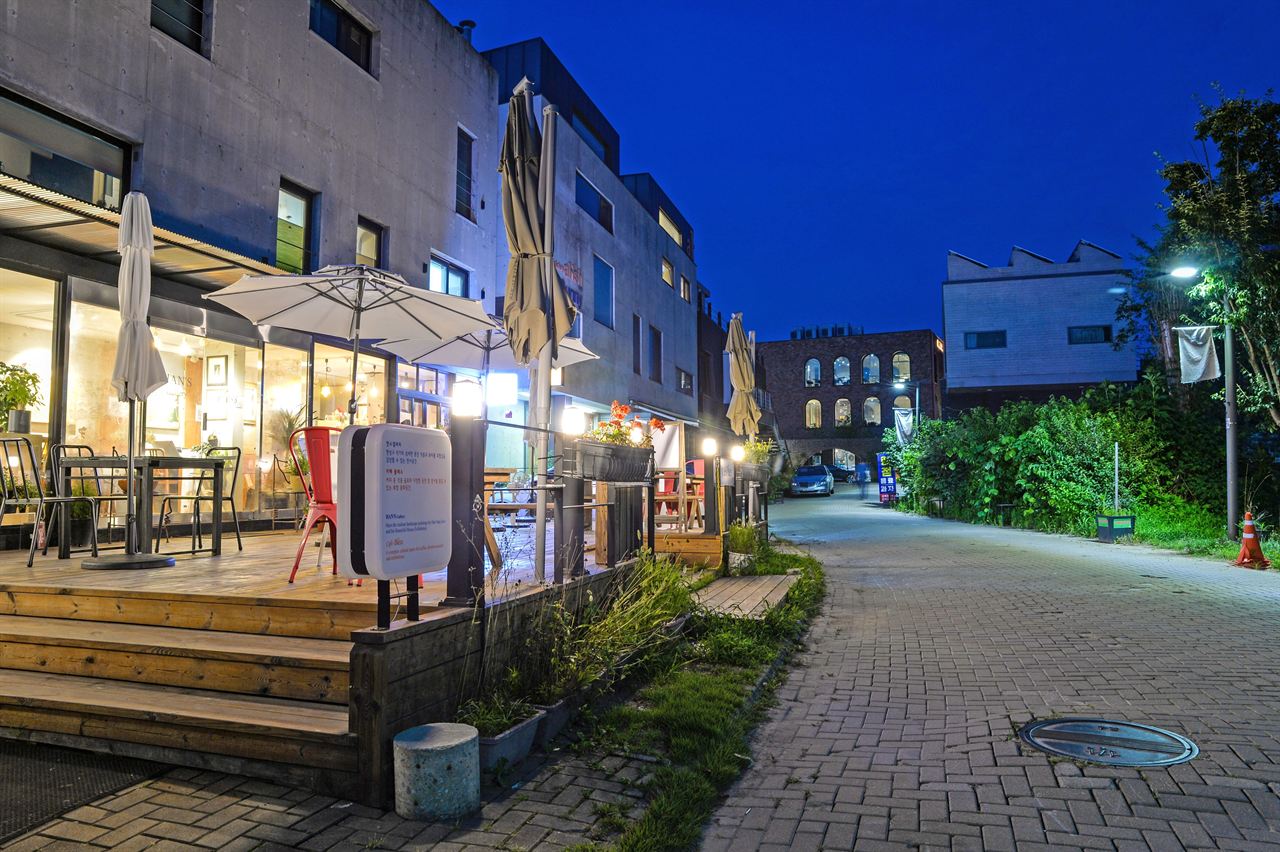
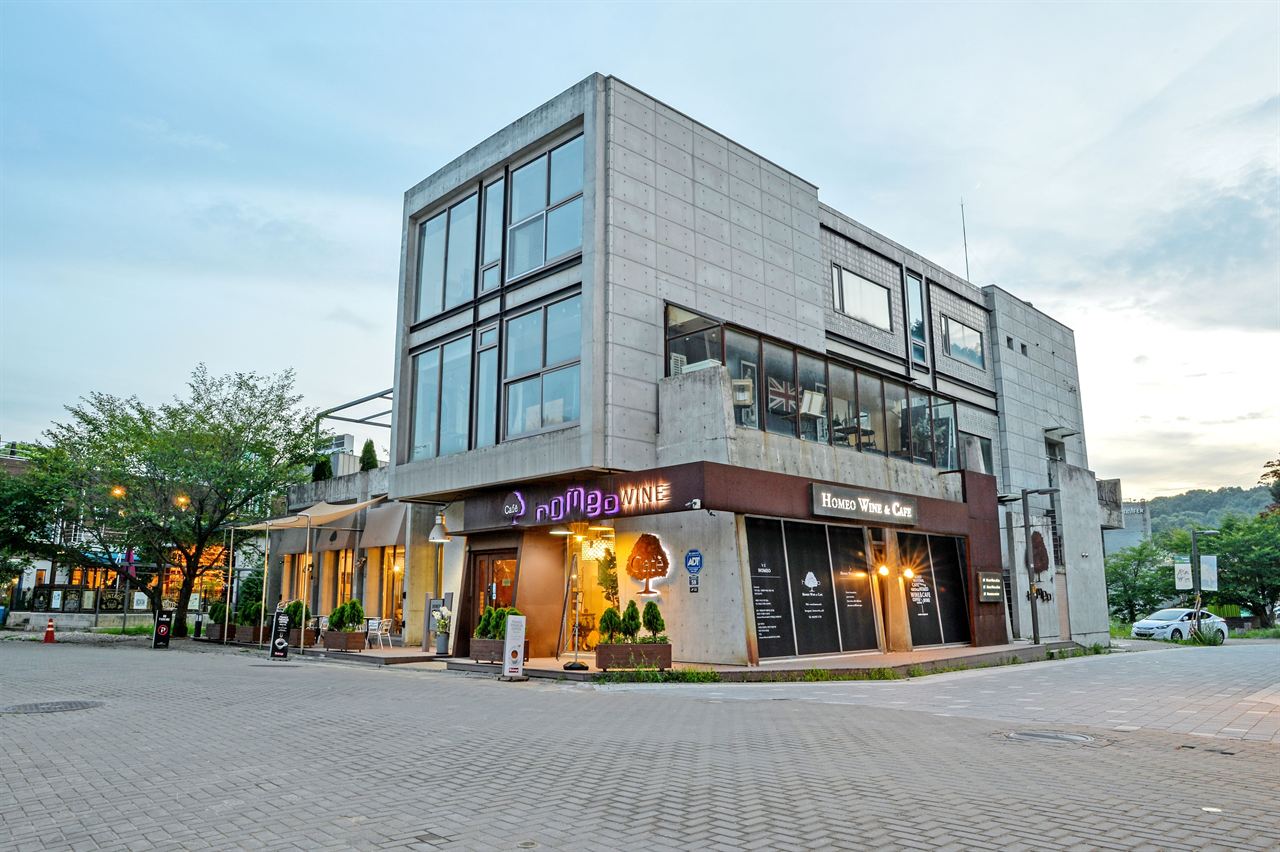
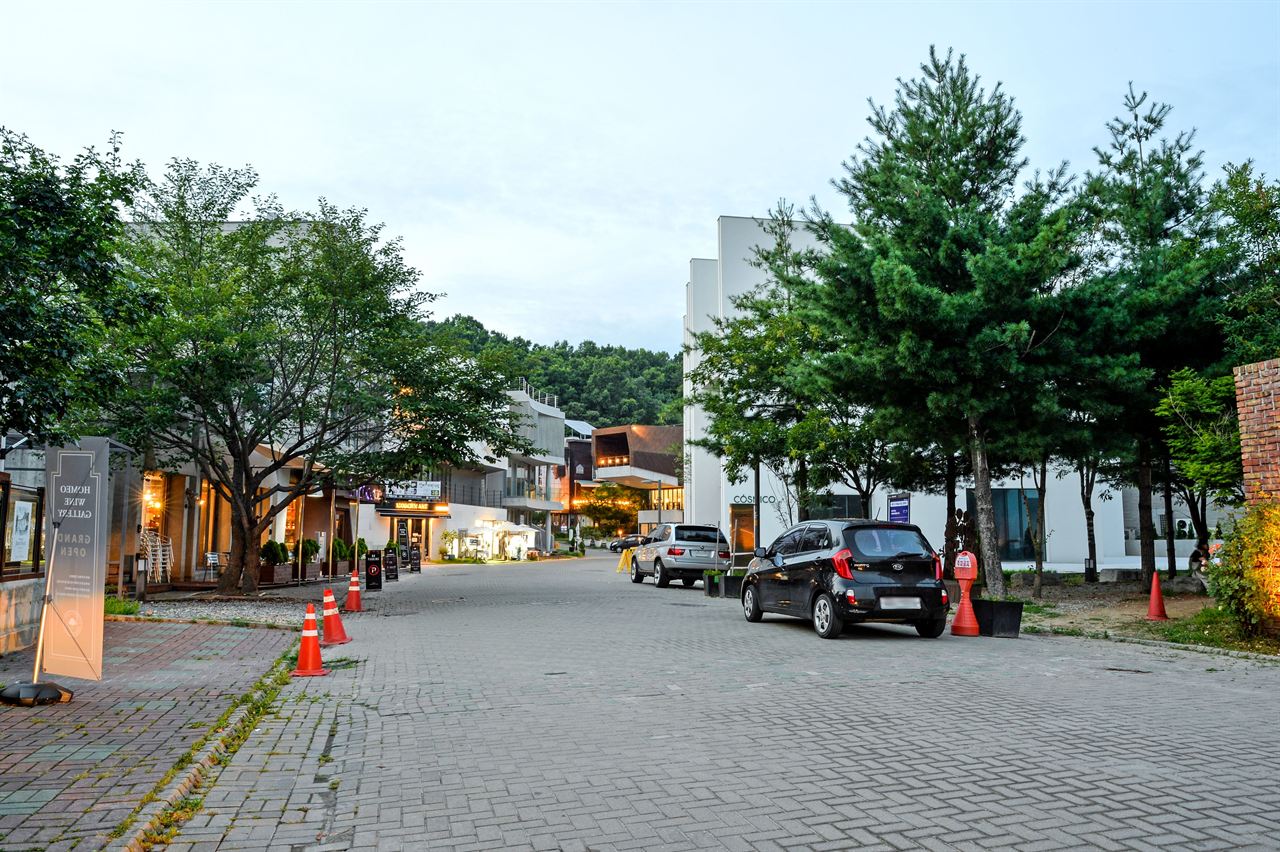
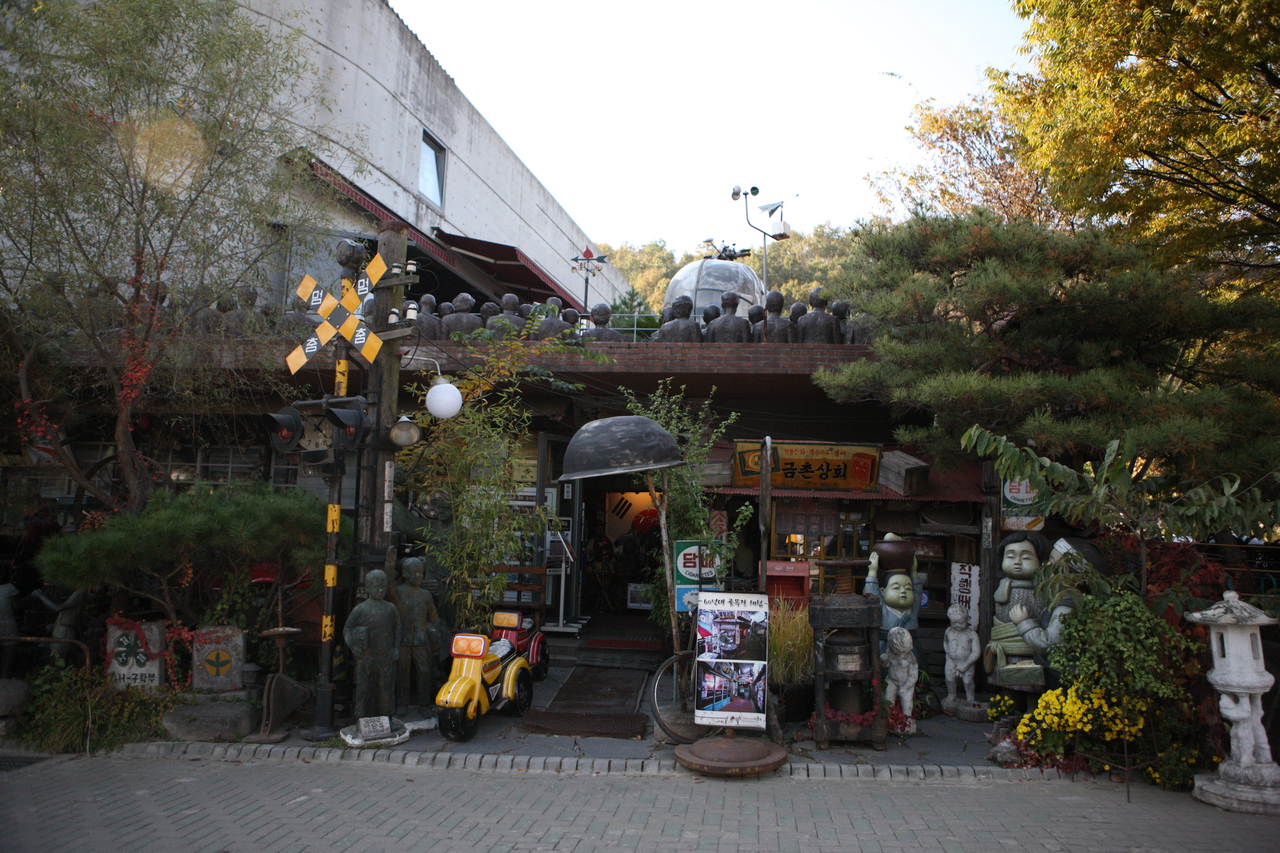
The Heyri Pan Festival is the annual festival of Heyri Art Valley, a planned artists’ village in Tanhyeon-myeon, Paju, close to the northern edge of the Seoul metropolitan area. Heyri is one of Korea’s largest artist communities: a cluster of low-rise, architect-designed concrete-and-glass buildings holding galleries, studios, small museums, workshops, cafés and bookshops, laid out along brick-paved lanes against a wooded hill. The festival — “Pan” refers to an open gathering-place — turns that everyday village into an open-air cultural weekend, and its 2026 edition was the 21st, the event having first been held in 2006.
For 2026 the festival ran September 11–13, a Friday to Sunday, with the theme of “peace, art and nature.” Those dates matter, because a national festival calendar had it pencilled for early October; the official Paju City culture page and every local news report instead give the September weekend, with the opening ceremony at 16:00 on Friday the 11th and the main programme concentrated on the Saturday and Sunday. That edition has now finished. If you are reading this to plan a visit, treat it as a guide to an annual mid-September event at Heyri rather than to a date still ahead.
What you actually do here
This is a browsing festival, not a single seated show. The 2026 programme was built around two markets — an art market of work by Heyri’s resident artists and makers, and a local-food market — plus orchestra concerts, outdoor film screenings, DJ sets, and a board-game hall. The organiser said the outdoor side of the programme was expanded this year, so more of it happened in the village’s open squares than indoors.
The events were spread across a few named parts of the village rather than one central stage. Local coverage placed the DJ sets and the food and art markets around the “Maeum-i Datchil” area, the orchestra performances and film screenings at Reed Square, and the indoor events, including the board games, in the Heyri Community House. In practice that means the festival is something you walk through: you move between squares, drop into a gallery or café, watch a short performance, and browse a market, rather than committing to one fixed programme.
The board-game strand is worth calling out for families. For 2026 it was run in partnership with a Korean board-game publisher as a free “Board Game Outing” on the Saturday and Sunday, 11:00 to 18:00, at the community-centre area — open play, new-game demos and hands-on zones with no advance booking. Combined with Heyri’s normal draw of small museums and craft studios, that makes the festival an easy outing with children even for visitors who do not read Korean, since most of what you do is look, listen and play rather than follow a script.
Programme and timetable
The useful thing to understand is where the weekend’s weight sits. The opening ceremony was at 16:00 on Friday, September 11, but the programme was concentrated over the following two days, running roughly 11:00 to 18:00 on Saturday and Sunday. This is fundamentally a daytime event. Unlike a lantern or fireworks festival, there is little reason to arrive in the late evening; the markets and most performances belong to the middle of the day and wind down toward early evening.
Individual set-times for specific concerts, film screenings or DJ sets were not published in a reliable, English-checkable daily grid, and this guide does not invent one. The honest planning advice for an event like this is to arrive around midday on the Saturday or Sunday, walk the whole village once to see what is running, and then double back to whatever you want to watch in full. Because entry is free and there is no ticketed seating, you are not locked into a schedule — the cost of guessing wrong is small.
Free admission and what it covers
Admission was free for 2026, and that is well supported: the organiser, Paju City and multiple independent news reports all describe every programme — the two markets, the orchestra concerts, the outdoor films and the board-game hall — as free to enter, with no gate ticket. The only money you needed was for whatever you chose to buy: a craft or artwork at the art market, a dish at the local-food market, a coffee in one of Heyri’s cafés. Card acceptance at individual stalls was not field-checked, so carry some cash for small vendors rather than assuming every booth takes cards.
That free, open structure is part of what makes Heyri’s festival low-stakes to visit. There is no package to book, no reserved-seat product to weigh up, and no separate charge to compare against a programme you may only half-see. It also means the festival rewards a relaxed, unhurried visit more than a tightly optimised one.
Getting there without a car
Heyri’s one real complication is transport: there is no subway to the village, and a single bus route does most of the work from Seoul. From the city, take Gyeonggi metropolitan bus 2200 from Hongik Univ. Station Exit 1 or Hapjeong Station Exit 1. It reaches the Heyri Art Valley stop in about 45 minutes and runs frequently — roughly every 5 to 12 minutes — though heavy weekend traffic on the Jayu-ro expressway can stretch that. On a busy morning it is worth boarding at Hongik Univ., the earlier stop, because the bus can fill and skip later stops once seats are gone.
The same 2200 route passes Paju Book City and the large outlet malls near Tongil-dongsan on its way to Heyri, which is why a Heyri visit is easy to pair with one of those. If you are already in Paju, bus 900 links Geumchon Station (on the Gyeongui–Jungang line) to Heyri in about 30 to 40 minutes.
Driving is possible and the village has parking, but for a festival weekend the bus is often the simpler choice, and it removes any worry about a full lot. Whichever way you come, set your destination to Heyri Art Valley (헤이리 예술마을) itself rather than a generic “Paju,” which covers a wide area.
Day trip or overnight
For most visitors this is a day trip, and a comfortable one. A 45-minute bus from Hapjeong, a daytime programme and free entry together make a half-day entirely realistic: you can leave central Seoul mid-morning, spend the afternoon in the village, and be back for dinner. The daylight timing is the key point — because the festival is not an after-dark event, you are not forced into a late return, which is the usual reason day trips to Korean festivals fail.
Staying overnight is really only worthwhile if you want to slow down and combine Heyri with the wider Paju area — the Book City, the outlet malls, or the DMZ-edge sights further north around Imjingak. There are cafés and some lodging in and around the village, but availability and prices were not independently verified here, so this guide names no specific hotel. As a festival on its own, Heyri does not demand an overnight stay.
Food on site and Paju’s Jangdan soybeans
On the festival days, food came from the local-food market set up among the village squares, alongside Heyri’s year-round cafés and restaurants. That is a genuine part of the event, but it is a rotating market rather than a fixed menu, so this guide will not promise a particular dish, price or vegetarian option.
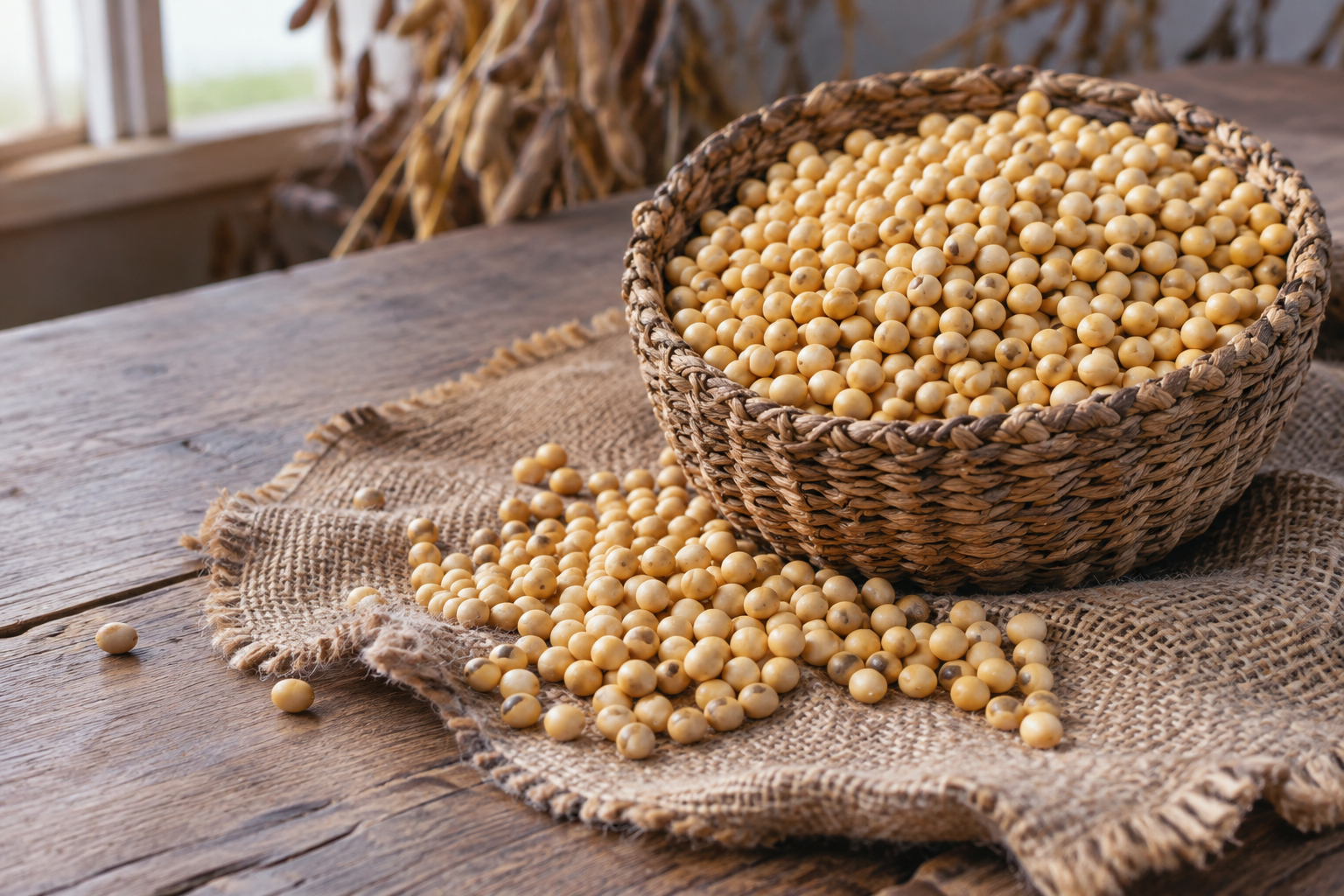
For a specialty tied to the region rather than to the festival stalls, look to Paju Jangdan soybeans (jangdan-kong). The small, glossy pale-yellow bean grown in Paju’s Jangdan area carries a geographical-indication registration and is one of the historic “Jangdan three whites” — soybean, Imjin-river rice and ginseng — that were once sent to the royal table. It is the base for the area’s doenjang (soybean paste), cheonggukjang and tofu, and Paju runs a separate, dedicated Jangdan Bean Festival at Imjingak each November. It is a Paju specialty worth seeking out in the region’s restaurants; it is not a claim that the Heyri market sold it.
Honest assessment
Heyri’s Pan Festival is a pleasant, low-key weekend rather than a headline spectacle, and it is most honest to judge it on those terms. Its strength is the setting: an entire architect-designed art village given over to markets, small performances and open-air culture, all free to enter, and close enough to Seoul to reach in under an hour by bus. For anyone who enjoys wandering galleries and craft markets, or who wants an easy, child-friendly outing that does not read Korean-only, it is a good use of a Saturday or Sunday afternoon.
Its limitations are the flip side of the same qualities. There is no big-stage draw, no named-headliner concert and no single must-see moment; if you want a large festival ground or a marquee performance, this is not it. The one bus route can be crowded on a fine weekend, and the lack of a clear, published daily timetable means you plan loosely and take the programme as you find it. And, plainly, the 2026 edition (September 11–13) is over — the value of this page now is as a picture of what the annual festival is like and how to reach it, not as a countdown to a date still ahead.