
Autumn · Chungcheongnam-do · Field listing
Cheonan K-Culture Expo 2026
The essentials first: whether it is open, what it costs, how hard it is to reach and what to expect if you do not speak Korean.

When
Sep 2 — 6EstimatedDates have not been confirmed yet
Where
Independence Hall of Korea, CheonanChungcheongnam-do
Admission
FREEGeneral admission is free. The published event information does not list a gate ticket or a separate charge for the main exhibition and performance areas. Food and products sold inside are not included.
From Seoul
About 1 h 50 mTake an ITX-Saemaeul, ITX-Maum or Mugunghwa train from Seoul Station to Cheonan Station, then a city bus to the Independence Hall of Korea. The train takes roughly 1 hour to 1 hour 15 minutes; the museum lists about 40 minutes for the bus leg, before transfer waiting time.
Hours
10:00-22:00; individual exhibitions and activities closed earlier
Organiser
Cheonan K-Culture Expo Promotion Division, 041-521-3412
Is this one for you?
Who it suits. This suits curious generalists who want to sample K-food, webtoons, K-pop and hands-on activities in one place rather than go deep in any single field. It works less well if you are set on one specific artist, since the daily stage schedule matters far more than the five-day run, or if you want a quiet museum-style visit, because the crowds are heavy and access can clog. Concert-first visitors should also note that many halls close in the early evening, leaving little exhibition time on an evening-only plan.
When to go. The programme peaks after dark, with the headline stages running in the evening while most exhibitions close earlier in the day. Arriving near opening lets you cover the halls first and keep the evening for a concert, which is the lower-risk order given how early some areas shut. Expect heavy crowds and slow access whenever you come, so build in extra time rather than planning a tight return.
LOCAL WEATHER
Weather near the festival
The festival date is outside the current forecast window. Check again closer to your trip.
Korea Meteorological Administration forecast
Need something we do not list — a stall menu, a parking gate, a last bus? The Korea Travel Helpline answers in English around the clock: dial 1330 inside Korea, or +82-2-1330 from abroad.
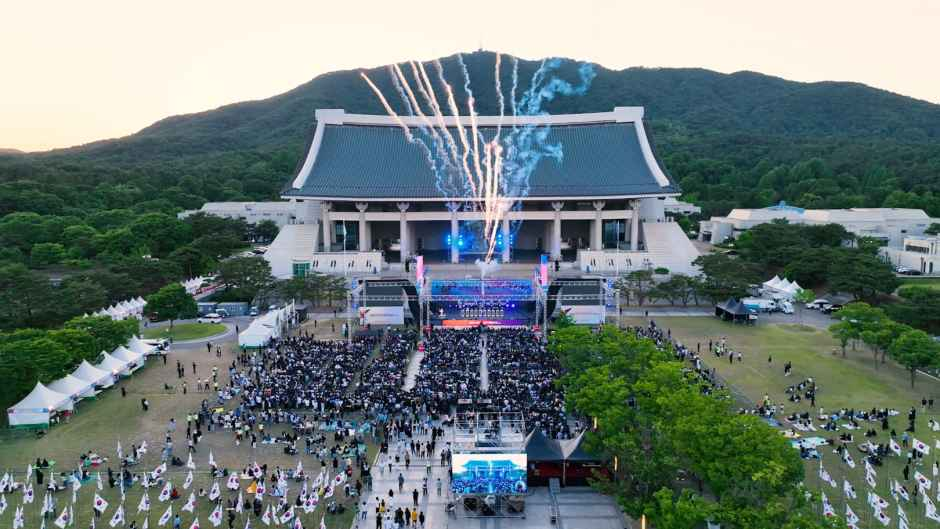
Cheonan K-Culture Expo is a five-day mix of exhibitions, performances and hands-on areas at the Independence Hall of Korea. The setting matters: this is not a convention-centre trade show in central Cheonan, but an outdoor-and-indoor event spread across a large national museum complex east of the city.
The 2026 edition ran from September 2 to 6, with published overall hours of 10:00 to 22:00 and free general admission. That 22:00 finish applied to the event as a whole, not every booth. Most exhibitions closed between 18:00 and 20:00, while the headline evening stages continued later. Its programme grouped contemporary Korean popular culture into distinct areas rather than treating “K-culture” as a single concert bill.
What you actually do here
The main circuit ran through dedicated K-food, K-webtoon and K-pop exhibition areas. The theme exhibition, K-Lifestyle in Everyday Life Around the World, used spaces modelled on Paris, New York, Bangkok and London to frame Korean food, beauty and pop music as everyday products. Its activities included a beauty diagnosis, assembling a personal Korean lunchbox concept, a K-pop music quiz and a food-personality activity.
The K-food hall covered fermented foods such as kimchi and jang, traditional kitchens, food masters and tastings of items including hangwa and sikhye. A separate ramen-and-ice-cream area offered instant-ramen cooking and tasting space. The webtoon hall combined invited and Chungcheongnam-do artists with competition work, live drawing, a robot-arm caricature activity, character performances and merchandise displays. The K-pop popup used AI and XR stations to take visitors through a six-step fictional “debut” sequence, from selecting a role to making a song and stage performance.
Hands-on areas widened the visit beyond those three halls. The Univ Zone, devised by regional university students, mixed dance, bands and cheerleading with VR/XR, autonomous-driving, smart-horticulture, traditional-culture and drawing activities. The Challenge Zone scheduled random-play dance and a scored street-karaoke contest. The general K-Experience Zone covered pop music, creators, goods, fashion, Hangul and traditional culture. Families also had a toy-and-character Play Ground and two children’s musical sessions.
The hanbok area was especially time-sensitive. It operated 10:00-18:00, but rentals stopped at 15:00 and garments had to be returned by 17:00. Anyone arriving only for an evening concert would therefore have missed it. This is best treated as a half-day or evening visit, but not all attractions fit an evening-only plan.
Programme and timetable
The five days had different anchors. The opening ceremony and drone show ran on Wednesday, September 2 from 19:00 to 21:45, with a short commissioned theme performance and a concert. Thursday’s K-Rock concert ran 19:30-21:30 with 10cm and YB. Friday’s K-OST concert used the same evening slot and combined Kim Na-young, MeloMance and K.Will with Cheonan’s municipal orchestra and choirs.
Saturday paired a children’s musical at 11:00 with the K-Culture talk concert from 13:00 to 15:30 and the live radio broadcast from 19:00 to 21:00. The radio programme had a long multi-artist bill, so it was structurally the day most likely to attract pop fans. Sunday’s second children’s musical began at 11:00, and the closing ceremony ran 16:00-17:30 rather than at night.
The exhibitions followed another clock. The food, webtoon and K-pop halls normally ran 10:00-19:00. The theme exhibition remained open until 21:00, the experience booths until 20:00, and the play and hanbok areas until 18:00. On the final Sunday, the theme exhibition ended at 16:00 and the three main industry exhibitions at 17:00. A visitor who looked only at the headline 10:00-22:00 hours could therefore arrive too late for much of the expo.
Tickets, fees and booking
General admission was free. KTO’s current festival record and the official event material did not list a gate charge for the exhibitions or main concerts. Food, toys, merchandise and other products sold inside were separate purchases; “free festival” should not be read as an all-inclusive day.
The opening concert used first-come admission. In its August 31 safety notice, the organiser said entry would begin at about 10:00 on the event day and explicitly prohibited overnight queuing. Anyone attempting to camp around the grounds or waiting area could be removed by safety staff. That notice applied to a particularly popular 2026 programme and should not be turned into a general booking rule for a future edition.
Getting there without a car
From Seoul Station, take an ITX-Saemaeul, ITX-Maum or Mugunghwa train to Cheonan Station. Current schedules put the direct rail leg at roughly one hour to one hour fifteen minutes. From Cheonan Station, continue by city bus to the Independence Hall of Korea; the museum’s own directions estimate about 40 minutes for this 12-kilometre leg. Its listed routes serving the grounds include 381, 382, 383, 390, 391, 392, 400 and 815, with route 400 listed at 20-minute intervals.
KTX to Cheonan-Asan Station is faster on the train itself, at roughly 52 minutes from Seoul, but it is less convenient after arrival. The Independence Hall lists about 25 minutes by taxi, while public transport requires a transfer. For a visitor avoiding taxis, the direct train to Cheonan Station is the cleaner plan.
Allow more than the nominal 1 hour 40 to 55 minutes for the full trip. Transfer waits are not included in either the rail or museum estimates. The Independence Hall says buses enter its grounds only from 08:00 to 19:00; outside that window they do not use the internal stop, so confirm the correct parking-area stop when leaving an evening programme.
The 2026 expo also ran free festival shuttles. Route 1 connected Cheongsu-dong, Cheonan Station and Cheonan Bus Terminal with the Independence Hall. Route 2 served Baekseok-dong and Cheonan-Asan Station, and Route 3 served Dujeong-dong and Ssangyong-dong. The published service window was 10:00-22:00 from Wednesday through Saturday and 10:00-18:30 on Sunday, with frequency varying by day and time. At Cheonan Station, the stated pickup point was outside the GS25 opposite the east side of the station, not a normal city-bus stop.
That shuttle was a temporary 2026 service. The organiser later warned that road conditions could delay it and that a full bus might not stop for safety reasons. It was useful, but not a reason to plan a tight return-train connection. The regular city-bus network remains the fallback and the Independence Hall directions page is the more durable source after the expo ends.
Parking, shuttles and traffic
The official parking page listed eight areas totalling 3,845 spaces: the Independence Hall’s main parking, several temporary road and campground areas, Mokcheon High School, Mokcheon public parking and temporary lots around the resort district. More supply did not eliminate congestion. Post-event reporting, citing the city, recorded vehicles blocking access routes and entrances even with those spaces prepared.
That is useful evidence rather than a generic warning. About 402,000 visits were counted over the five days in 2026, compared with 356,448 in 2025. These are visit counts across the run, not a simultaneous crowd figure, but they explain why a nominal parking capacity or shuttle interval cannot guarantee a quick arrival. For any future edition, use its dated lot map and live notice rather than navigating to a 2026 temporary verge or school ground.
Food on site and a Cheonan specialty
There were two different food propositions. The K-food industry hall explained products and processes, while the ramen-and-ice-cream area was built around cooking, tasting and places to eat. Neither establishes that every sample was free or that a specific dietary option was available, so this guide does not make those promises.
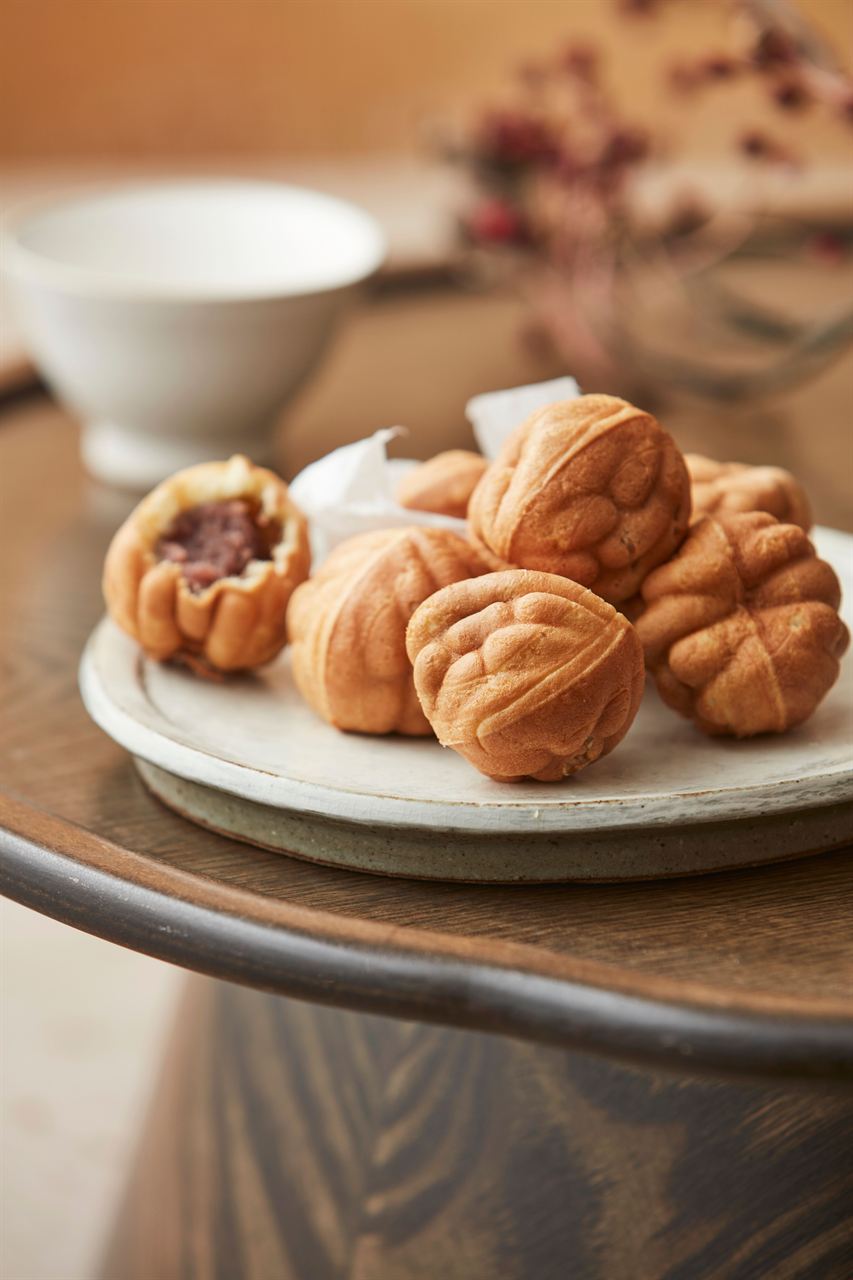
For something tied to Cheonan rather than the national K-food theme, hodu-gwaja, or walnut cake, has firmer credentials. KTO identifies Cheonan as the snack’s birthplace and describes the standard form as a walnut-shaped baked cake containing sweet red-bean filling and walnut. It is now sold throughout Korea, especially at transport hubs and motorway stops, but it remains associated with Cheonan. Buy it separately as a city specialty; do not assume a particular expo stall, filling or price.
Honest assessment
Come for the range, not for depth in any one field. The useful part of this expo is that food, webtoons, pop music and hands-on areas sit in one site. If your only priority is a particular artist, the daily stage schedule matters more than the five-day date range. Conversely, concert-first planning leaves surprisingly little time for halls that close at 18:00 or 19:00.
The crowd is the main drawback, and there is hard evidence for it. The 2026 total was about 402,000 visits; shuttles sometimes could not take more passengers, and parking access became obstructed. Those facts do not prove the same conditions at every hour, but they rule out treating this as a quiet museum add-on. An opening-time arrival was the lower-risk structure for exhibitions, while headline-stage visitors needed to accept a busier departure.
The setting also produces a real trade-off. Using the Independence Hall gives the event space and historical context, but it puts the expo 12 kilometres from Cheonan Station and spreads the programme across grounds rather than one air-conditioned hall. Comfortable shoes and weather protection matter. The 2026 edition delivered enough separate material for several hours; its timetable, rather than promotional language about “K-culture,” was the document that determined whether those hours worked.
Local specialties to try
Cheonan walnut cakes (천안 호두과자)
Small walnut-shaped cakes baked around sweet red-bean filling and pieces of walnut. Korea Tourism Organization identifies Cheonan as their place of origin and the city's walnut as the local ingredient behind the original form. This is a Cheonan specialty, not a promise that the expo's temporary food zone will sell a particular version.
Questions worth asking
Is admission really free?
Yes. The Korea Tourism Organization and Chungnam's official culture listing both mark general admission as free. Budget separately for food and anything sold at the market booths.
Which Cheonan station should I use from Seoul?
Cheonan Station is the simpler public-transport option because city buses run from there to the Independence Hall. KTX serves Cheonan-Asan Station, but the Independence Hall says the onward trip requires either a taxi of about 25 minutes or a bus transfer.
How crowded does it get?
Very crowded. Cheonan City counted about 402,000 visits over the five days in 2026, up from 356,448 in 2025. The organiser warned that free shuttles could pass stops when full, and post-event reporting documented cars blocking access routes despite the expanded parking plan.
What time did the 2026 exhibitions close?
The overall event hours were 10:00-22:00, but that was not a universal closing time. The K-food, webtoon and K-pop halls normally closed at 19:00, the hands-on zone at 20:00, the play area and hanbok zone at 18:00, and most areas closed earlier on the final Sunday.
Was there a free shuttle from Cheonan Station?
Yes for the 2026 edition. A free route linked Cheonan Station and Cheonan Bus Terminal with the Independence Hall, while another served Cheonan-Asan Station. This was a dated festival service, not a permanent connection; future visitors should wait for the next edition's official transport notice.
Before you goFestival Etiquette in Korea: What Visitors Get WrongBooking KTX Trains and Intercity Buses as a Foreign VisitorGetting Out of Incheon Airport and On to a FestivalKorean Festivals With Children: Toilets, Strollers and TimingStaying Online in Korea: SIM, eSIM and the Apps That MatterEating at a Korean Festival Without Speaking KoreanRain, Typhoons and Cancelled Festivals: How to Plan Around ThemHow to Pay for Things in KoreaT-money and Transit Cards in KoreaWhat to Wear to a Korean Festival, Season by Season
LAST UPDATED · Sep 7, 2026