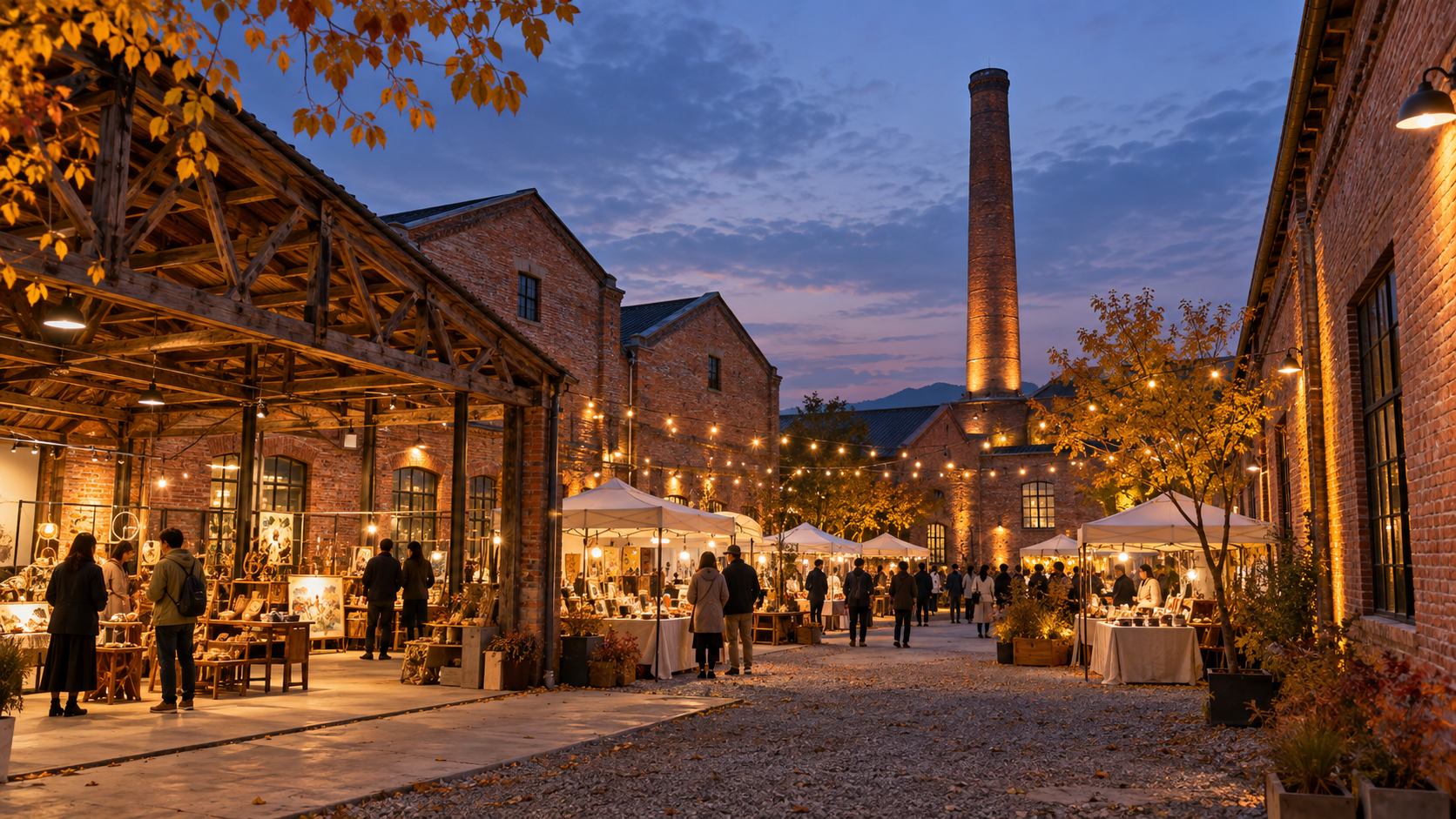
Dongbu Warehouse Festa is an evening arts-and-market festival held in and around Dongbu Warehouse (동부창고), a cluster of old red-brick tobacco-leaf warehouses in Cheongju. The buildings were part of a tobacco processing plant that operated for decades until the early 2000s; the city later kept the structures and, through a national cultural-regeneration project, reopened them as an arts venue that keeps its original brickwork and wooden roof trusses. The warehouses now sit inside the larger Culture Factory (문화제조창) complex, which also holds a craft museum, an open library and food and retail floors. The festival uses that industrial-heritage backdrop rather than a purpose-built festival ground.
For 2026 the edition is themed ‘Dream Warehouse’ (꿈의 창고) and runs on Saturday September 12 and Sunday September 13, from 15:00 to 21:00 on both days. Those dates and hours come from Cheongju City and the Cheongju Cultural Industry Promotion Foundation and were reported consistently across several Korean outlets in late August. The festival first ran in 2023 and has been held annually since, with different seasonal themes.
What you actually do here
This is a browse-and-graze festival, not a sit-down show. The core of it is a set of outdoor markets and hands-on booths spread across the warehouse yard, the crossroads between the buildings and the surrounding garden. The 2026 programme lists art-experience booths, an upcycling playground (새활용 놀이터), a flea market, a resource-recycling market, food trucks and a pop-up store selling work by local artists. There are also living-culture classes and hobby-club taster sessions, so a fair amount of what happens is participatory rather than something you only watch.
Because the site is a former factory, part of the appeal is simply moving through the spaces: brick warehouses, a chimney and the reused structural frame of the old plant. The organiser leans into that after dark with lighting across the grounds and gardens, which is why the festival is scheduled to run into the evening rather than finishing in daylight. If you have children, the upcycling playground and the art-play booths are the obvious anchors; if you are here for the setting, leave time to walk the whole complex rather than stopping at the first cluster of stalls.
None of this requires Korean-language ability to enjoy at a basic level, since the markets and the visual programme carry themselves. That is an observation about the format, not a promise of English signage or interpretation — neither was confirmed for this guide, so do not plan around English support being available on site.
Programme and timetable
Both days operate on the same 15:00-21:00 window, but the two stage programmes differ, so the day you choose changes what you see. The festival’s stage strand — billed as the “Warehouse Stage” — runs genre sets rather than named headliners. For September 12 the announced formats include dance, a show choir, cheerleading, an instrument ensemble and a ballad set. For September 13 the announced formats include an orchestra, a balloon show, dance, popera, a cappella and a band.
That distinction matters for planning. If you specifically want the orchestra or a full band set, that falls on the Sunday; the Saturday leans toward choir, ensemble and ballad performances. A precise minute-by-minute running order had not been published in the sources available when this guide was written, so treat the above as the confirmed line-up of formats rather than fixed set times. Check the venue’s own channels close to the date if timing a visit around one particular performance.
Away from the stage, the markets and experience booths run throughout the operating window. Practically, the sensible sequence is to arrive in the late afternoon while there is still daylight for the flea market, the artist pop-up and the food trucks, then stay on as the site lighting comes up and the evening stage sets run. The last hour before the 21:00 close is when the grounds are most atmospheric, but it is also when stalls begin to wind down, so do any buying earlier.
Tickets, fees and booking
There is no admission ticket: entry is free and the organiser describes the festival as open to anyone. That makes it easy to drop in for an hour or stay the whole evening without committing to a package.
Free entry does not mean everything is free. The hands-on experience booths, the flea and recycling markets, the artist pop-up store and the food trucks are all paid separately, and a reliable programme-by-programme price list was not published for 2026 when this guide was written. Bring a payment method and expect to pay per activity or per item rather than budgeting around a single figure. Because this is a community arts event rather than a ticketed concert, there is also no reserved-seating product to book in advance for the stage — plan to stand or find space near the stage during the sets you care about.
Getting there without a car
Cheongju is not on the main high-speed line, so there are two sensible car-free routes from Seoul, and they arrive in different parts of the city.
The most direct is the express bus. Services from Seoul Express Bus Terminal to Cheongju take roughly 1 hour 30 minutes and run very frequently — about every 20 minutes through the day. This drops you at Cheongju’s own bus terminal inside the city, which then needs only a short local bus or taxi leg to the festival area.
The train option is faster on paper but adds a transfer. KTX and SRT services reach Osong Station in about 45-50 minutes from Seoul; Osong is the high-speed station that serves Cheongju, but it sits outside the city, so you then continue by connecting bus or taxi — commonly around 25-30 minutes into central Cheongju. Counting the transfer, the door-to-door time is broadly comparable to the bus, which is why many visitors simply take the bus.
Either way, the venue is in the north-central part of Cheongju, at 314 Sangdang-ro in Cheongwon-gu, not beside the station or the bus terminal. Set “Dongbu Warehouse” or the Culture Factory as your destination in a Korean map app for the final leg rather than navigating to “Cheongju” in general, and check the live local route on the day.
Parking and practicalities
If you do drive, the organiser says the Culture Factory public parking structure can be used free of charge for the festival, which is unusually clear for an event of this kind — many festivals leave parking as an open question. No dedicated festival shuttle had been announced when this guide was written, so treat the free parking as the confirmed driving plan and check the venue’s channels for any late traffic notice.
The organiser has reported strong turnout at earlier editions — press material for a previous year cited roughly 15,000 visitors — but that is an organiser-reported figure for a past edition, not a verified 2026 forecast, and no official crowd-management notice for this festival was found. In practice the busiest period will be the evening, once the lighting is up and families arrive after dinner, so come earlier in the afternoon if you dislike crowds around the stage.
Food on site and nearby
On site, food means the food-truck zone and whatever market stalls are trading; the organiser confirms food trucks for 2026 but did not publish a menu, vendor list or prices, so this guide cannot promise a particular dish or a vegetarian option. The Culture Factory building itself also has restaurants and shops on its lower floor, which is a useful fallback if the trucks are busy.
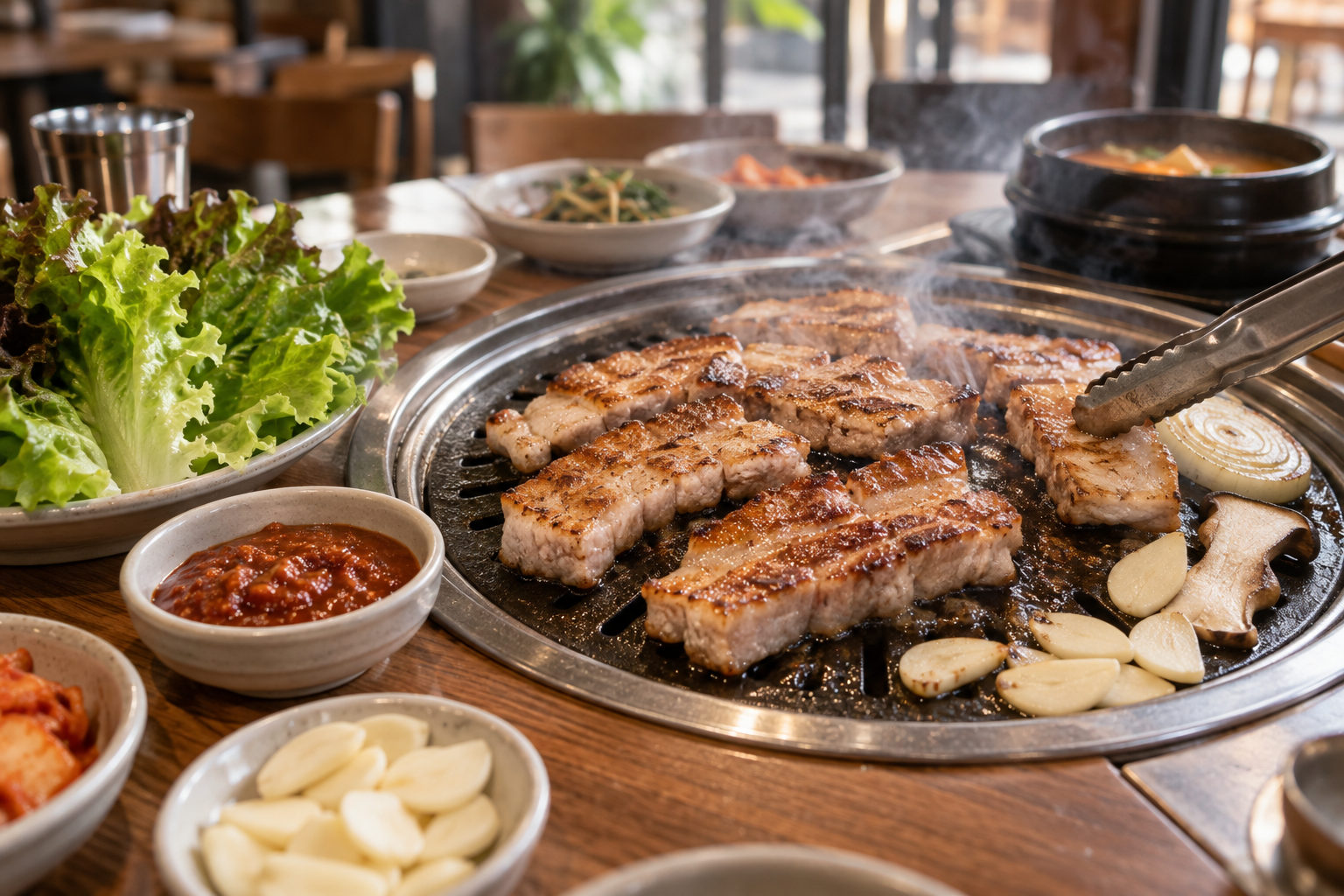
For a documented local meal away from the festival, Cheongju treats grilled pork belly as a city food tradition. Cheongju City’s tourism office promotes the Seomun Market Samgyeopsal Street, a run of roughly a dozen pork-belly restaurants, and a local style salts and grills thick-cut belly. This is a citywide specialty to seek out on its own, not a claim that the festival’s food trucks will serve it.
Honest assessment
The strength of Dongbu Warehouse Festa is its setting and its low commitment. You get a walkable evening of markets, art booths and short performances inside genuinely handsome industrial-heritage buildings, entry is free, and — unusually — the free parking removes one of the normal headaches of a Korean festival. For a family, a couple or anyone already in Cheongju, it is an easy, pleasant way to spend a September evening, and the after-dark lighting gives it a distinct character that a daytime market would not have.
Its weakness is that it is a local community event rather than a destination festival. The stages run genre sets, not a headline act you would cross the country for; it is only two days; and the site needs a transfer from either the bus terminal or the KTX station. Planning detail is also thin — there was no published minute-by-minute schedule or price list when this guide was written — so it rewards a flexible, drop-in approach more than a tightly timed itinerary.
The fair verdict: worth an evening if you are in or near Cheongju, or if you are pairing it with the Culture Factory’s craft museum and the city’s other sights, but not worth a dedicated round trip from Seoul on its own. Come in the late afternoon, browse the markets in daylight, stay for the lighting and one or two stage sets, and choose your day by which stage programme you prefer.