The Saseon Cultural Festival is a county cultural festival in Imsil, in the interior of Jeollabuk-do. It is held at Saseondae, a riverside scenic park in Gwanchon-myeon rather than in a town centre, and its programme is built around folk contests and community events instead of a single headline stage. The Ministry of Culture’s 2026 regional-festival plan places it on September 17-20; the same record traces the festival’s line back to 1963, which makes it one of the older continuously held local festivals in the province.
Two cautions belong at the top. First, the dates above are a plan value. They are consistent with recent practice — the 2023 edition ran in early September — but they had not been reconfirmed against an official 2026 festival announcement when this guide was written, and older tourism pages still describe the festival as an October event. Treat the days as estimated and reconfirm before booking. Second, the English name here, “Saseon Cultural Festival,” follows the romanisation used for Saseondae on Korea Tourism Organization and Jeonbuk provincial tourism pages; the festival does not publish its own English branding.
What you actually do here
This is a participatory folk festival rather than a spectacle you watch from a seat. Its signature event is the national Saseonnyeo selection contest — a classical-style pageant tied to the four-fairies legend of Saseondae, sometimes compared to Namwon’s Chunhyang contest. The 2026 selection is advertised as the 40th, and candidate applications for it were open until September 11, which is a useful sign of how close to the festival the final programme is decided.
The rest of the programme, based on the most recently documented edition, is a spread of contests and community events rather than a continuous show. Recent years have included a national nongak competition — farmers’ percussion music, organised with the locally rooted Pilbong troupe whose style is on the UNESCO intangible-heritage list — along with the Sochung-Saseon culture awards, a long-running song festival, a folk-food cooking contest, a poetry-and-painting exhibition and a national janggi (Korean chess) tournament. Expect craft and produce stalls and celebratory concerts around these.
Because the 2026 daily grid had not been published when this was written, the honest planning advice is to treat the festival as a place to wander for a few hours rather than to arrive for one timed performance. If a specific contest or concert is your reason for coming, wait for the organiser’s schedule before fixing your travel.
The setting: Saseondae
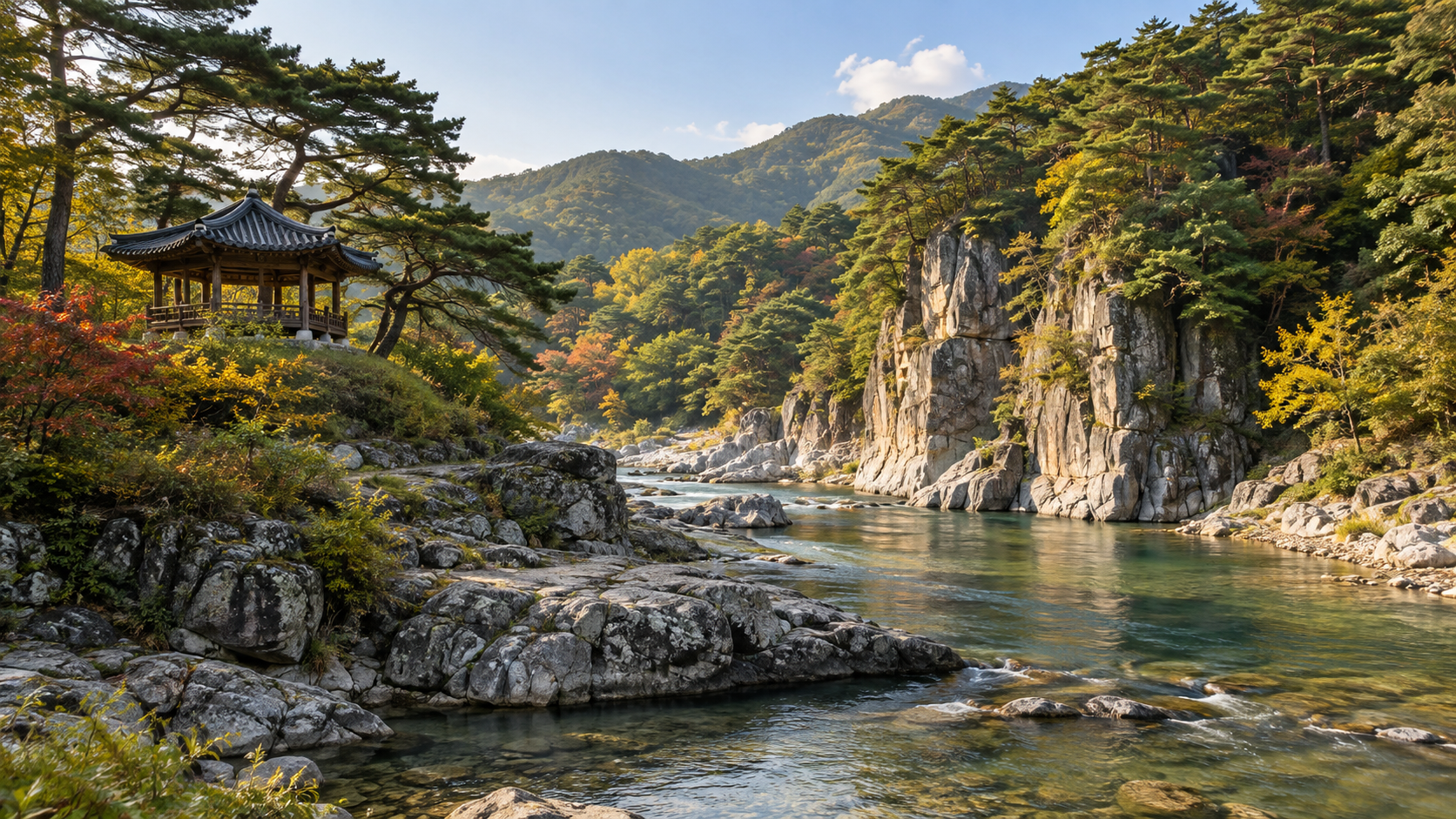
The venue is the strongest part of the trip. Saseondae sits on the Owoncheon, a clear stream in the upper reaches of the Seomjin River, where steep rock cliffs curve around the water like a folding screen. It was designated a national tourist area in 1985. On the bank stands Unseojeong, a traditional wooden pavilion listed as a provincial cultural-heritage property, reached by a walking path along the hillside, and next to the park is a sculpture park with works by artists from the Ogung-ri art village in nearby Sindeok-myeon.
The name comes from a local legend. In the older version, immortals from Maisan in Jinan and from a mountain in Imsil gathered by the Owoncheon to enjoy the scenery, and four heavenly fairies (사선녀) came down to join them; a second story links the name to four officials who once relaxed here. Either way, the four-fairies theme is what the festival’s headline contest draws on. The park also has ordinary recreation facilities — walking trails, a fountain, sports courts and a summer river pool — so outside festival days it functions as a local outdoor spot rather than a monument.
Autumn is the season the site is known for locally, with foliage reflected in the stream, which fits a mid-September-to-October festival window. Even if the programme on your day is modest, the walk between the pavilion, the cliffs and the sculpture park is worth the visit on its own.
Dates and what’s confirmed
To be clear about what is and is not settled: the venue (Saseondae in Gwanchon, Imsil) is confirmed, and the festival’s September timing is well supported by both the 2026 plan and the 2023 precedent. What is not independently confirmed is the exact 2026 span of September 17-20, the full daily schedule, any invited-performer lineup, and the fees for individual programmes. This guide deliberately leaves those blank rather than copying an earlier year’s details forward.
If precise timing matters, the organiser is the Saseon Cultural Festival Committee on 063-643-3988, and Imsil’s Saseondae tourist-area line is 063-640-2921. Use those, or the festival’s own site, to lock down the days before committing to trains or a room.
Getting there without a car
This is the part that needs planning, because the obvious option no longer exists: Gwanchon Station closed to passengers in 2008, so you cannot take a train directly to the festival. There are two workable routes instead.
The simpler one is by way of Jeonju. A KTX from Yongsan reaches Jeonju in roughly an hour and a half on the fastest services (slower Mugunghwa and ITX trains take longer and cost less). From Jeonju you continue about 20 km to Saseondae in Gwanchon by local bus or taxi. The second option is to take a Jeolla Line train that stops at Imsil, about 4 km from Gwanchon by rail, and then a rural bus toward Saseondae; one tourism listing describes getting off at the Saseondae stop a few minutes’ walk from the park.
Either way the last leg is a local bus or a taxi, and rural bus frequencies are low, so check live times on a Korean map app on the day and set Saseondae — not just “Imsil” — as the destination. Intercity bus from Seoul to Jeonju and onward is a reasonable alternative to rail if train seats are scarce on a festival weekend. Because a car-free trip involves a transfer at the end no matter which route you pick, leave margin and do not plan a tight same-evening return.
Food and the local specialty
Festival food at a county event like this is typically produce and craft stalls plus a folk-food cooking contest, and the 2026 stall list was not published when this was written, so this guide does not promise a particular dish, vendor or price on site.
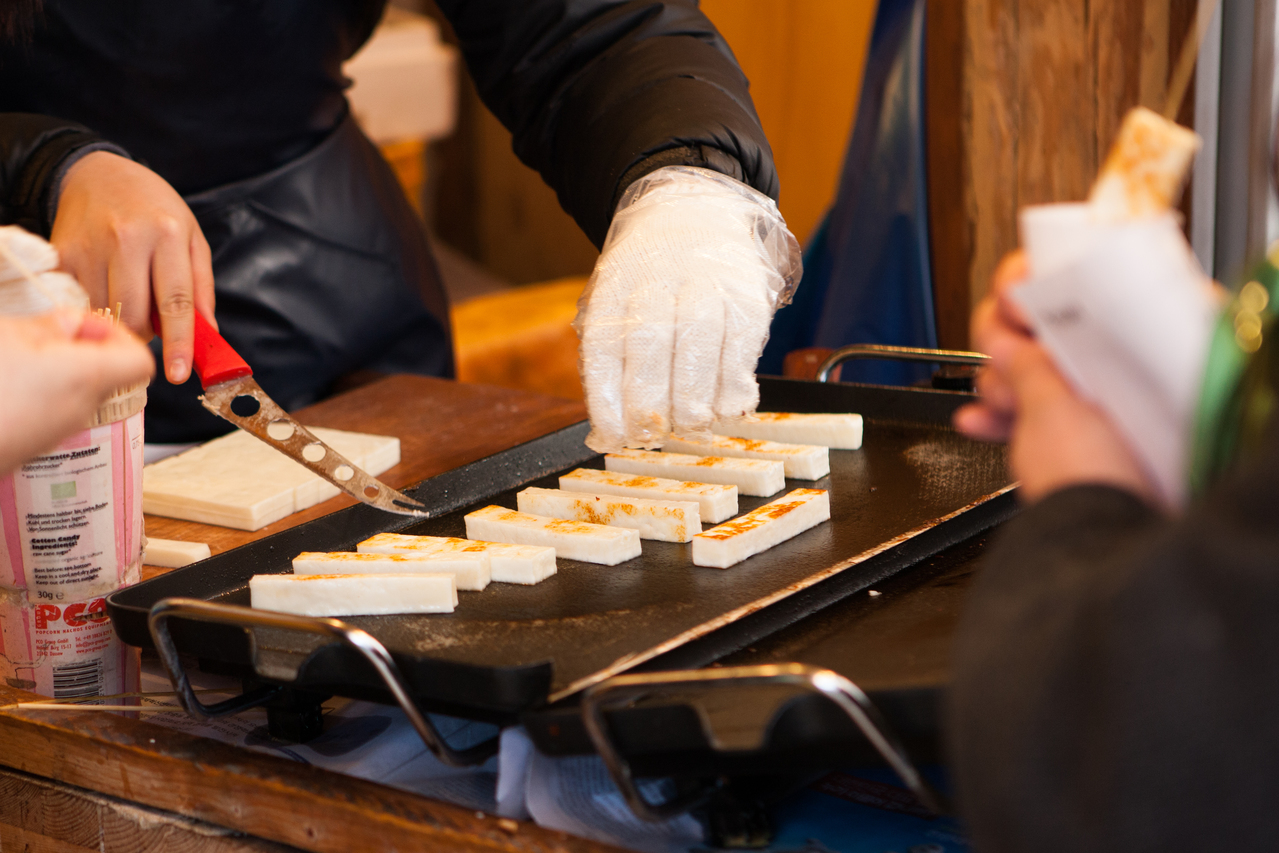
For a specialty with a real local story, look to Imsil cheese. Imsil is where cheese was first produced in Korea — a Belgian missionary, Father Didier t’Serstevens (지정환), began dairy farming here in the 1960s and made the country’s first cheese around 1970 — and it remains the county’s best-known product, with its own cheese village and a separate annual cheese festival. You will find it as blocks, string cheese and grilled-cheese snacks across the county. It is an Imsil specialty worth seeking out on the trip, not a guarantee that a stall at Saseondae will sell it.
Honest assessment
The Saseon Cultural Festival’s appeal is the combination of a genuinely attractive riverside setting and a folk programme that is local rather than staged for tourists. The four-fairies contest, the nongak competition and the community events give it more character than a generic town fair, and the Saseondae park — cliffs, stream, pavilion and sculpture park — justifies the trip even on a quiet day.
Its weaknesses are practical and worth taking seriously. It is a small county festival, so do not expect English-language programming, published headline acts, or the scale of a major regional event. The 2026 daily schedule and performer lineup were unpublished at the time of writing, the exact dates are a plan value rather than a confirmed announcement, and reaching Saseondae without a car means a KTX plus a bus or taxi at the end. The fair way to approach it is as a half-day in an appealing setting with some folk contests attached, best for travellers already interested in interior Jeollabuk-do — not as a destination event to build a long journey around until the organiser confirms the details.