
Autumn · Seoul · Field listing
Sinchon World Youth Festival 2026
The essentials first: whether it is open, what it costs, how hard it is to reach and what to expect if you do not speak Korean.
When
Sep 11 — 13ConfirmedConfirmed dates
Where
Yonsei-ro, Star Square and Changcheon Culture Park, Sinchon, SeoulSeoul
Type
Culture & arts
Admission
FREEAdmission to the festival, performances and public booth areas is free. The published participant recruitment for the student sports day and international-student singing contest was separate and closed on August 30; it is not an admission ticket for spectators. Food sold at the World Food Zone is not described as free.
From Seoul
About 30 minFrom Seoul Station, take Line 1 to City Hall and change to Line 2 for Sinchon Station. Yonsei-ro begins by the Line 2 station and leads toward Yonsei University; allow additional walking time for the specific stage or booth zone.
Hours
Sep 11 17:30–20:00; Sep 12 10:00–19:00; Sep 13 12:00–21:00. Booths run Sep 12–13, 11:00–19:00.
Organiser
+82-2-330-8108
Is this one for you?
Who it suits. This suits free-concert and street-festival goers, students, and anyone curious about a K-pop lineup and international university culture along a busy Seoul avenue. It is a weak choice if you want a quiet fenced festival park with fixed facilities, or if you are coming mainly for the cultural and food booths on Friday, when the opening concert runs but no booths are published.
When to go. Pick Friday if the stage lineup matters most, since it is the compact opening concert night with named bands and no booths. Come on the weekend if you want the booths and student activities, which run only Saturday and Sunday. Sunday runs latest, closing with a singing contest and closing concert, so choose it if you prefer the programme to carry into the evening.
LOCAL WEATHER
Weather near the festival
The festival date is outside the current forecast window. Check again closer to your trip.
Korea Meteorological Administration forecast
Need something we do not list — a stall menu, a parking gate, a last bus? The Korea Travel Helpline answers in English around the clock: dial 1330 inside Korea, or +82-2-1330 from abroad.
Sinchon World Youth Festival, officially abbreviated SWYFT, turns the avenue between Sinchon Station and Yonsei University into a three-day outdoor campus. The 2026 programme is divided clearly by day: an opening concert on Friday evening, student activities and street talks on Saturday, then international cultural performances, a singing contest and a closing concert on Sunday. Booths run only on the weekend, not on opening night.
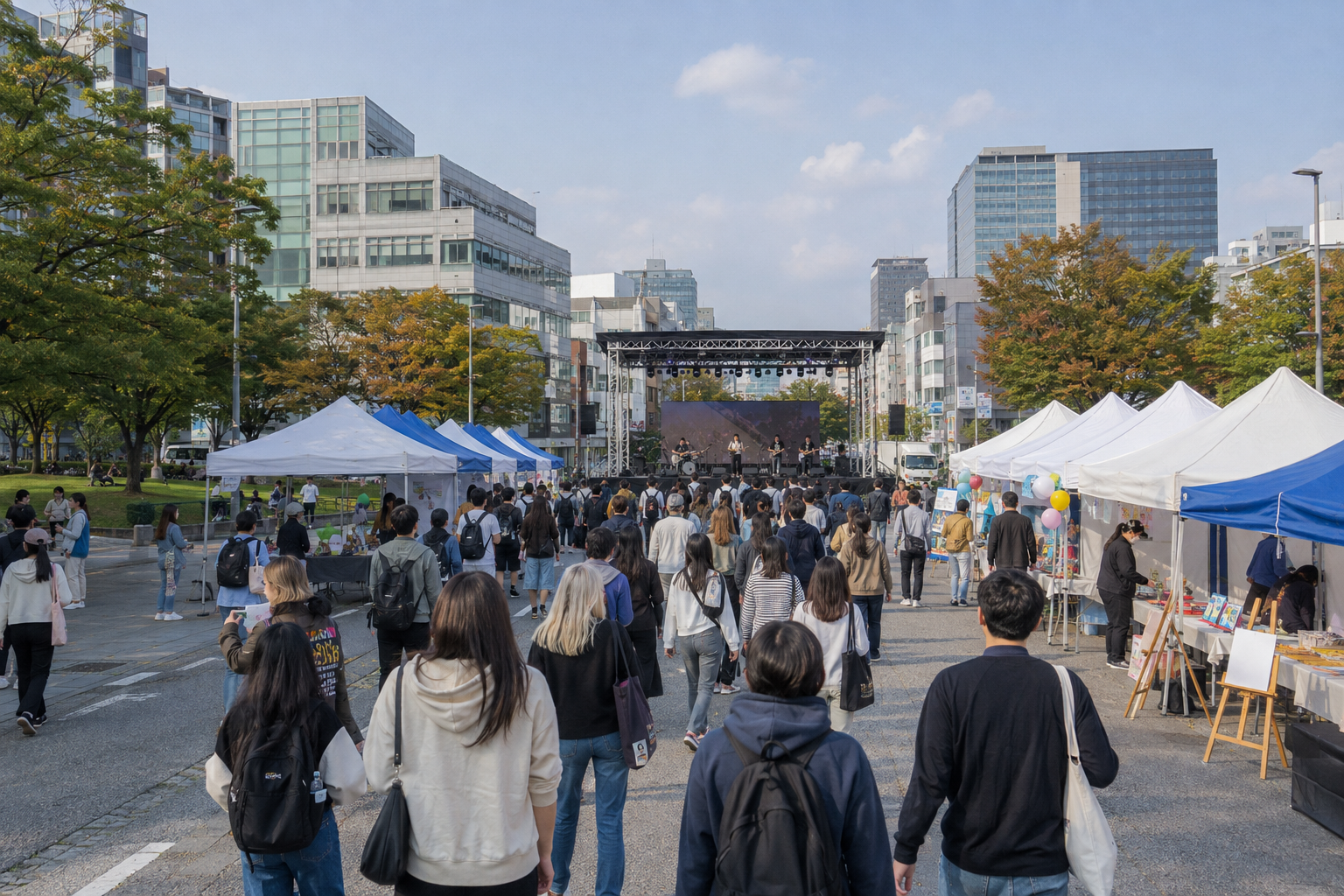
This is a city-street event rather than a fenced festival park. The footprint includes Yonsei-ro, Star Square and Changcheon Culture Park, with stages and booths performing different jobs. That makes it easy to enter but worth checking the programme before arriving: going to the food area when you meant to see a main-stage performance can add an avoidable walk through the crowd.
What you actually do here
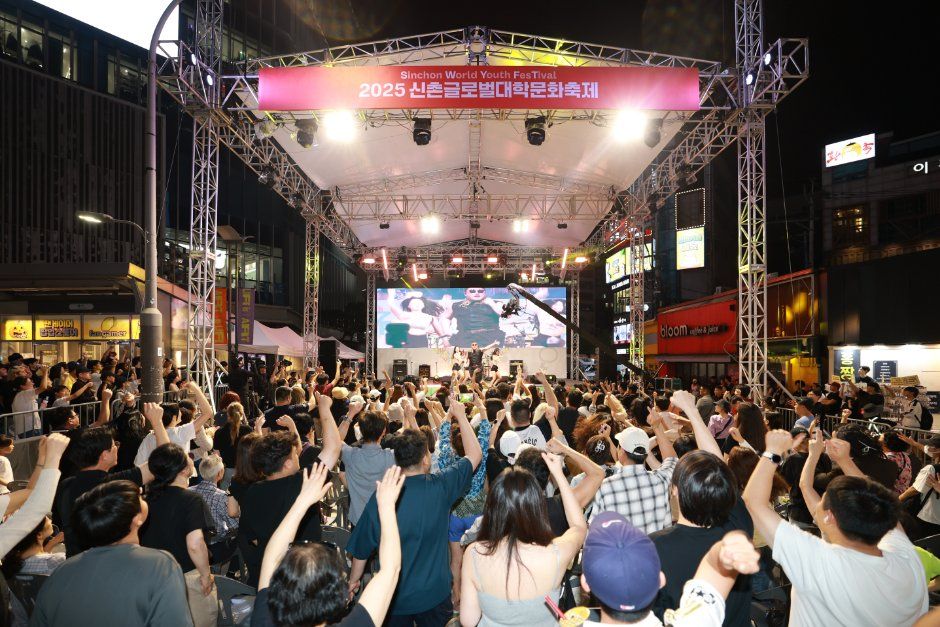
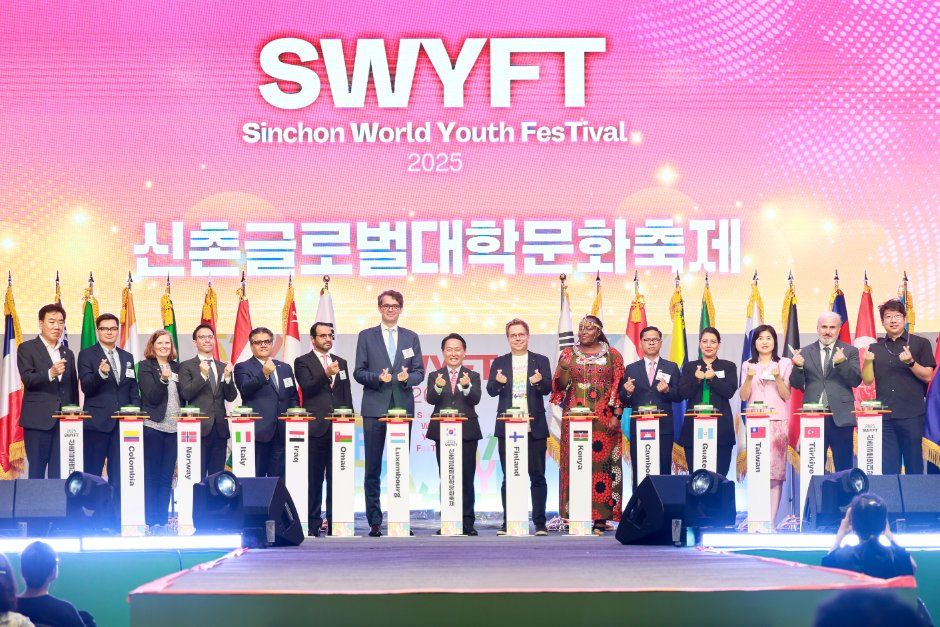
Friday is the compact opening session. The Seoul Culture Portal lists the programme from 17:30 to 20:00, with the opening ceremony and celebratory performances. Seodaemun-gu names WAKER, We;Na and Crying Nut in its notice. There are no published Friday booth hours, so this is the day to choose if the stage lineup is your priority rather than browsing cultural displays.
Saturday changes the street into a student participation space. The schedule begins at 10:00 with the Sinchon SWYFT Sports Day. The announced games include a large-ball relay and a dance-stop challenge, followed by a water-pistol performance. Sinchon UNI.ON gives university clubs a performance slot, while Sinchon University Street Lectures bring talks out onto the avenue. The official participant recruitment capped the sports event at 200 Korean and international students; that limit applies to competitors, not the public watching from the street.
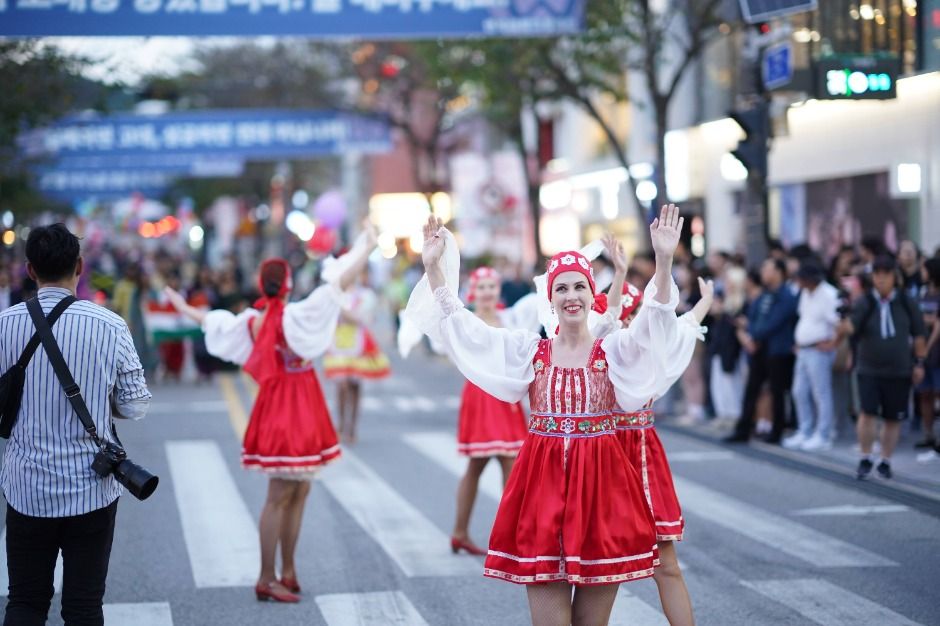
Sunday leans most heavily into the festival’s international theme. The programme begins at noon with “A Trip Around the World,” a cultural-performance segment, followed by the international-student singing contest and the SWYFT concert. The official site schedules the concert for 19:00–21:00 and names Lee Se-jun, Readycore, Sima Island and JUNCOCO among the performers. The Seoul Culture Portal also lists Cyburger. Because the final concert runs to the published 21:00 closing time, Sunday evening is the most straightforward choice for visitors who want one continuous main-stage block.
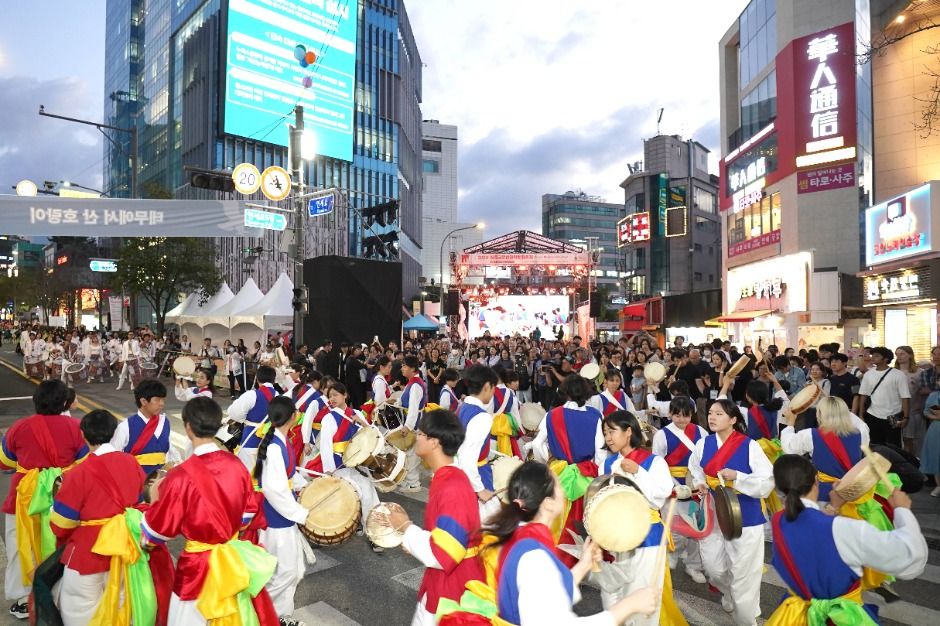
The weekend booths are not a single generic market. Global culture booths and university booths operate along Yonsei-ro, while the World Food Zone is placed separately in Changcheon Culture Park. Official descriptions say embassies, tourism bodies and cultural centres will present clothing, languages, travel information and food from different countries. University clubs, student bodies and international-student groups use their booths to introduce their activities, research and campus culture. Published hours are 11:00–19:00 on both Saturday and Sunday.
Programme and timetable
The useful planning distinction is that the festival’s full daily hours are not the same as the booth hours. Friday runs 17:30–20:00 and is stage-focused. Saturday runs 10:00–19:00, but booths do not open until 11:00. Sunday runs 12:00–21:00; booths still close at 19:00, just as the closing concert begins.
That creates three sensible ways to visit. Come Friday after work for the opening performances only. Come late Saturday morning to combine the sports programme with booths and student performances. Or arrive Sunday afternoon for cultural booths and food, then move to the main stage before the 19:00 concert. Trying to treat all three days as interchangeable risks arriving before the stalls open or after they close.
The singing contest and sports day had advance application processes, both with an August 30 deadline. Those calls were for participants. Neither the government listings nor the official festival information requires a general spectator reservation. If you did not apply, you can still attend the public festival and watch; you simply cannot assume there will be a place in the competition itself.
Tickets, food and spending
General admission is confirmed as free by both the Ministry of Culture, Sports and Tourism and the Seoul Culture Portal. The published programme does not identify a paid concert or a reserved spectator zone. That makes this a low-commitment stop: you can enter from the subway end of Yonsei-ro, see what is happening and leave without having bought an event ticket.
“Free festival” should not be read as free food. The organisers describe a World Food Zone but publish no menu, prices or payment methods. Bring a normal food budget and decide after seeing the posted menus. Card acceptance has not been verified, so this guide does not claim that every temporary vendor takes cards.
The international food booths belong to the event programme; they are not evidence of a Sinchon or Seoul specialty. For something tied more firmly to the city, seolleongtang is the relevant local dish in the fact card. Seoul’s own heritage records describe the beef-and-bone soup as a native food that spread across the capital from the late Joseon period into the early twentieth century. It is a separate meal to seek in the city, not a promised festival offering.
Getting there without a car
From Seoul Station, the published subway route is Line 1 to City Hall, then Line 2 to Sinchon, taking about 30 minutes including the transfer. Use Sinchon Station on Line 2 for the Yonsei-ro festival axis. The avenue extends north from the station toward Yonsei University, so the subway puts you at the useful end of the event area without a bus connection.
The station name needs a little care. Seoul also has a Sinchon Station on the Gyeongui-Jungang Line, beside the former rail station and tourist information centre. That second station is real and close enough to cause map confusion, but it is not the Line 2 stop at the foot of Yonsei-ro. Check the green Line 2 symbol when planning the trip.
Once above ground, navigate to the part of the programme you want rather than to a single festival pin. Yonsei-ro holds the main flow of culture and university booths; Star Square is one of the named event sites; Changcheon Culture Park holds the World Food Zone. The official Visit Seoul guide also lists a tourist information centre at the Gyeongui-Jungang Sinchon Station, open 10:00–19:00, with English, Japanese and Chinese assistance. That language service belongs to the information centre, not to every festival booth, so it is not used here to claim festival-wide language support.
Traffic control and crowd planning
Seodaemun-gu schedules Yonsei-ro traffic control from 15:00 on Friday, September 11 until 06:00 on Monday, September 14. This is useful for pedestrians and a warning for anyone considering a taxi or private-car drop-off: do not make the controlled avenue your meeting point. Arrange to meet at a specific subway exit or a fixed place outside the road closure.
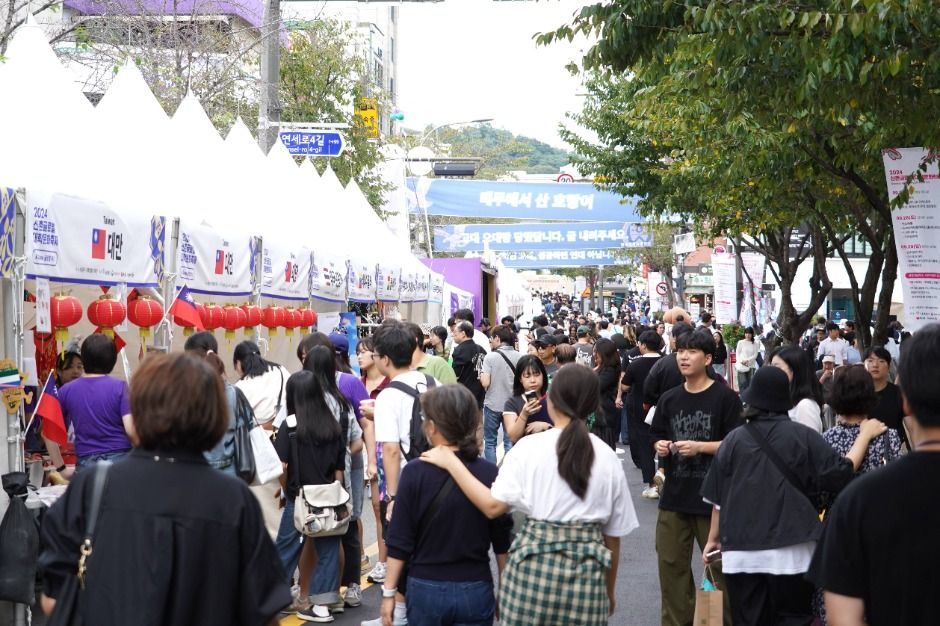
The district says the 2025 festival produced roughly 490,000 visits. That figure is context, not a prediction of how many people will be on one block in 2026, and “visits” should not be converted into unique attendees. It does show that SWYFT is no longer a small campus-club gathering. The opening and closing concerts are the obvious pressure points because they concentrate the programme on one stage, while the daytime booth hours spread visitors along the avenue and into the park.
If personal space matters, the practical window is shortly after booths open at 11:00 on Saturday. Sunday requires more of a choice: arrive early for the stalls, or come near 19:00 for the concert, but expect the transition between booth closing and concert opening to put two movements of people on the street at once. There is no verified 2026 shuttle or festival parking plan, and the road is controlled, so the subway is the only transport recommendation made here.
Honest assessment
SWYFT works best as a half-day urban event, not as the sole reason for a multi-night Seoul trip. Its advantage is variety without a ticket: student sport, club performances, short talks, cultural displays, food booths and concerts occupy one walkable district. It also sits on Line 2, making it easier to add to an existing Seoul itinerary than a festival requiring an intercity train and rural shuttle.
The trade-off is that the programme serves several audiences at once. A visitor interested only in professional music will find long daytime stretches centred on student participation. Someone coming for cultural booths will get little from Friday, when no booth session is published. And the phrase “world food” does not guarantee a comprehensive survey of national cuisines; the confirmed fact is that participating embassies, tourism bodies and cultural centres operate booths, not that every advertised country or dish will be present all weekend.
Treat the timetable as the deciding tool. Saturday late morning gives the broadest sample of student-led activity. Sunday afternoon into evening gives the clearest culture-to-concert progression. Friday is a short opening show. Check the official site again on the day for programme changes, use Line 2, and set a precise meeting point before entering Yonsei-ro. Those small choices matter more here than trying to cover every booth.
Local specialties to try
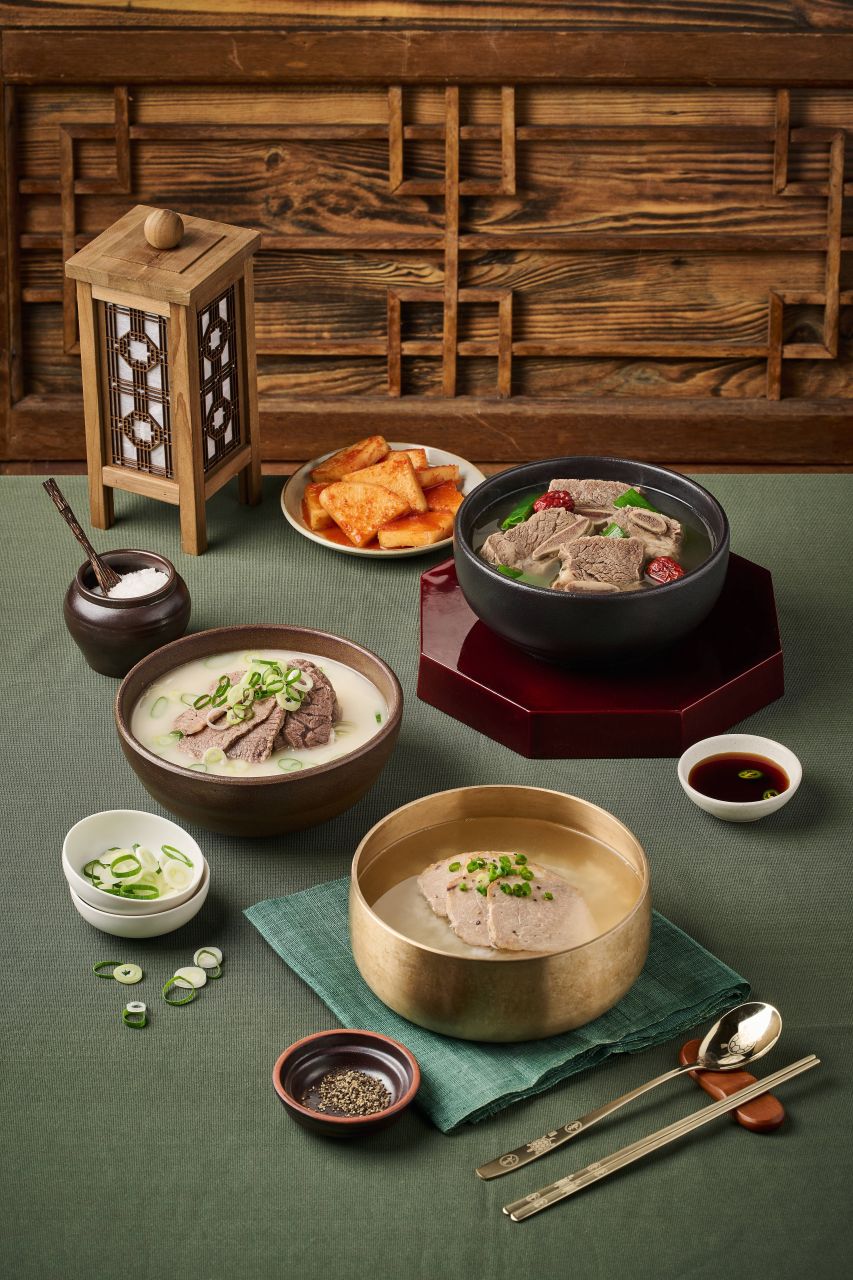
Seolleongtang (설렁탕)
A pale beef-and-bone soup served with rice, sliced meat and chopped spring onion. Seoul Metropolitan Government records identify seolleongtang as a native Seoul food that spread across the city between the late Joseon period and the early twentieth century.
Questions worth asking
Is the Sinchon World Youth Festival free?
Yes. The Ministry of Culture, Sports and Tourism and Seoul Culture Portal both list admission as free. Food sold in Changcheon Culture Park is separate, and the official information does not say that food is included.
Which Sinchon Station should I use?
Use Sinchon Station on Seoul Subway Line 2 for Yonsei-ro. There is also a different Sinchon Station on the Gyeongui-Jungang Line, by the tourist information centre; check the line number before following a route.
When are the culture and food booths open?
The published booth hours are 11:00–19:00 on Saturday, September 12 and Sunday, September 13. Global culture and university booths are on Yonsei-ro; the World Food Zone is in Changcheon Culture Park.
Will Yonsei-ro be open to traffic?
No during the event setup and operation period. Seodaemun-gu's notice schedules traffic control on Yonsei-ro from 15:00 Friday, September 11 until 06:00 Monday, September 14. Use the subway rather than planning a drop-off on the avenue.
Before you goFestival Etiquette in Korea: What Visitors Get WrongBooking KTX Trains and Intercity Buses as a Foreign VisitorGetting Out of Incheon Airport and On to a FestivalKorean Festivals With Children: Toilets, Strollers and TimingStaying Online in Korea: SIM, eSIM and the Apps That MatterEating at a Korean Festival Without Speaking KoreanRain, Typhoons and Cancelled Festivals: How to Plan Around ThemHow to Pay for Things in KoreaT-money and Transit Cards in KoreaWhat to Wear to a Korean Festival, Season by Season
LAST UPDATED · Sep 7, 2026