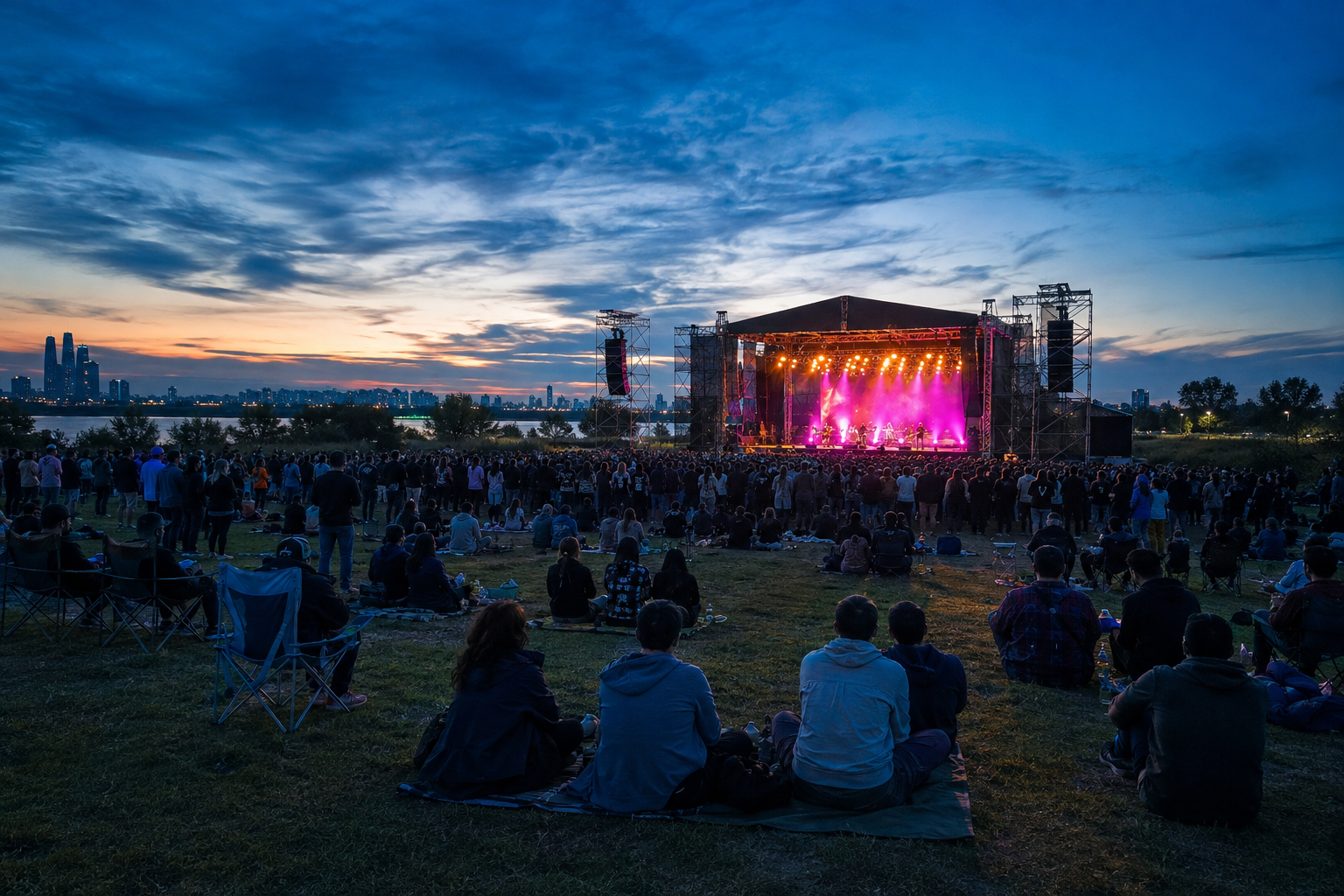
Busan’s long-running rock festival is a three-day, ticketed event in a broad riverside park rather than a concert in the city center. The festival began in 2000, and the Korea Tourism Organization describes it as Korea’s first and longest-running international rock festival. For 2026, Busan City says the final bill contains 99 teams. The useful decision is therefore less whether there is enough music and more whether the park setting, ticket price and full-day format suit the way you travel.
This guide was rechecked on September 28, four days before the opening. Nothing about the dates has changed: the run stays October 2-4, with no cancellation, postponement or date change in the official notices. What has changed is the operational detail that was still missing in early September. The day-by-day timetable and a venue guide map are now posted, a Kakao Map festival map has launched, the shuttle page has been filled in, and several late-September notices added a free daytime zone, a small theme park and an off-site food alley. The sections below fold those in.
What you actually do here
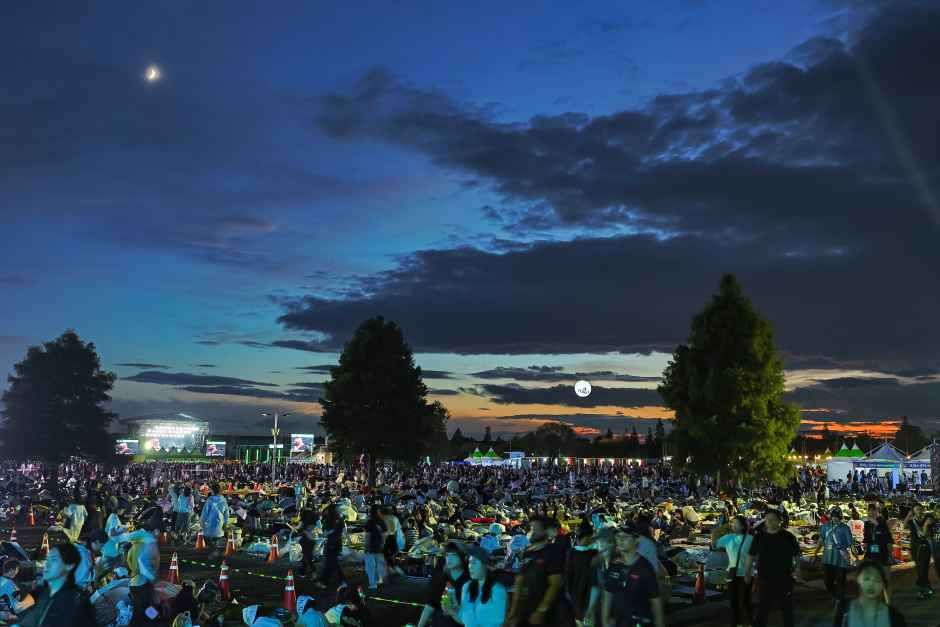
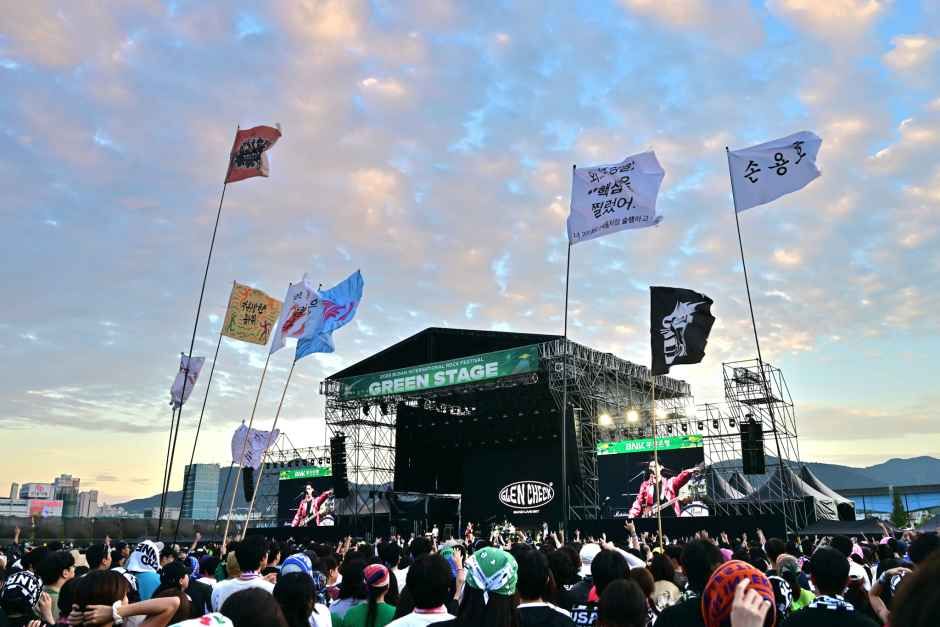
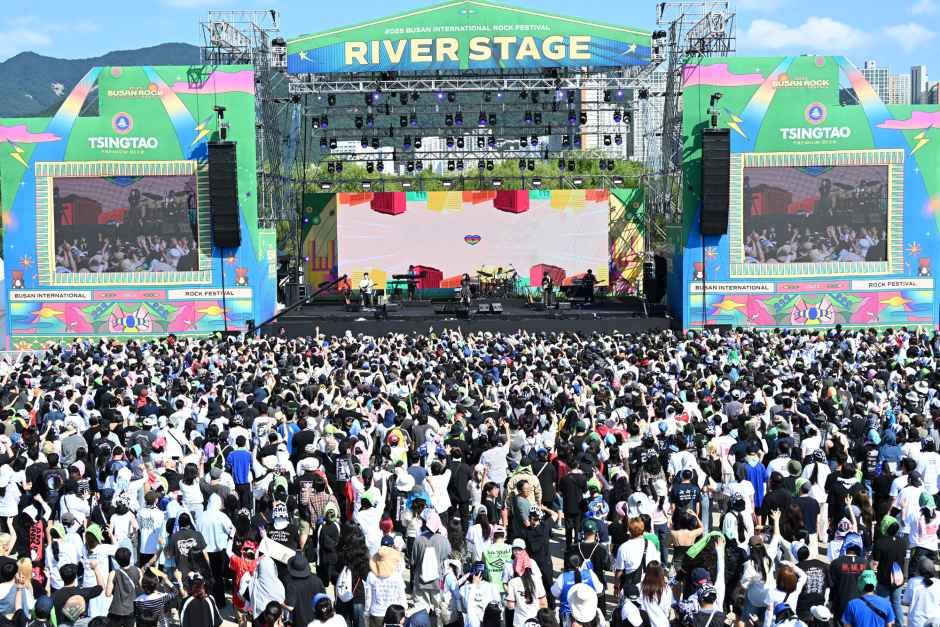
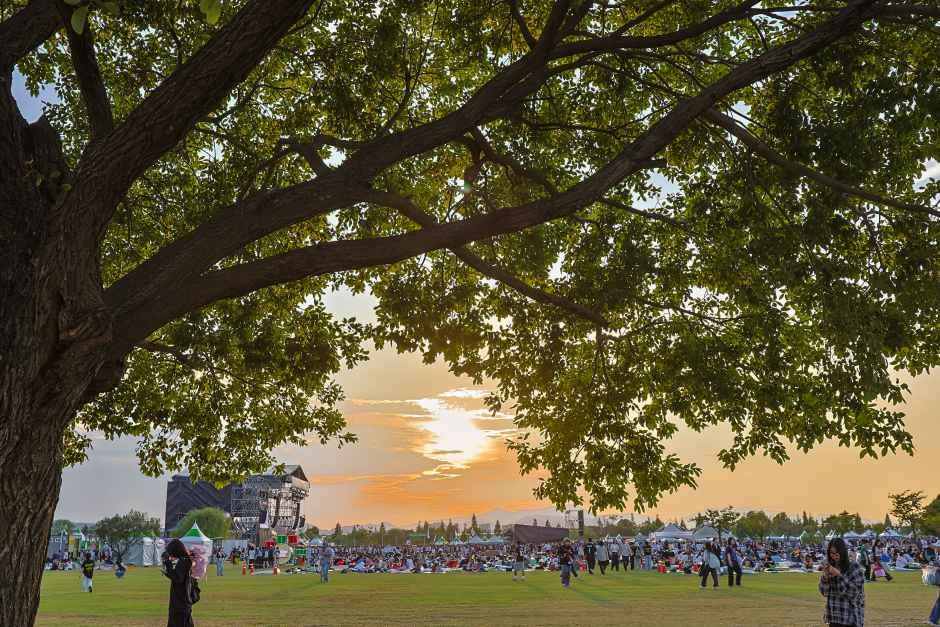
You move between outdoor stages and build a day around the acts you want to see. This is not a single-stage concert where one seat determines the whole experience. The Korea Tourism Organization says stages are placed around Samnak Eco Park, with acts ranging from emerging performers to international headliners. Moving between them is part of the day, so the eventual stage timetable matters as much as the lineup poster.
The final lineup announced on September 4 includes Avenged Sevenfold, Megadeth, The Libertines, Songolmae, Suchmos, CNBLUE, CreepHyp and Hitsujibungaku alongside Korean acts such as Jannabi, Lee Seung-yoon, Jang Beom June, N.Flying, Broccoli, You Too?, Idiotape and Say Sue Me. Elephant Gym, AiNA THE END and HANABIE. are also on the bill. That sample shows the range better than treating all 99 names as interchangeable: there is heavy metal, Korean band music, indie rock and artists from elsewhere in Asia and beyond.
KTO lists Rookies on the BU-ROCK and Road to BU-ROCK as associated programme strands. Road to BU-ROCK is a lead-up project rather than another name for the October main event; its announced 2026 cities include Busan, Taichung, Seoul, Gwangju, Jeju, Ulsan and Fukuoka. At the park, KTO also lists audience games on a free-access stage, merchandise booths, a food-court lounge and a camping zone. Treat those as supporting facilities. The ticket purchase is principally for the live programme.
Programme and timetable
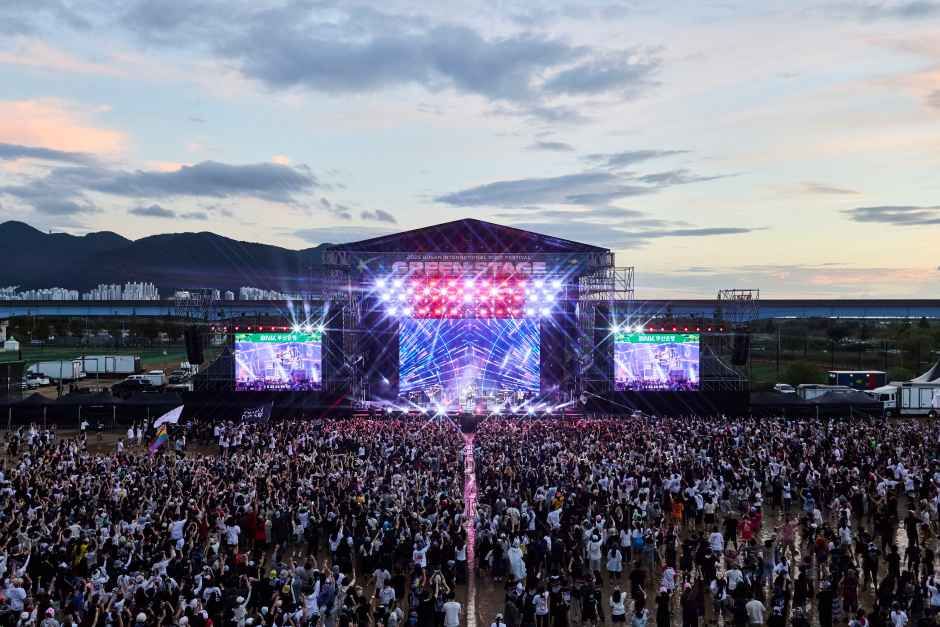
The published operating window is 10:00-22:00 on October 2, 3 and 4. That is the overall event time, not evidence that every artist performs every day or that music runs continuously for twelve hours. The final artist roster has been public since September 4, and — unlike at the last update — a day-by-day timetable and a venue guide map are now posted on the official site’s TIMETABLE and notice pages. The map is published as images rather than text, so read it on the official page itself before travelling.
That grid matters most if you are considering a one-day or two-day ticket. The right move now is to open the official timetable and match a single-day pass to the acts you actually want, rather than inferring a performance date from the order of names on a poster. The festival’s Kakao Map page adds a second way to plan: you can set a reminder that alerts you roughly 15 minutes before a chosen set, which is more useful than a printed sheet once you are walking a large park between stages. Still allow gaps for that walking rather than constructing a minute-perfect sequence.
The same caution applies to headline counts. Busan City and multiple reports based on the city’s September 7 announcement give a total of 99 teams, while the festival’s official September 4 page confirms the final lineup by name and artwork. The count tells you the event is large; it does not tell you how many complete sets one visitor can realistically watch in a day.
Tickets, fees and booking
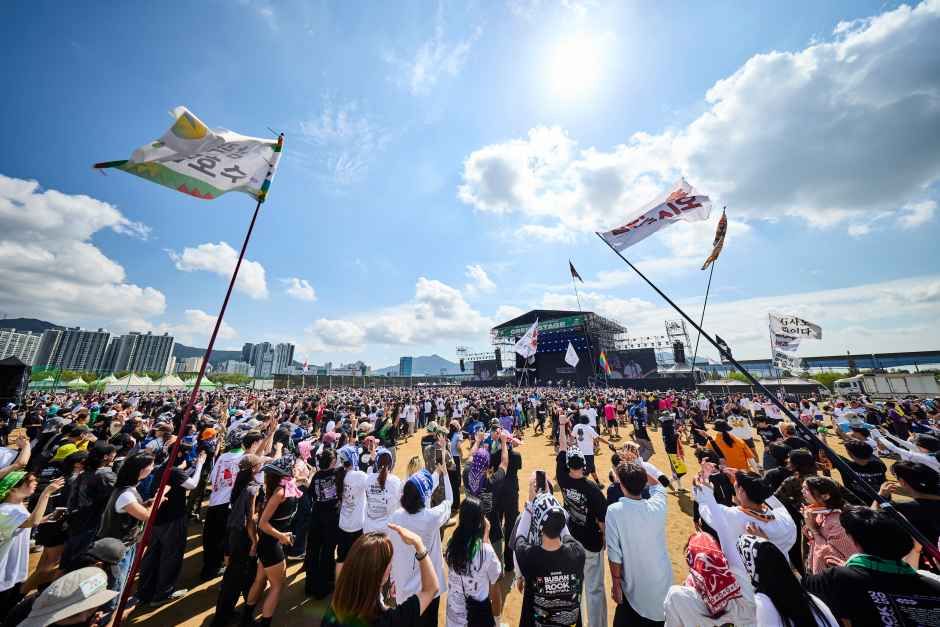
Regular tickets went on sale through YES24 Ticket at 14:00 KST on July 21. The official prices are 120,000 won for one day, 193,000 won for two days and 266,000 won for all three days. The one-day price is the amount shown in the fact card because it is the lowest current regular admission price, not the cost of every ticket type.
Earlier early-bird rounds were cheaper, but those launch prices should not be used as the current planning budget. The first early-bird allocation was a three-day pass at 212,800 won; the second round offered 10 percent reductions. The current official notice is the regular-sale notice above. It says tickets are sold first come, first served in limited quantities and may close early when the allocation is exhausted.
Use the ticket link reached from the official festival website and read the YES24 product conditions before payment. This guide does not assert an on-site box office, a cancellation deadline, a wristband collection procedure or a child-price rule because those details were not confirmed in the sources checked. If any of those determines whether you can attend, verify it on the live sales page rather than relying on a previous year’s system.
Getting there without a car
KTX from Seoul Station to Busan Station takes roughly two hours forty minutes. The express-bus alternative from Seoul Express Bus Terminal to Busan Central Bus Terminal is about four hours, but that terminal is in the north of Busan and is not the same place as Busan Station.
From Busan Station, take Metro Line 1 to Seomyeon, change to Line 2 for Sasang, then take the Busan-Gimhae Light Rail one stop to Gwaebeop Renecite. Visit Busan lists a 16-minute walk from Exit 1 to Samnak Eco Park. This local leg is substantial enough that the KTX time alone should not be treated as your door-to-gate journey.
The nearby Samnak Auto Camping Site is taking separate reservations for festival dates from October 1 to 5. Published nightly rates are 20,000-25,000 won for a general site and 30,000-35,000 won for an auto-camping site, plus a 2,000-won waste fee. It is useful only if you actually have camping equipment; it is not accommodation bundled with the festival ticket.
Paid shuttles and the final approach
The organiser has announced Kakao T shuttle products for people coming from outside Busan. Shuttle-only prices run from 35,000 to 102,000 won, varying by route, and ticket-plus-shuttle packages are also advertised. Booking and remaining inventory are handled in the Kakao T app. This is a paid intercity service; it should not be confused with a free circulation bus from Busan Station.
The official shuttle page has since been expanded. Alongside the intercity products it now lists a Kakao T shuttle covering on-site circulation and a connection to Sasang Station, plus a k.ride option. Boarding points are marked on the festival’s new Kakao Map page. The page does not publish fixed fares or departure times for these, so treat the Sasang connection as a booked, in-app service rather than a free local bus, and confirm the price and schedule inside Kakao T or k.ride before relying on it.
International visitors have a second official option through the k.ride app, where the festival advertises shuttle and admission bundles. The notice is useful evidence that a foreign-visitor booking channel exists, but it does not establish on-site interpretation or multilingual assistance. Those language-support fields remain unfilled in this guide.
For ordinary public transport, Gwaebeop Renecite is the documented final station. Visit Busan gives the walk from Exit 1 as 16 minutes in normal conditions. Festival entry routing, queues and barriers can lengthen the real gate approach, so do not schedule arrival at the station for the exact minute a set begins. A venue guide map is now posted on the official site, but it is published as images and does not translate into a dated public-parking or road-control plan this guide can quote, so no particular lot is recommended. For the last leg, the festival’s Kakao Map page — which marks stages, booths, facilities and shuttle boarding points — is the more practical navigation aid.
Camping and staying over
The festival’s camping arrangement is unusually specific. Samnak Auto Camping Site, near the grounds, accepts festival-period stays from October 1 through October 5, for up to four nights and five days. The reservation window runs from September 7 through October 4, with bookings handled daily from 09:00 to 21:00 through the campground website. Reservations are first come, first served; after a date sells out, only cancelled spaces return to sale.
Nightly prices are 20,000 won on weekdays and 25,000 won on weekends for a general camping site, or 30,000 and 35,000 won respectively for an auto-camping site. Add the stated 2,000-won waste-disposal fee. These are campsite charges, not tent rental, and the official notice does not say that festival admission is included. You therefore need both a festival ticket and a campground reservation, plus the equipment appropriate to the site you reserve.
Camping is not the only sensible overnight pattern. Sasang is the most convenient urban base for minimizing the final transit leg, while Seomyeon sits on the transfer between Metro Lines 1 and 2. Staying near Busan Station or in a beach district remains possible, but it adds cross-city travel after a 22:00 finish. No individual hotel has been verified here, and availability during festival weekend changes too quickly to recommend one as fact.
Zones and extras announced for 2026
A run of notices in the last week of September filled in what is on the grounds beyond the ticketed stages, and some of it is useful to non-ticketholders or families.
The Road to BU-ROCK zone — the festival shortens it to “Lo-Bu-Rock” — runs near the Hidden Stage from 12:00 to 20:00 on all three days and is described as open to everyone. It is the on-site face of the year-round Road to BU-ROCK project rather than part of the main paid programme, so it is a way to sample the fringe without committing to a day pass. Treat the headline acts on the main stages as the thing you are actually paying for.
There is also a small Samnak theme park operating near the Hidden Stage from 11:00 to 20:40 on October 2-4, charging 5,000 won per ride. Its notice is one of the few places a payment method is stated: it lists card, cash and bank transfer, and it warns that rides may pause in bad weather and that some attractions restrict young children, pregnant riders and older visitors. That payment note applies to the ride booth only; this guide still does not assert a site-wide card policy, so the festival’s cardsAccepted field stays unset. Late-September notices also added a Kids Zone and a Hidden Stage activity programme; check the official notice board for their hours before relying on them for a family day.
Food on site and a Busan specialty
KTO’s current record lists a food-court lounge featuring local Busan food, alongside merchandise and camping areas. However, the same record explicitly warns that its detailed food description is still based on the 2025 festival while 2026 information is being updated. It is reasonable to expect the listed food-court facility; it is not reasonable yet to promise a particular vendor, dish, price, vegetarian menu or payment method.
A late-September notice adds an off-site option: the Garo Park restaurant alley in Sasang-gu, near the venue. The festival says that during the event, wearing your festival wristband and visiting shops flying the Garo Park flag earns a small perk. This is an existing local eating street rather than a festival food court, so it is a way to leave the park for a proper meal without losing your re-entry, but the specific discounts and participating shops are set by the notice rather than by this guide.
One verified Busan product is Daejeo tomato, grown in Daejeo-dong in Gangseo-gu. Busan City records that it became the city’s first product registered under Korea’s agricultural geographical-indication system, as registration number 86. The fruit is known for green coloring around the stem when partly ripened and for a firm texture. Its main season runs from February into May, so it belongs in this guide as regional context rather than as a promised October festival snack.
Honest assessment
This works best if several names on the eventual timetable justify a full day for you. At 120,000 won for one day, it is a poor choice for casually dropping in for an hour, and the park is not beside Busan Station or the beach neighborhoods where many visitors stay. The advertised 10:00-22:00 window also makes this a long outdoor day: choose shoes and a bag for repeated walking, not for a seated arena show.
The upside of the location is room for multiple stages and a proper outdoor-festival day. The trade-off is distance: there is a 16-minute approach even after the final light-rail stop, and you repeat it when the programme ends. A Seoul day trip built around the last sets is not credible: the festival operates until 22:00, while reaching Busan Station requires the walk and several transit legs. Stay in Busan if the late programme is the point, even though this guide leaves the formal overnight field unset until the exact October rail timetable is confirmed.
The final lineup is strong enough that schedule clashes are more likely than a shortage of options. Make a short priority list against the day-by-day timetable, now posted, use the Kakao Map reminders so a set does not slip past while you are on the far side of the park, and accept that crossing a large park has a cost. Buy before the limited allocation closes, and base the pass decision on the acts you can actually watch rather than the impressive but less useful total of 99 teams.