The Jeju Olle Walking Festival is a three-day group walk along the Olle trail network, not a fixed festival ground you can drop into. In 2026 it runs November 5 to 7, a Thursday to Saturday, on Olle Courses 19 and 20 in northeast Jeju, between Jocheon and Hado. It is the 16th edition; Korean press says the festival began in 2010. The host is Jeju Special Self-Governing Province and the organiser is the Jeju Olle Foundation, which runs the trail itself.
One fact shapes this edition: Korean reports describe it as the last festival in its present form, where large numbers walk the same stretch together over three days. From 2027, according to those reports, the festival moves to a new format spread over 25 days and covering all 23 courses. So this is a good year for anyone who specifically wants the big-group version.
What you actually do here
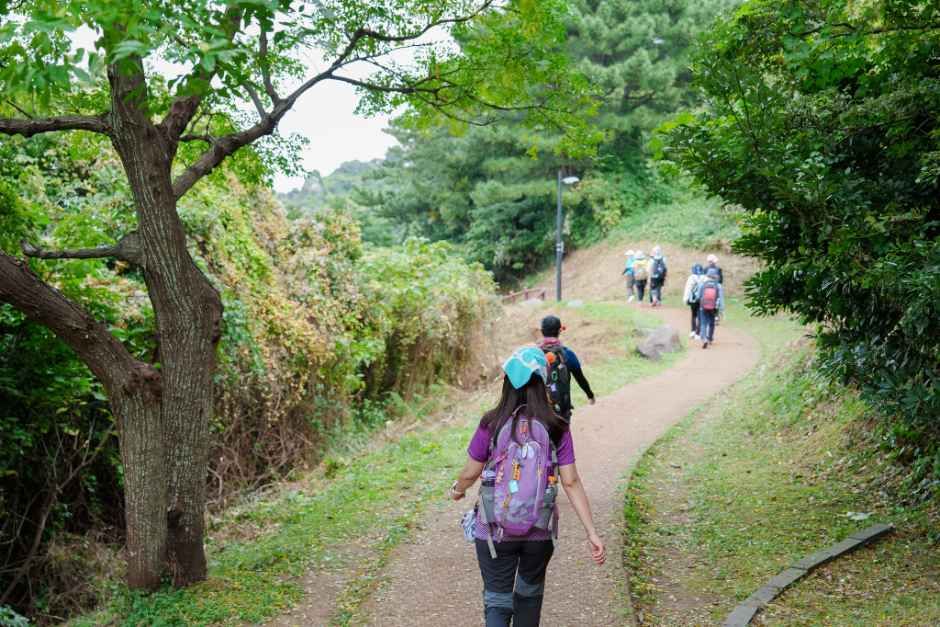
You walk. The 2026 route is split into three one-way legs, one per day, and each ends somewhere different from where it began. KTO lists the registered venue as Jocheon Mansedongsan (1141 Jocheon-ri, Jocheon-eup), the start of Course 19. Press reports name slightly different Jocheon spots for the opening ceremony, so confirm the assembly point in the Olle Pass app.
The legs, as reported:
- Day 1, November 5: about 13 km, Jocheon to the Dongbok-ri Sports Center in Gujwa-eup, after the opening ceremony.
- Day 2, November 6: about 11.5 km, from Dongbok-ri to the Jeju Field Wall Theme Park.
- Day 3, November 7: about 12.9 km, walked in reverse from the Jeju Haenyeo Anti-Japanese Resistance Memorial Park to the same theme park, where the closing ceremony is reported.
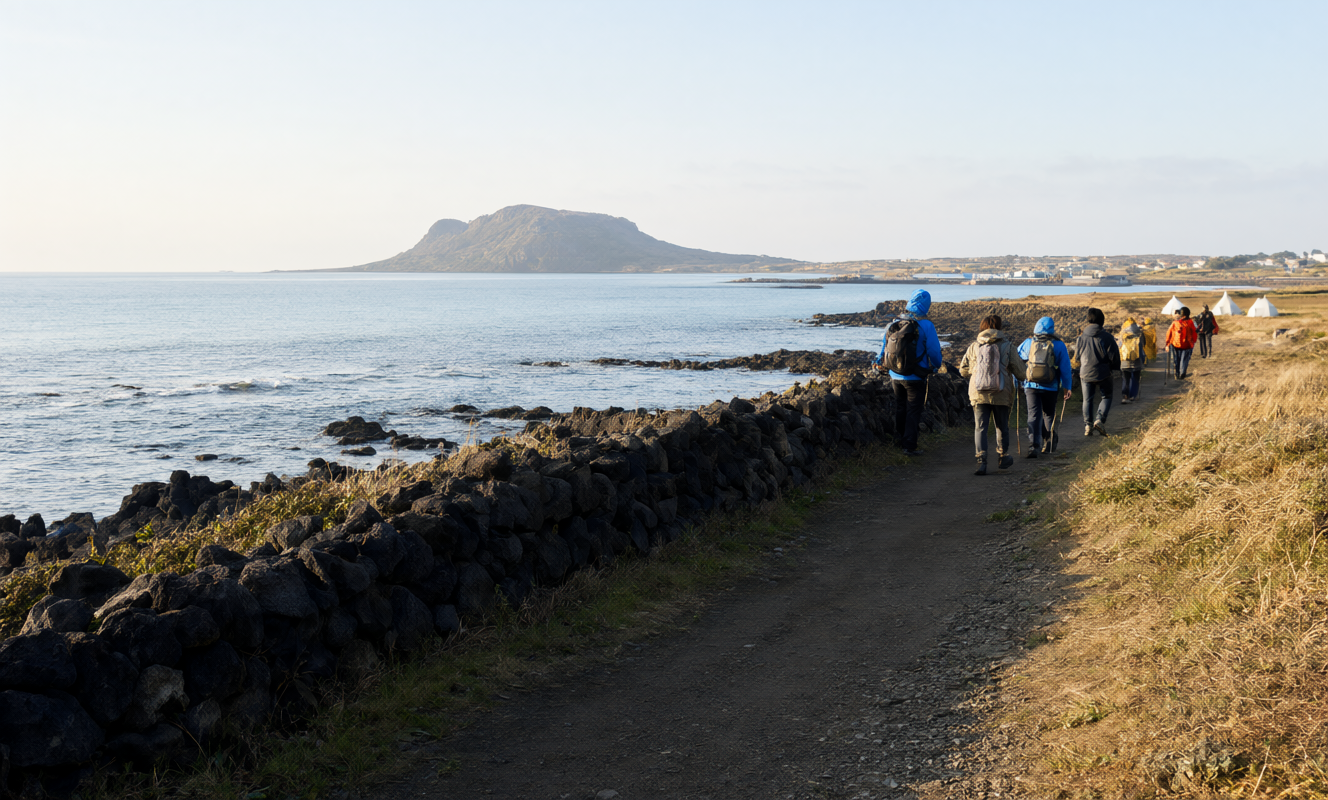
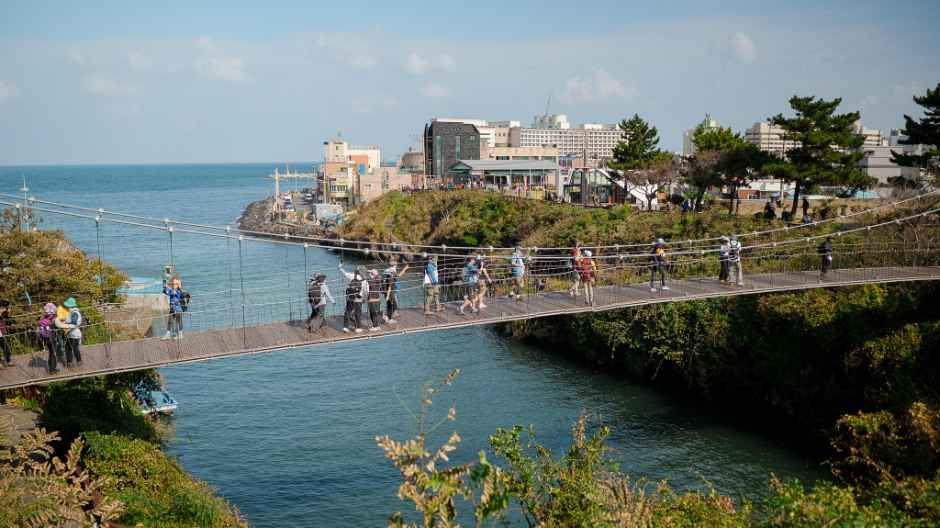
That adds up to 37.4 km. The press describes the scenery as sea, stone field walls and village lanes; the field wall (batdam) is the black basalt boundary you see around Jeju fields. Participants are asked to bring their own cutlery and a tumbler and to carry their rubbish out.
Programme and timetable
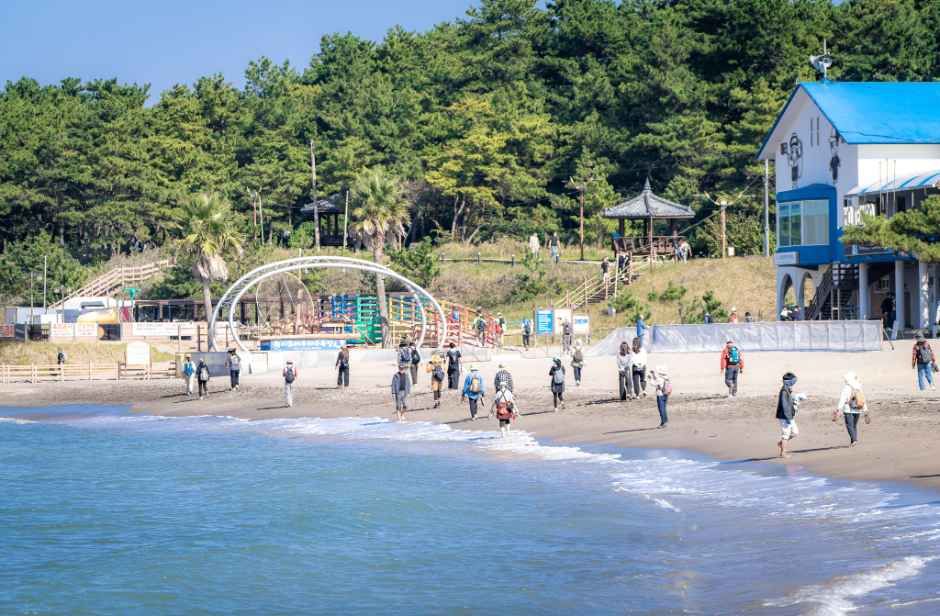
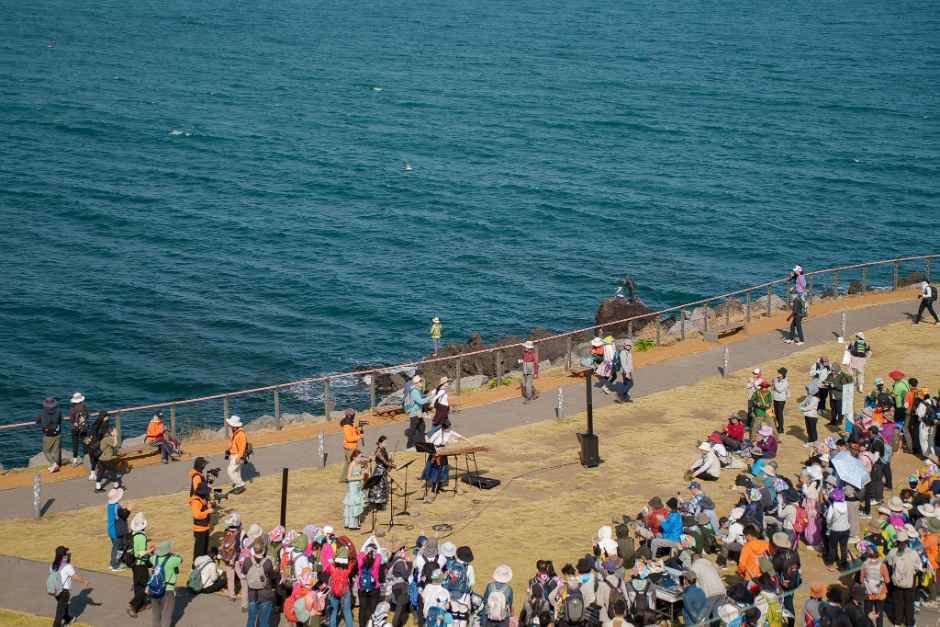
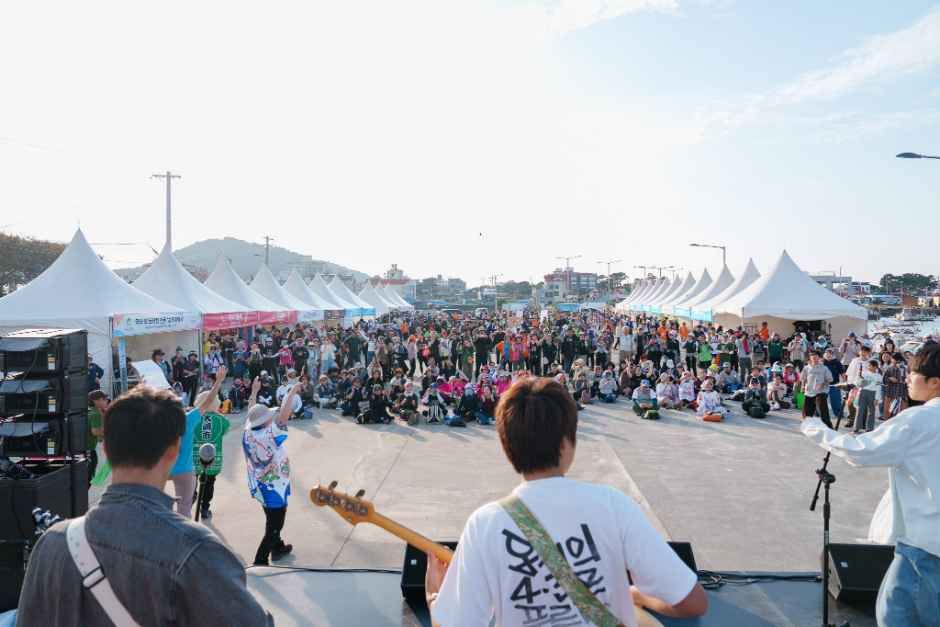
KTO’s Korean record lists the main programmes as performances on the trail, traditional games and a campaign to clean up the coastal paths. The side programmes are Olle exercises, an Olle OX quiz, a QR stamp tour and a styling activity called “Kkodak Kkodak Meotnaegi”. Press reports add haenyeo (women divers) choir performances, village storytelling about field walls, Jeju 4.3 exhibitions and a workshop making decorative lights from haenyeo shelters.
Walking is reported as 09:00 to 17:00 each day, and lunch with programmes as 11:00 to 14:00. KTO’s registered listing gives 08:00 to 16:00. The difference is probably administrative, but if the exact start matters, use the Olle Pass notice. No per-stage performance timetable was available in the sources reached, so this guide does not promise when a given act appears.
Tickets, fees and booking
Participation is paid. The general fee is 30,000 won, and the discounted fee is 25,000 won for groups of 20 or more, people with disabilities, national merit recipients and young people born in 2008 or later. KTO’s own record and several Korean reports agree on this. One English-language listing says entry is free with pre-registration, and that does not match the official fee line.
Pre-registration ran from July 8 to October 9 in Olle Pass, the foundation’s official app, which now takes sign-ups from domestic and overseas users on the same platform. About 3,000 had signed up by mid-October. KTO’s English description mentions about 10,000 walkers a year, so the on-the-day turnout may be higher than the pre-registration count, but no source gives a 2026 cap. Reports say late sign-up is open on the day. The on-site price was not reported, so do not assume it matches the pre-registration fee. For questions, call 064-762-2190.
Getting there without a car
From Seoul, the practical route is a flight from Gimpo to Jeju International Airport, which takes about 1 hour 10 minutes in the air. From the airport, Visit Jeju’s directions for Course 19 point to the east-bound express bus 101 to the Jocheon transfer stop, a short walk from Manse Hill (Mansedongsan). Bus numbers and times change, so check a live map on the day.
No festival shuttle information was available. Since the route is one-way and the end point changes daily, work out how you will get back before choosing where to stay. The official site has a Traffic Information section, and that is where to check.
Food on site and nearby
KTO describes village programmes and food made with local farm and sea produce, but no stall list or prices were available, so nothing is promised here. The one named meal is on day one: temple-food master Jeongwan will serve lotus-leaf rice to about 500 walkers at the Dongbok-ri Sports Center. Reports say places are drawn, so it is not available to every walker.
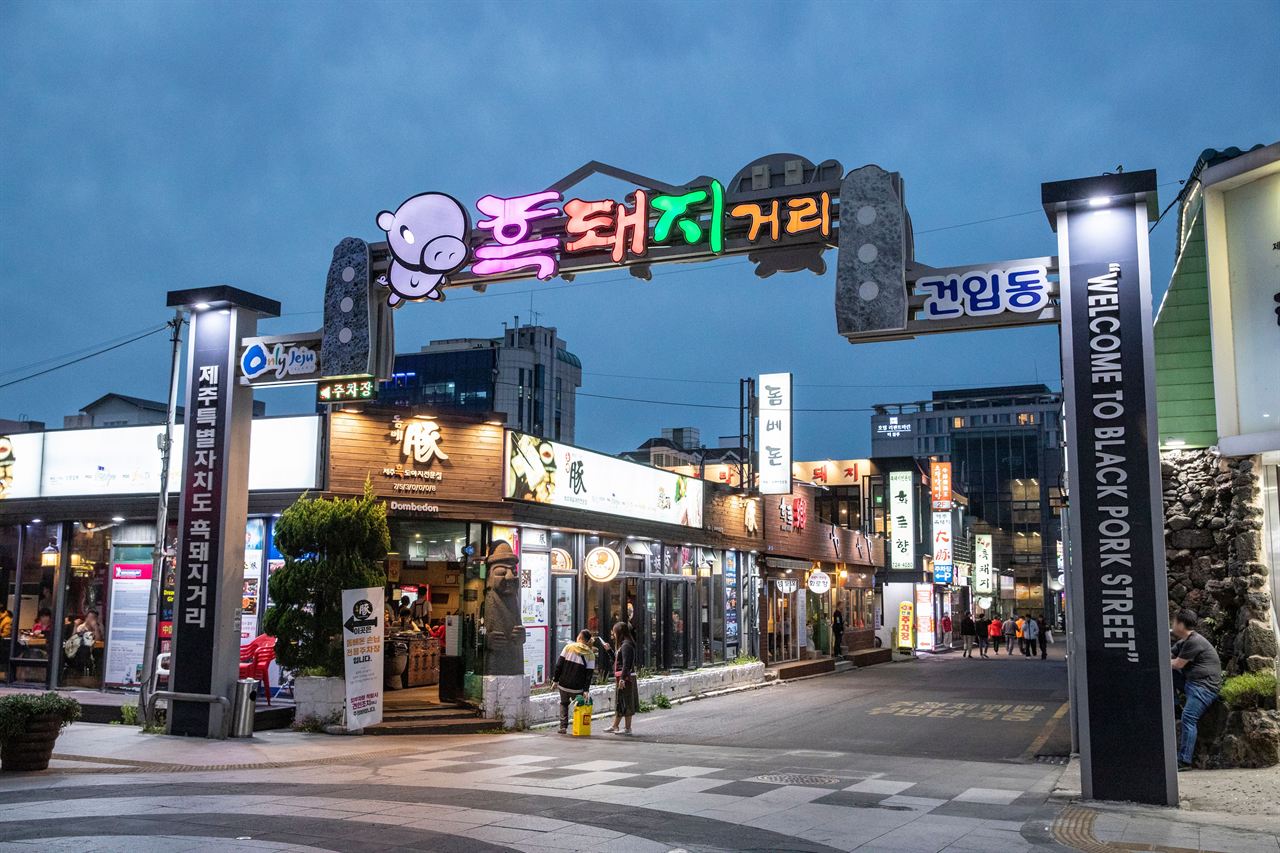
For a documented Jeju specialty off the route, Jeju black pork is a native breed, and Jeju City’s Black Pork Street is a concentration of grill restaurants. It is in the city, not near Jocheon, so treat it as a separate meal.
Honest assessment
The festival’s strength is that it is a real walk on a well-kept trail, with village programmes along the way instead of a single stage. If you like walking, the three legs of 11.5 to 13 km are manageable for a regular walker, and the group format means you are rarely alone on the path.
The weaknesses are practical. Registration has closed and the on-site details are thin. The shuttle, parking and lunch arrangements were not confirmed, and the legs finish in different places from where they start. It is also an outdoor event in November, so bring layers and check the forecast. If you only want a coastal walk rather than the organised programme, the same Olle courses exist outside the festival dates, but you would miss the performances and the crowd that make this the festival. For a first-time visitor who cannot read Korean notices, the Olle Pass app and the call centre are the two things to sort out before you fly.